- Internal Heat Generation: RF welding creates heat within the material—not on the surface—resulting in deeper, more uniform bonds.
- Material-Specific Process: Only polar thermoplastics (like PVC and PU) are compatible, making material validation essential (not all plastics are suitable; only those with the right molecular structure can be RF welded).
- High-Speed Production: Short cycle times enable efficient, repeatable manufacturing at scale.
- Superior Seal Quality: Produces airtight, watertight seams with minimal surface distortion.
- Automation-Ready Technology: Easily integrates into automated systems for consistent, high-volume output.
- Machine Selection Matters: The right RF welding machine depends on your material, product geometry, and production volume.
- Supports Sustainable Manufacturing Practices: RF welding eliminates adhesives, solvents, and other consumables, supporting sustainable manufacturing practices by reducing waste, lowering ongoing material costs, and improving overall environmental impact.
Understanding RF Welding Technology
At its core, the radio frequency welding process works by exciting molecules inside a material using radio frequency energy and electromagnetic radio waves. These radio waves induce molecular vibration and friction within the plastic surfaces, generating heat internally. Because the heat is created inside the material, rather than from an external heat source, the plastic softens evenly, allowing pressure to fuse layers together into a single, cohesive structure.
Not all plastics are suitable for this process—only those with the right molecular structure, typically polar materials, can be effectively welded using RF energy.
This internal heating process is what makes RF welding exceptionally consistent. Unlike methods that rely on an external heat source, which can vary with airflow or contact pressure, RF welding delivers repeatable results cycle after cycle—making it ideal for precision manufacturing environments.
However, this process only works with polar materials. Understanding material compatibility upfront is critical to ensuring successful welds and avoiding production issues.
By integrating the radio frequency welding process into the overall manufacturing process, manufacturers can achieve improved efficiency, quality, and reliability in their production workflow.
How Radio Frequency Welding Works: The Science Behind Dielectric Heating
RF welding relies on dielectric heating—a process where an alternating electromagnetic field causes polar molecules to rapidly realign, generating heat through molecular friction.
Think of it like shaking a group of magnets back and forth at high speed. As they try to constantly realign with the changing field, they create energy in the form of heat. In RF welding, this happens inside the material itself.
Once the material reaches the correct temperature, pressure is applied through the welding die to fuse the layers together. When the RF energy stops, the material cools and solidifies, forming a permanent, high-strength bond.
Core Components of an RF Welding Machine
Radio frequency welding machines, also known as high frequency welding machines or radio frequency welders, are industry-standard equipment for dielectric welding. Their components include:
- RF Generator – Produces the high-frequency electromagnetic energy that drives the process
- Press System – Uses the upper electrode to apply consistent pressure, ensuring proper material fusion and facilitating chemical bonding during the cooling and solidification stages
- Electrode/Die Tooling – Shapes the weld and directs energy to the correct area
- Control System – In automated machines, utilizes cutting edge technology to regulate time, pressure, and power for precision, consistency, and repeatable results
The generator and press must work in sync—energy softens the material while pressure forms the bond. Die design and material selection are equally critical, as they directly impact weld quality, precision, and longevity.
Material Compatibility: What Can Be RF Welded?
RF welding only works with polar thermoplastics, which respond to electromagnetic fields. Not all plastics are suitable for radio frequency RF welding—only specific plastic materials with polar characteristics can be effectively joined using this method.
Advanced RF welding technology has expanded compatibility, allowing for the bonding of more challenging materials, including multiple layers and thin plastic sheets. This technology ensures that electromagnetic energy penetrates the surrounding material, providing uniform heating and strong welds, even in complex or layered products.
Common Compatible Materials:
RF welding is particularly effective for joining multiple layers and thin plastic sheets, making it ideal for applications requiring lightweight, flexible, or multi-layered plastic materials. The process ensures the surrounding material is uniformly heated, resulting in strong, reliable bonds.
Non-Compatible Materials:
- Polyethylene (PE)
- Polypropylene (PP)
- Non-polar films and fabrics
If you’re unsure about your material, testing is essential. Even materials with similar names can behave differently depending on coatings or formulations.
RF Welding vs. Other Joining Methods
- RF Welding vs. Hot Air/Wedge – RF creates internal heat for deeper fusion, while hot air/wedge methods rely on external heat sources to heat surfaces, which can limit weld quality and consistency.
- RF Welding vs. Heat Sealing – RF is faster and more consistent for compatible materials, as it does not require external heat and instead uses electromagnetic energy for uniform results.
- RF Welding vs. Adhesives – Eliminates curing time and reduces variability
- RF Welding vs. Ultrasonic – RF welding is better suited for thicker materials and airtight applications, while ultrasonic welding is typically faster for small, rigid parts but is limited in material compatibility and is less effective for flexible or thicker films.
- RF Welding vs. Traditional Welding Methods – RF Welding vs. Traditional Welding Methods
RF sealing is a specific method that leverages radio frequency energy to create strong, uniform welds in polymer films, offering versatility and precision across various applications.
RF welding excels when strength, consistency, and sealed performance are required—but it’s only viable for compatible materials.
Types of RF Welding Machines
RF Welding Defined
RF welding machines are designed around production volume, product geometry, and automation level. Radio frequency welding applications span a wide range of industries and products, including high-volume manufacturing of items requiring hermetic or airtight seals. There is a configuration suited for every manufacturing environment—from manual operations to fully automated machines that enable high-speed, consistent RF welding work with minimal labor and superior seal quality.
Shuttle RF Welders
Shuttle welders use a sliding table that moves material in and out of the welding area. Operators can load one side while the other is welding, improving efficiency.
Best for medium-volume production and products like inflatables, medical bags, flexible containers, medical devices, and automotive components. Shuttle RF welders are commonly used for RF heat sealing in the production of medical devices, where sterile, contamination-free sealing is critical. Available in single- and dual-station configurations to increase throughput.
Rotary / Turntable RF Welders
Rotary systems use a circular table that continuously indexes between stations. While one part is welding, others are being loaded or unloaded.
Ideal for high-volume production where cycle efficiency and operator flow are critical, rotary RF welders are especially suitable for joining multiple layers of material. This makes them ideal for manufacturing layered products such as medical bags and inflatables, due to RF welding's ability to create strong, airtight seals.
Bar / Platen RF Welders
These machines use long bar electrodes to create straight-line welds.
Best suited for applications like tarps, banners, curtains, and large flat products requiring continuous seams. Miller Weldmaster's RFlex RF welder and the large-format RFlex Travel are built for these products.
Automated / Inline RF Welding Systems
Fully automated systems integrate RF welding into a continuous production line.
These automated machines utilize cutting-edge technology for maximum throughput and improved energy efficiency, delivering minimal labor input and highly consistent quality—ideal for large-scale manufacturing environments.
Specialized RF Welding Equipment
Custom RF systems are designed for specific industries such as medical and automotive, utilizing advanced RF welding technology and high frequency electromagnetic fields to expand material compatibility and improve weld quality in specialized applications.
Standalone generators can also be integrated into automation systems, with radio frequency welding technology enabling tailored production solutions for challenging materials.
Step-by-Step RF Welding Machine Selection Process
Choosing an RF welding machine is a strategic decision that impacts production efficiency, product quality, and long-term scalability. Selecting the right machine is critical for efficient RF welding work and for successfully integrating radio frequency technology into your manufacturing process. Work through these steps before engaging with a supplier.
Step 1 — Confirm Material Compatibility
- Verify the material has a polar molecular structure.
- Conduct test welds before committing to equipment.
Step 2 — Define Product Geometry and Seam Requirements
- Map seam shape, size, and complexity.
- Factor die design into the decision.
Step 3 — Assess Production Volume and Cycle Time
- Align machine type with throughput needs.
- Plan for future growth, not just current demand.
Step 4 — Evaluate Automation Level and Operator Requirements
- Balance labor availability with automation investment.
- Consider consistency and quality control needs.
Step 5 — Account for Workspace, Power, and Safety
- Evaluate electrical and floor space requirements.
- Ensure proper RF shielding and compliance.
RF Welding Machine Comparison
Use this comparison as a starting point to align your production needs with the right machine type. This table compares different types of high frequency welding machines, radio frequency welding machines, and radio frequency welders, highlighting their applications, automation levels, and suitability for various production volumes.
For a more tailored recommendation, explore the selection guide above or contact Miller Weldmaster.
| Machine Type | Best For/Production Volume | Cycle Time/Automation Level |
|---|
| Shuttle | Flexible, mid-volume production/Medium | Moderate/Low-Medium |
| Rotary/Turntable | High-Efficiency Workflows/High | Fast/Medium |
| Bar/Platen | Long, straight seams/Medium | Moderate/Low |
| Automated Inline | Continuous production lines/Very High | Very Fast/High |
| Specialized | Niche/custom applications/Varies | Varies/Medium-High |
Common Challenges and Solutions in RF Welding
Even with the right setup, achieving durable welds and high seal quality with RF welding requires attention to detail to maintain quality and uptime.
Challenge 1: Arcing and Material Burning
- Causes: Contaminants, improper settings, uneven pressure
- Solutions: Clean materials, calibrate power levels, ensure proper die alignment
Challenge 2: Weak or Inconsistent Seam Strength
- Causes: Incorrect parameters, material variation
- Solutions: Standardize settings, validate materials, perform regular testing
Challenge 3: Material Compatibility Failures
- Causes: Non-polar materials or inconsistent formulations
- Solutions: Test every new material lot before production
Challenge 4: Die Wear and Tooling Degradation
- Causes: Repeated use, improper materials
- Solutions: Implement routine inspections and use high-quality die materials
Challenge 5: Regulatory and Safety Compliance
- Considerations: FCC frequency regulations, RF shielding requirements
- Approach: Maintain compliance as an ongoing operational priority
Maintenance and Repair of RF Welding Machines
Regular maintenance and timely repair are essential for keeping RF welding machines operating at peak performance. Because the RF welding process relies on precise high frequency electromagnetic energy to generate heat and bond thermoplastic materials, even minor issues can impact weld quality, production efficiency, and the overall reliability of your welding equipment.
Why Maintenance Matters in RF Welding Technology
RF welding machines are sophisticated systems that combine high frequency generators, press mechanisms, electrodes, and control units. Over time, components can wear, electrical connections may loosen, and dust or debris can accumulate—potentially disrupting the electromagnetic energy flow or causing inconsistent welds. Preventive maintenance helps avoid unexpected downtime, reduces costly repairs, and extends the lifespan of your investment.
RF Welding Applications Across Industries
Radio frequency welding applications span a wide range of industries and products, including medical devices and large fabric structures. RF welding is widely used in the medical industry for products requiring sterile, contamination-free sealing. It is also ideal for manufacturing inflatable products, due to its ability to create airtight seals.
RF welding, also known as RF sealing, uses high frequency radio waves—typically at 27.12 MHz—to generate internal heat within plastic materials. This process heats and bonds plastic surfaces at a molecular level, resulting in strong, uniform, and airtight seals.
- Medical products: blood bags, IV fluid pouches, pressure cuffs and surgical drapes
- Inflatables, air mattresses and evacuation slides
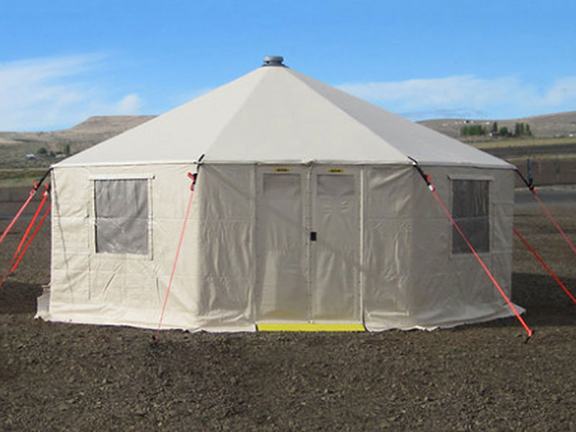
- Tents, shelters and tension structures
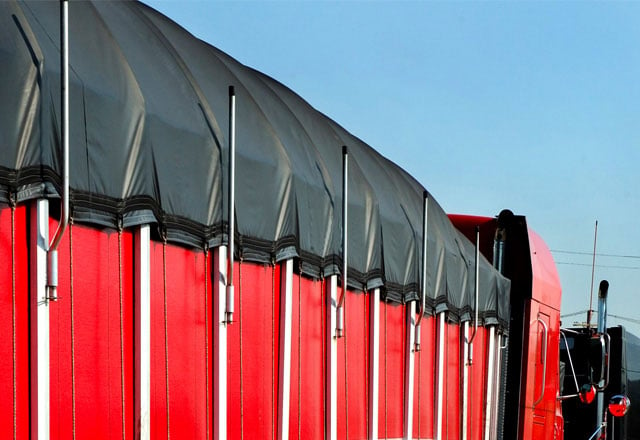
- Tarpaulins, covers and truck side curtains
- Awnings, blinds, shades and pergolas
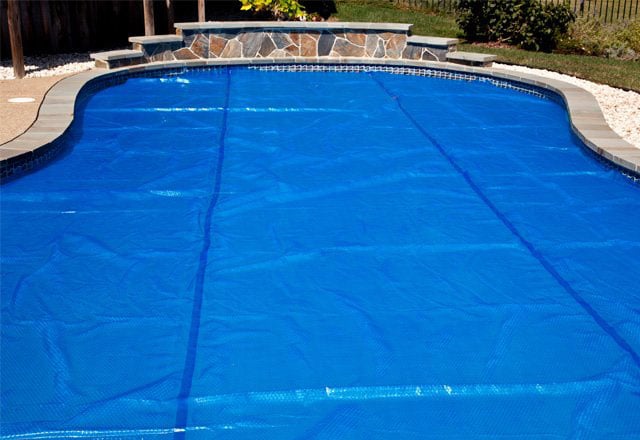
- Pool covers and pools
- Signs and billboards
- Containment booms and flexible storage tanks
- Conveyor belts and roller doors
Choose Miller Weldmaster for Your RF Welding Machine Needs
Miller Weldmaster brings decades of expertise in industrial welding solutions, offering cutting edge technology in radio frequency welding machines and radio frequency technology. Our full range of RF welding machines is designed for performance, reliability, and scalability.
- Proven Engineering Expertise: Built on decades of innovation in industrial welding technology
- Solutions for Every Production Level: From standalone machines to fully automated systems
- End-to-End Support: Training, service, and long-term partnership beyond installation

 LEARN MORE