
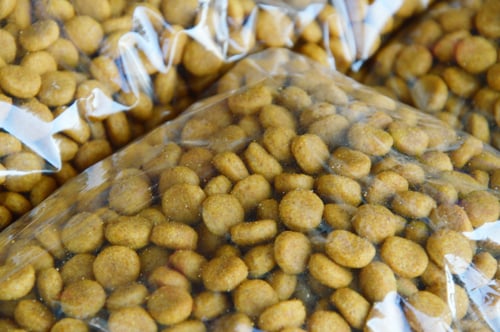
About Animal Feed Bag Sealing
Sealing animal feed bags is a critical quality control step in feed manufacturing. A bag that loses its seal in transit contaminates or spoils its contents before it reaches the end consumer, and that failure has direct consequences for brand trust and customer retention. The Miller Weldmaster Packaging Systems lineup is built specifically for this problem, delivering hot air sealing technology that closes polywoven and thermoplastic feed bags without adding glue, hot melt or thread, for a clean, consistent seal on every bag.
Key Takeaways
No Added Glue or Adhesives
Hot air sealing closes animal feed bags without adding glue, adhesives or hot melt, so no added substance can reach pet food or livestock feed.
Polywoven, Thermoplastic and Paper Bags
Miller Weldmaster Packaging Systems machines seal polywoven, thermoplastic, and paper feed bags using precisely controlled hot air, with no consumables required.
Strong, Consistent Seals
Digitally controlled hot air, quick-change folding and saved recipes give every bag the same seal, run after run.
Three Sealing Styles
The PS150, PS400, and PS300 each address a distinct sealing style — single-fold top closure, pinch/double-fold closure, and back-seam tube sealing — to match any production format.
Miller Weldmaster machines support two types of sealing
U.S. feed producers predominantly use the pinch method for dog and cat food bags, while many European manufacturers favor the double-fold approach. Miller Weldmaster bag sealing machines are designed to support both sealing methods, allowing manufacturers to accommodate regional packaging preferences, production requirements, and customer specifications without sacrificing speed or seal quality.
Why Does the Seal Matter So Much in Animal Feed Packaging?
Overview
Feed bags pass through a long chain of touchpoints between the production floor and the consumer's hands: filling, conveying, palletizing, warehousing, shipping, and retail display. Each stage places stress on the bag closure. A weak seal can fail at any one of them.
For pet food manufacturers, the stakes are especially high. Consumers buying dog food, cat food, or small animal feed trust that the product they open is exactly what was packed at the factory. A compromised seal invites moisture infiltration, oxygen exposure, and potential contamination, all of which degrade nutritional value and create food safety concerns.
For livestock and agricultural feed producers, volumes are larger and bag weights heavier, making seal integrity a physical durability requirement, not just a freshness concern. Stacked 40- to 50-pound polywoven bags place significant compressive load on every closure.
What Happens When the Sealing Method Introduces Its Own Contamination Risk?
Traditional bag closing methods for polywoven feed bags have relied on hot melt adhesives, glue strips, or stitching with thread. Each of these carries a contamination vector. Adhesives can leach into the bag contents, especially under thermal stress during storage or transport. Stitching leaves needle holes that are potential entry points for moisture and dust. Hot air sealing removes these risks entirely by fusing the bag material itself, creating a seal that contains no foreign substance and no physical penetration of the bag wall.
How Does Hot Air Bag Sealing Work for Feed Bags?
Hot air bag sealing, a form of hot air welding, works by directing precisely controlled heated air at the bag material through a specially engineered nozzle, then passing the heated material through compression rollers that press and bond the seal uniformly across the bag opening. The process is entirely thermal: no adhesive, no thread, no consumable required.
The key variables in a hot air seal are temperature, airflow rate, and roller pressure. Miller Weldmaster machines control all three digitally, allowing operators to set and save recipes for specific bag materials and seal styles. Once a recipe is configured, every bag in that production run receives an identical seal, regardless of operator experience.
What Bag Materials, Including Poly Bags, Are Compatible with Hot Air Sealing?
Hot air sealing is specifically effective with thermoplastic materials. In animal feed applications, the most common material is polypropylene woven fabric with a polyethylene inner liner, alongside BOPP-laminated polypropylene as another common plastic construction. The PE liner is the sealing surface. When hot air activates the PE, the compression rollers fuse it into a solid, airtight bond across the fold.
Compatible materials for Miller Weldmaster feed bag sealers include:
- Polypropylene woven bags with PE liner — the standard for 20–50 kg feed bags
- Thermoplastic bags — including laminated and composite constructions
- Multi-wall paper bags with pre-applied glue — sealed on the PS150
- Kraft paper/poly composite bags — used in specialty and organic feed applications
Which Miller Weldmaster Bag Sealers Are Right for Your Feed Bag Line?
| Machine | Sealing Style | Best For |
|---|---|---|
| PS150 | Single-fold top closure | Top closure of single-fold polywoven, thermoplastic or paper bags, including BOPP and multi-wall paper bags with pre-applied glue, at up to 35 bags per minute. |
| PS400 | Pinch or double-fold closure | Pinch or double-fold closures at up to 35 bags per minute, with a quick-change folding system to switch fold size and type. |
| PS300 | Back-seam / tube overlap seal | Operations forming bags from flat material into tube form. Used where an overlap seal on the back seam is required. |
What Is the Difference Between Pinch and Double-Fold Sealing for Feed Bags?
Pinch sealing closes the top of a filled bag by folding the material over once and heat-welding it in place. It creates a flat, compact closure and is the dominant method for dog food and cat food bags in the U.S. market.
Double-fold sealing folds the bag material over twice before welding, creating a slightly wider seal band and a more structured closure profile. This format is more common in European feed markets, where the double-fold is considered a premium closure style.
Both methods are supported by the PS400 high-speed bag closer, which can be configured for either format via its quick-change folding system. The PS150 handles single-fold pinch closures at the same top speed of up to 35 bags per minute.
How Does the PS150 Compare to Manual Bag Closing for Feed Operations?
The PS150 top-closing bag system automates this step with consistent heat, airflow, and roller pressure on every bag. It is digitally controlled for quick start-up, stores recipes for different batches and can be custom designed to fit new or existing packaging lines.
What Feed Products, Such as Dog Food, Are Typically Sealed with Hot Air Technology?
Hot air bag sealing with Miller Weldmaster machines is used across many different types of dry bulk animal feed bag applications. The common thread is polywoven or thermoplastic bag construction, including many poly bags.
Animal feed applications include:
- Dog food, cat food, and feed for pets bags (2 kg to 50 kg)
- Horse, rabbit, and chicken feed in woven PP bags
- Wild bird seed and specialty animal feeds
- Livestock and aquaculture feed in industrial 25–50 kg formats
Beyond dedicated animal feed, the same machines seal a range of related bulk products in identical bag formats, including adjacent industries such as chemicals:
- Rice, grains, and cereals
- Kitty litter and similar granular products
- Pet bedding and substrate materials
- Fertilizers and soil amendments
For fertilizer packaging applications, see Sealing Organic and Inorganic Fertilizer Bags.
How Do U.S. and European Feed Markets Differ in Bag Sealing Style?
Bag sealing style preferences vary by market, and feed producers exporting to multiple regions need machines flexible enough to accommodate both.
In the U.S. market, the pinch method is the dominant closure format for dog and cat food bags. The closure is single-fold, compact, and efficient — well suited to high-speed domestic production lines.
In European markets, the double-fold method is more common. The wider seal band is considered a more premium closure style and is often specified by retail brand owners who want a cleaner bag profile on shelf.
Miller Weldmaster Packaging Systems machines support both formats. The PS400 can be configured for either pinch or double-fold sealing via its quick-change folding system, allowing a single machine to serve both market requirements without full line changeover.
What Are the Production and Cost Benefits of Automated Feed Bag Sealing?
| Challenge With Current Method | Outcome With Miller Weldmaster Hot Air Sealing |
|---|---|
| Adhesive or glue contamination risk in feed contents | No adhesive required — seal formed entirely by thermal bonding of bag material |
| Inconsistent seal quality across shifts and operators | Digital recipe control delivers identical heat, airflow, and pressure on every bag |
| Seal failures during palletizing, transit, or stacking | A fused seam with no needle holes, tape or glue line |
| High consumable costs (glue, tape, thread) | Consumable cost eliminated — a durable sealing solution with no glue, no tape, no thread required |
| Slow throughput at manual closing station | PS150 and PS400 seal up to 35 bags per minute |
| Line integration complexity | All three machines integrate into new or existing packaging lines; digitally controlled for fast production start-up |
How Does Miller Weldmaster Support Feed Bag Sealing Operations?
Miller Weldmaster has built hot air welding equipment since 1974. The Packaging Systems division was built specifically for bag sealing and bag forming applications across food, feed, agricultural, and industrial markets.
Miller Weldmaster schedules installation and staff training with each machine: a field service engineer configures the machine to your bag format and material, sets initial sealing recipes and trains your team on operation and maintenance.
Kent Nutrition, an animal feed maker, replaced its old bag sealing equipment with a PS150, which Miller Weldmaster helped install into its existing packaging line. Since adding the PS150, Kent has seen fewer bag jams, faster setups and job changes, easier training and less cleaning than with its old system, which left residual glue. Read the Kent Nutrition case study.
After installation, the Miller Weldmaster service and support program provides ongoing technical support, spare parts availability, and service plans designed to keep packaging lines running at rated capacity.
The company is family-owned and U.S.-based, with headquarters in Navarre, Ohio and distributor support in Europe.