Awning welding machines join awning, shade and marine fabrics with heat and pressure instead of thread, so seams come out watertight, clean and stronger than sewn ones. Miller Weldmaster builds hot air, hot wedge, impulse and radio frequency awning welding machines, from portable welders for custom shops to automated awning welding systems for high-volume production. Fabricators also call them awning welders or fabric sealers.
These machines are used to manufacture awnings, canopies, shade sails, marine enclosures, boat covers, bimini tops, tarps, and more across a wide range of materials including acrylic, vinyl, PVC-coated fabric, and marine-grade textiles.
At its core, welding equipment eliminates needle holes and weak stitch lines, producing seams that are watertight, visually clean, and structurally stronger than sewn construction. This guide helps you compare welding technologies, match machines to your materials and products, and avoid costly buying mistakes.
Key Takeaways
- Welding equipment creates stronger, waterproof seams that outperform traditional sewing across awning, shade, and marine applications.
- Hot air, hot wedge, and impulse welding each serve different materials, seam types, and production environments.
- Material type, seam requirements, and product design determine the right machine — not price alone.
- Welding reduces labor dependency, improves consistency, and makes production output more predictable.
- The right machine selection directly improves product quality, margins, and the ability to scale.
What Awning, Shade System, & Marine Machines Help You Make
Awning
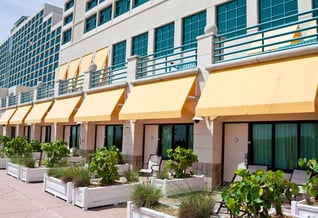
Common awning products include retractable awnings for residential patios and decks, fixed-frame and storefront awnings for commercial buildings, and decorative striped awnings with valances. Retractable systems need seams that flex repeatedly without stress fracturing. Fixed and storefront awnings require clean, weather-tight construction that holds shape over years of UV and rain exposure.
Shade System
Shade products include tensile shade structures, shade sails, solar screens, pergola covers, patio shade panels, and shades. These applications often involve large fabric spans where seam integrity affects structural performance under wind load. Vertical drop screens and roller blinds also fall into this category — and the seam finish on these products is often visible, making appearance a real factor alongside strength.
Marine
Marine fabrication covers boat covers, full enclosures, windshield curtains, mooring covers, bimini tops, and dock protection items. These products operate in demanding environments — constant UV, moisture, salt air, and mechanical stress. A failed seam on a boat cover or enclosure panel means an unhappy customer and a repair call. Weld quality here is not cosmetic. It's structural.
Across all three categories, seam quality is the common denominator - affecting weather resistance, product lifespan, and how the finished product looks to the end customer. Material type (acrylic vs. vinyl vs. PVC vs. mesh) and product geometry (flat panel vs. compound curve) further shape which welding technology fits the application best.
Types of Awning, Shade & Marine Welding Equipment
Most awning welding machines use one of three heat sources: hot air, a heated wedge or a short electrical impulse. Here is how each one works and where it fits best.
| Technology | How It Works | Best Fit |
|---|---|---|
| Hot Air Welding | Directs heated air between fabric layers before applying pressure to bond them. | Versatile; works across many seam types and coated fabrics. |
| Hot Wedge Welding | A heated metal wedge contacts material directly for fast, consistent heat transfer. | Optimized for straight, high-speed seams and repeat production. |
| Impulse Welding | Electrical resistance heating creates precise, controlled welds in short cycles. | Best for acrylic and specialty applications where seam aesthetics matter. |
How to Choose the Right Welding Equipment for Your Materials
Choose awning welding equipment in this order: first the materials you run most, then how the finished product has to look, then the volume you need to produce. Material narrows the welding method; looks and volume decide between machines.
What Materials Do You Run Most?
The materials you use most frequently should drive your technology selection first. Different materials such as acrylic, vinyl, PVC, or mixed fabrics each have unique welding requirements and respond differently to heat and pressure. Understanding your primary materials helps narrow down which welding equipment will deliver the best seam quality and durability for your products.
What Does the Finished Product Look Like to the Customer?
The visual appeal of the finished product is a critical consideration. Products where appearance is paramount, such as storefront awnings or premium decorative items, usually benefit from impulse welding, which offers tight tolerances and crisp seams. For structural or performance-driven products, seam aesthetics may be less critical, allowing for technologies like hot wedge or hot air welding.
What Volume Do You Need to Produce?
Your production volume plays a key role in determining the right welding equipment. High-volume operations with long, straight seams typically favor hot wedge welding for its speed and repeatability. Shops producing smaller batches or custom, varied products will find hot air welding more adaptable to their needs due to its flexibility and ease of setup.
Hot Air, Hot Wedge & Impulse Welding Equipment for Awning, Shade & Marine Fabrication
Hot Air Welding Equipment for Awning, Shade & Marine Fabrication
Hot Air Welding Equipment for Awning, Shade & Marine Fabrication
Hot air welding works by directing a controlled stream of heated air between two fabric layers just before a pressure roller bonds them. The heat softens the material surfaces, and pressure creates the weld. The process is continuous, moving along the seam at a controlled speed.
Best For
- PVC-coated and vinyl fabrics
- Varied seam types including laps, hems, and folds
- Custom fabrication shops with diverse product lines
- Operations running moderate production volumes with multiple SKUs
Core Benefits
- High versatility across materials and seam configurations
- Strong, clean seam appearance with consistent weld width
- Adjustable temperature and speed for different material thicknesses
- Capable of handling both straight runs and more complex seam paths
What to Plan For
- Setup and parameter tuning takes some operator time when switching materials
- Results depend on proper temperature, speed, and pressure calibration
- Some materials require testing to confirm weld parameters before production
Hot air systems are the most common starting point for shops that produce a range of awning and shade products and want flexibility without committing to a single specialized process. They work particularly well for shops with a mix of vinyl and coated fabric work.
Hot Wedge Welding Equipment for High-Speed, Consistent Seams
Hot Wedge Welding Equipment for High-Speed, Consistent Seams
Hot wedge welding uses a heated metal wedge inserted directly between two material layers as they feed through the machine. Contact heat is transferred directly into the material surfaces before they're pressed together. This direct-contact method delivers consistent, repeatable heat input — which translates into highly uniform seam quality at production speeds.
Best For
- Long, straight seams on flat panels and covers
- High-volume, repeat production runs
- PVC, vinyl, and coated fabrics
- Environments where throughput speed and seam consistency are the top priorities
Core Advantages
- Faster welding speeds compared to hot air for straight-seam work
- Stable, direct heat input produces reliable seam penetration
- Excellent seam repeatability across large batch runs
- Lower operator variability on standard seam types
What to Plan For
- Less suited for complex seam geometries or small curved panels
- Most effective in dedicated production lines rather than highly varied custom work
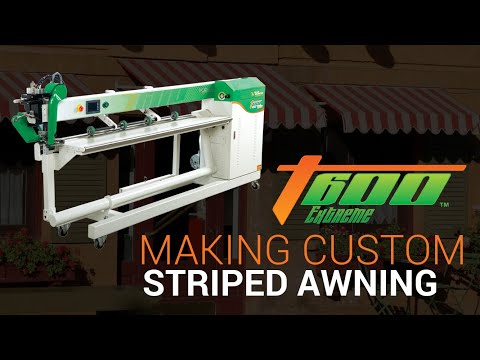
Hot wedge is the go-to technology for shops running the same product repeatedly at volume — tarps, flat covers, large awning panels, shade cloth. The consistency advantage compounds over large runs. Miller Weldmaster's T300 Shade and T600 Shade weld at up to 30 meters (100 feet) per minute, depending on the material and application.
Impulse Welding Equipment for Acrylic and Specialty Fabric Applications
Impulse Welding Equipment for Acrylic and Specialty Fabric Applications
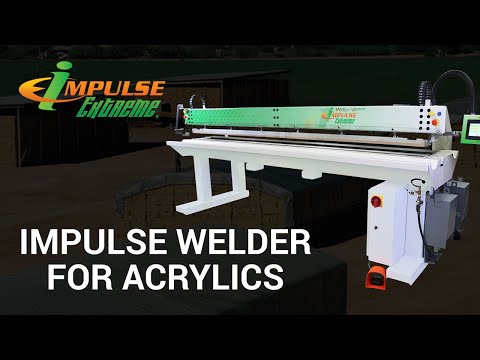
Impulse welding uses a short, controlled burst of electrical resistance heat applied directly to the seam area, followed by immediate cooling under pressure. This heat-cool cycle produces a precise, clean weld. The process is well-suited for materials that respond poorly to sustained heat or where seam appearance is as important as seam strength.
Best For
- Acrylic fabrics and specialty textiles
- Applications where seam aesthetics are a primary concern
- Decorative hems, folds, and finished edges on premium products
- Storefront awnings and high-visibility installations where finish quality is judged by the customer
Core Benefits
- Clean, crisp seam appearance with tight tolerances
- Precise heat control prevents material distortion or discoloration
- Suitable for delicate or specialty fabrics that can't tolerate high sustained temperatures
- Consistent results on smaller seam runs and decorative work
Impulse is often the right choice when the product is going into a visible commercial location, a high-end residential project, or a marine application where aesthetics match performance in the customer's buying criteria. It complements hot air or hot wedge setups in a shop that serves multiple market segments.
Which Miller Weldmaster Welding Technology Fits Different Awning, Shade & Marine Needs
Hot air is the usual starting point for custom and marine work, hot wedge for long, straight seams at volume, and impulse for short, crisp seams where the finish matters most. The table below matches common awning, shade and marine products to a starting technology.
These are starting points, not rigid rules. A shop producing marine covers from PVC may run the same hot wedge machine as a shade cloth producer. A custom awning shop making high-end residential products may prefer impulse over hot air for the finish quality. The best recommendation always comes after reviewing your specific materials, product mix, and throughput requirements. For step-by-step methods, heat settings and seam strength tips, see our guide on how to weld awning fabric.
| Application | Production Context | Recommended Starting Point |
|---|---|---|
| Custom awning fabrication | Varied seam types, multiple fabrics, moderate volume. | Hot Air — flexibility first. |
| Storefront and commercial awnings | Clean finish critical, acrylic common, custom sizing. | Impulse or Hot Air depending on material. |
| High-volume flat panel production | Straight seams, PVC or vinyl, repeat runs. | Hot Wedge — speed and consistency. |
| Marine enclosures and covers | Complex geometry, marine-grade fabrics, weather critical. | Hot Air; material testing recommended. |
| Shade sails and tensile structures | Large panels, structural seam requirement, varied materials. | Hot Wedge for straight runs; Hot Air for varied seam paths. |
| Bimini tops and boat enclosures | Appearance and waterproofing both critical. | Hot Air or Hot Wedge depending on material and seam type. |
| Premium residential and decorative | Finish quality primary, acrylic common. | Impulse for clean aesthetics. |
Maintenance, Training, and Support: What Really Impacts Long-Term ROI
Operator Training and Adoption
A machine that operators can't use confidently produces inconsistent results regardless of its specifications. Proper training on setup, parameter adjustment, changeover procedures, and basic troubleshooting is not optional — it's what converts a capital purchase into productive output. Ask every manufacturer what training is included with purchase and what ongoing training resources are available.
Preventative Maintenance
Welding machines that run consistently require scheduled maintenance. Pressure components, temperature sensors, feed mechanisms, and contact surfaces all wear over time. Preventive maintenance — not just reactive repair — is what keeps seam quality consistent over the machine's life. Machines designed for easy maintenance access reduce the time and skill required to keep them in spec.
Service
When something needs attention, response time matters — especially in production environments with order commitments. Ask manufacturers specifically about service delivery: Is support available remotely? What are typical lead times for parts? Is on-site service available? For shops operating on tight timelines, the difference between a one-day resolution and a two-week wait is a real business impact.
Support Access
Support is not an afterthought. It is part of the investment — and it deserves the same evaluation rigor as the machine specifications themselves. A reliable machine from a manufacturer with strong support is worth more over five years than an equivalent machine from a manufacturer with poor service availability.
How Miller Weldmaster Supports Awning, Shade & Marine Fabricators
Miller Weldmaster manufactures hot air, hot wedge, and impulse welding equipment designed specifically for industrial fabrics and thermoplastic applications. The product line covers everything from precision machines for custom fabrication to automated systems for high-volume production. For awnings, the range also includes radio frequency welders and automated sewing systems.
Miller Weldmaster awning welding machines include:
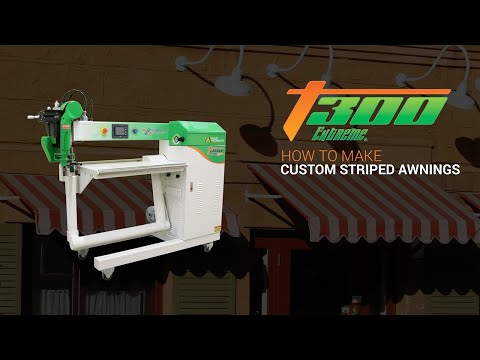
- T300 Shade: hot air and hot wedge welder for PVC or acrylic awnings, shades and marine products
- T600 Shade: hot air and hot wedge welder with added fabric handling support
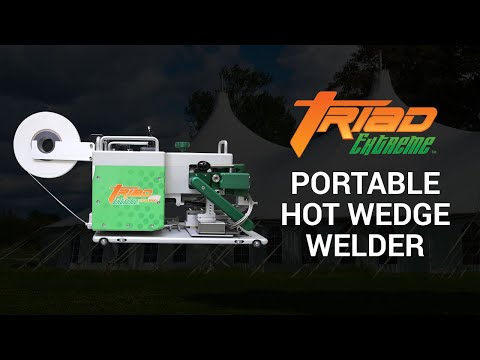
- Triad Extreme Awning: portable hot wedge welder that works stationary or travels on a table-top track
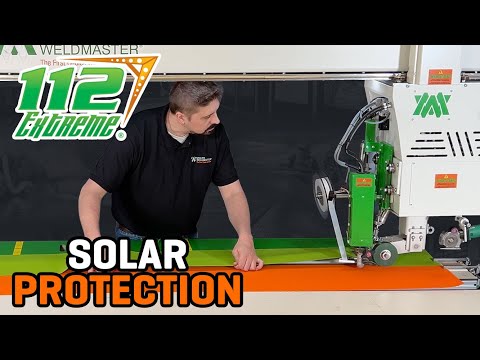
- 112 Extreme: hot air welder for long, straight seams
- Impulse Extreme: impulse welder for acrylic awnings and shades
- RFlex and RFlex Travel: radio frequency welders for PVC and PU fabrics, the Travel model for large-scale work
- Digitran: automated sewing machine for awnings and shades that are sewn rather than welded
See every awning machine in the machine finder.
What Working with Miller Weldmaster Delivers
- Strong, consistent seam quality across materials and seam types
- Increased production throughput with less manual labor per seam foot
- Reduced dependence on skilled sewing labor for performance-driven products
- Scalable manufacturing solutions from small shop to industrial production
- Equipment that matches your actual materials and production environment
Support Capabilities
- Free weld tests on a sample of your material before you buy
- Process and application guidance — matching technology to your specific product mix
- Equipment integration support for shops adding welding to existing workflows
- Training for operators at setup, parameter tuning, and ongoing use
- Global service network with access to parts and technical support
With decades of expertise across industrial fabric applications, Miller Weldmaster helps fabricators bring production in-house, improve seam quality, and scale with confidence — not just sell a machine, but help them explore the right equipment and solutions for the job.
Get in touch to discuss your application.