

Single ply roof membranes have become one of the most popular roofing systems for many reasons including:
- Flexibility
- Lightweight
- Durability and longevity
- Easy to maintain
- Easy to install
- Competitive price
- Environmentally friendly
- Energy efficient
Single ply roof membranes are typically categorized as thermoplastic membranes. One of the key benefits of thermoplastic membranes is the ability to heat weld their seams and create a permanent seal. Our guide explains how hot air welding works.
The two most common thermoplastic single ply roof membranes are Polyvinyl Chloride (PVC) and Thermoplastic Olefin (TPO). These membranes are usually offered in white or light colors because the lighter colors reflect sunlight before it can be absorbed, potentially reducing building cooling costs. See our roofing membrane welding machines for PVC and TPO.
PVC and TPO membranes typically include a reinforcing layer which provides increased strength and stability. Inherently fire-resistant, PVC membranes are typically reinforced with polyester or fiber-glass, and contain various additives such as plasticizers to impart flexibility. Usually a blend of polypropylene and ethylene-propylene rubber, TPO membranes are typically reinforced with polyester and contain additives such as flame-retardants and UV absorbers.
These membranes share the same range of sheet widths - 6 to 12 feet - and thickness - 45 mils to 90 mils. When they are installed, a properly executed heat seam is critical to their durability and longevity. Roofers make these seams with hot air welding, which melts the membrane surfaces with heated air and presses them into one watertight seam.
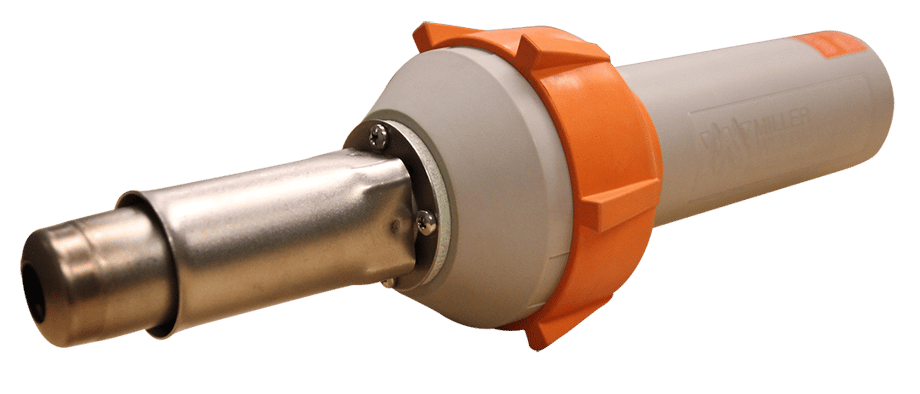
For repair and finish work on the roof, Miller Weldmaster's EliteAir hand roof welder heat welds roofing membrane seams. Roofing manufacturers who weld membrane panels in-house use the TG3600, the T300 Flex or a Moduline Geomembrane Multi-Roll line.
Contact one of our roofing specialists to find the right machine for your TPO roof membrane or PVC roof membrane welding application.