When a sign shop begins producing billboard panels, large-format building wraps, or architectural display graphics, the challenge shifts beyond welding itself. Materials become larger, seam lengths increase, and moving oversized panels through a traditional stationary RF press can become a significant production bottleneck.
An RF welder for banners and signs uses radio frequency energy to fuse compatible materials such as PVC and polyurethane (PU) from within, creating a hermetic, weather-resistant seam that is nearly invisible. While both stationary and traveling RF systems utilize the same welding technology, the workflow is fundamentally different.
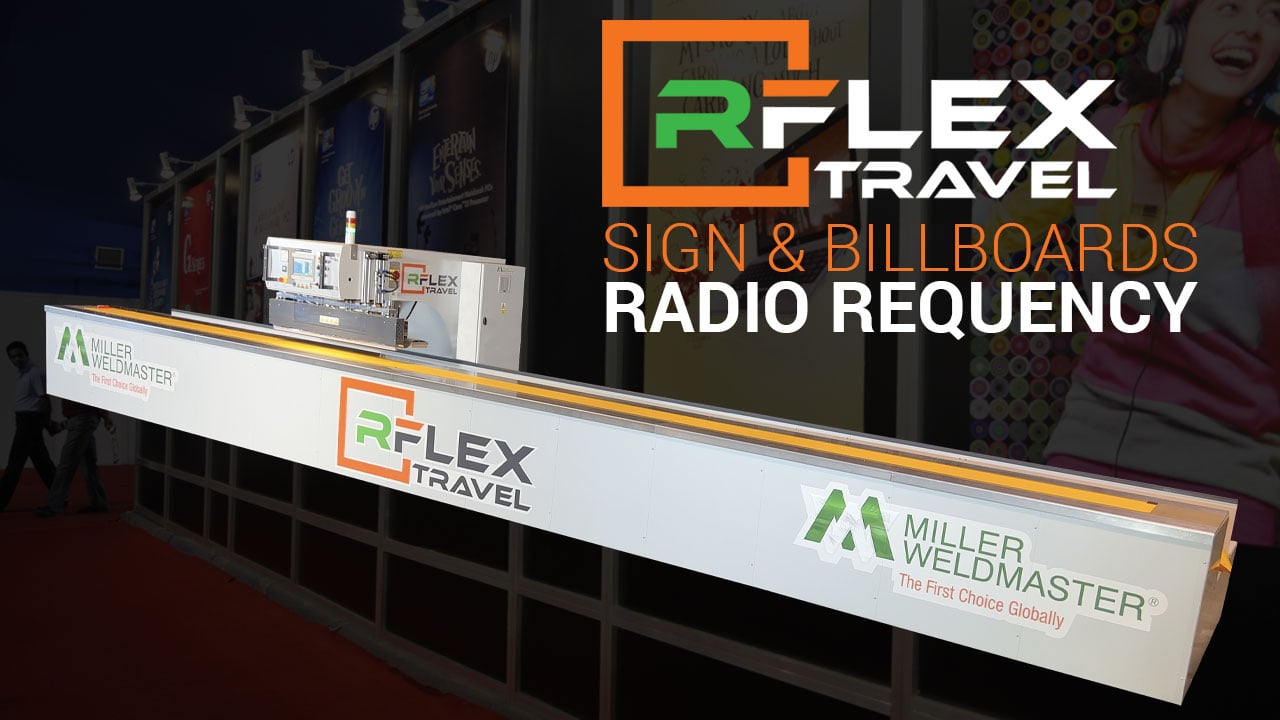
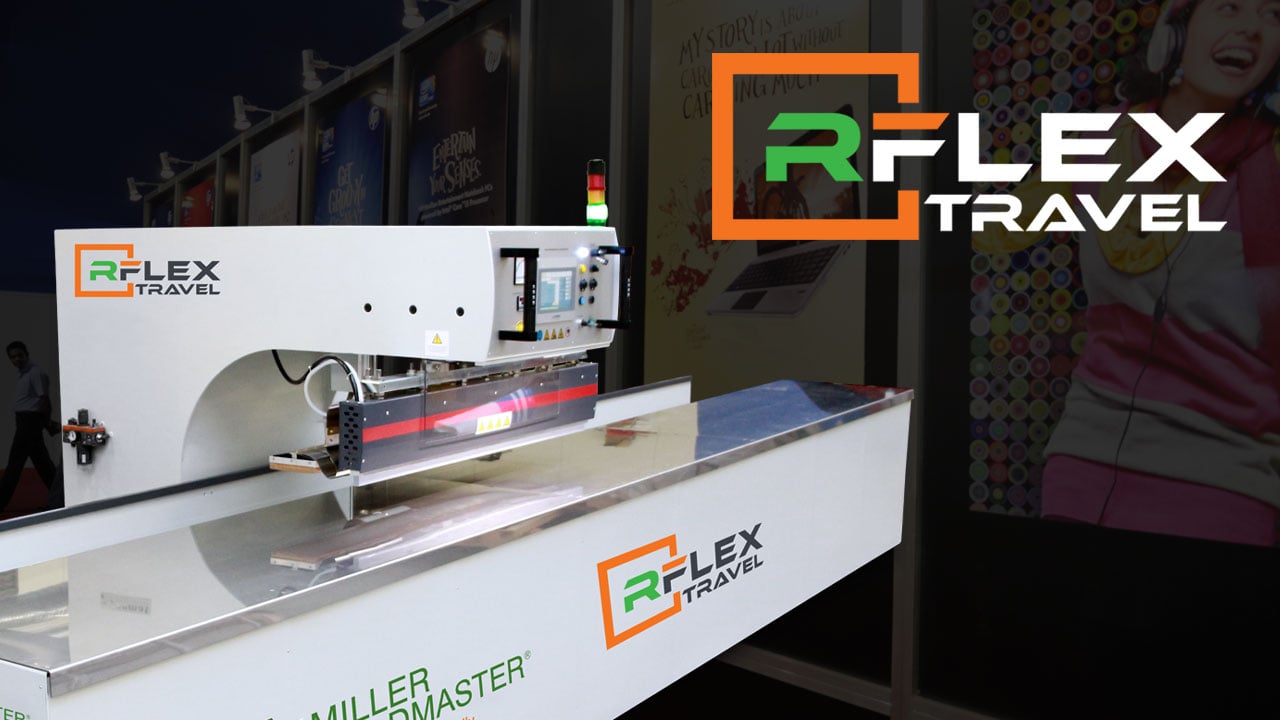
With the Miller Weldmaster RFlex Travel, the material remains stationary on the worktable while the RF welding head travels along a precision track across the seam. This design minimizes material handling, improves seam alignment, and makes processing large-format graphics significantly more efficient.
Whether you're producing billboard faces, architectural graphics, or oversized banner panels, understanding when a traveling-head RF system provides an advantage can help you improve productivity and product quality.
Key Takeaways
- RF welding creates hermetic, waterproof seams by generating heat inside compatible materials instead of applying heat to the surface.
- The RFlex Travel is a stationary production machine featuring a welding head that travels along a precision track while the material remains flat on the worktable.
- Keeping material stationary reduces handling challenges associated with large-format graphics and improves seam consistency across long welds.
- RF welding is designed for compatible polar thermoplastics, including PVC and PU materials commonly used in sign and banner manufacturing.
- The RFlex Travel is a permanent production installation requiring proper facility planning, electrical service, compressed air, and professional installation.
What Is an RF Welder for Banners and Signs?
An RF welder for banners and signs is an industrial machine that uses radio frequency (RF), also known as high-frequency (HF), energy to permanently bond thermoplastic materials. Unlike hot air or hot wedge welding—which heats the material surface—RF welding generates heat internally by exciting the molecules within compatible materials.
This process produces:
- Airtight seams
- Waterproof welds
- Strong, structurally continuous bonds
- Clean, nearly invisible seam lines
For outdoor applications where products are subjected to wind, moisture, UV exposure, and years of environmental stress, RF welding delivers the durability and appearance many specifications require.
How RF Welding Works
During an RF welding cycle:
- Material is positioned between upper and lower electrodes.
- Radio frequency energy passes through the material.
- Polar molecules rapidly oscillate, generating heat internally.
- Pressure is applied while the material fuses.
- After cooling, a permanent weld is formed.
Because heat is generated within the material rather than on its surface, RF welding produces extremely consistent weld quality from start to finish.
Materials Compatible with RF Welding
RF welding requires polar thermoplastic materials that respond to electromagnetic energy.
Common materials include:
- Scrim-reinforced PVC vinyl
- Blockout PVC
- Polyurethane (PU) coated fabrics
- Many technical coated textiles used in architectural graphics
Materials such as polyester, nylon, and other non-polar fabrics cannot be RF welded and should instead be processed using hot air or hot wedge technologies. Always verify material compatibility before selecting RF welding as your primary production method.
RF Welding vs. Hot Air Welding
Both technologies produce strong seams, but each serves different manufacturing needs.
| Feature | Hot Air / Hot Wedge | RF Welding |
|---|---|---|
| Heat Source | External heat | Internal RF energy |
| Seam Quality | Strong surface bond | Hermetic, waterproof bond |
| Appearance | Visible seam | Nearly invisible seam |
| Compatible Materials | Many thermoplastics | PVC and PU |
| Best Applications | Standard banners, hems, pole pockets | Billboard faces, building wraps, architectural graphics |
| Material Handling | Material moves through machine | Material remains stationary while welding head travels |
For everyday banner finishing, hot air welding remains an excellent solution.
For large-format graphics where weather resistance, seam appearance, and structural integrity are critical, RF welding provides advantages that surface-heating technologies cannot replicate.
Why the RFlex Travel Changes the Workflow
The biggest difference between the RFlex Travel and a traditional RF press isn't the weld quality—it's how material moves through production.
Material Stays in Place
With many traditional RF presses, operators feed material through a fixed welding station.
The RFlex Travel works differently.
The machine itself remains permanently installed while the RF welding head travels along a precision linear track over the stationary material. Operators simply position the panel on the worktable, align the seam using laser guides, and begin the welding cycle.
This approach greatly simplifies handling of oversized graphics that would otherwise require multiple operators or extensive staging.
Improved Handling of Large Panels
Large billboard panels and building wraps can be difficult to move through conventional equipment.
Keeping the material stationary helps:
- Reduce operator fatigue
- Minimize panel shifting
- Improve seam alignment
- Simplify production of oversized graphics
Rather than managing material movement throughout the weld, operators focus on accurate positioning before the cycle begins.
Consistent Weld Quality Across Long Seams
Maintaining consistent pressure and alignment over long welds is critical for outdoor products.
The RFlex Travel's precision-controlled traveling head maintains consistent welding parameters throughout the entire seam, helping deliver uniform weld quality from beginning to end.
For manufacturers producing billboard faces, architectural graphics, or building wraps, this consistency helps reduce rework while improving finished product quality.
RFlex Travel vs. Stationary RFlex
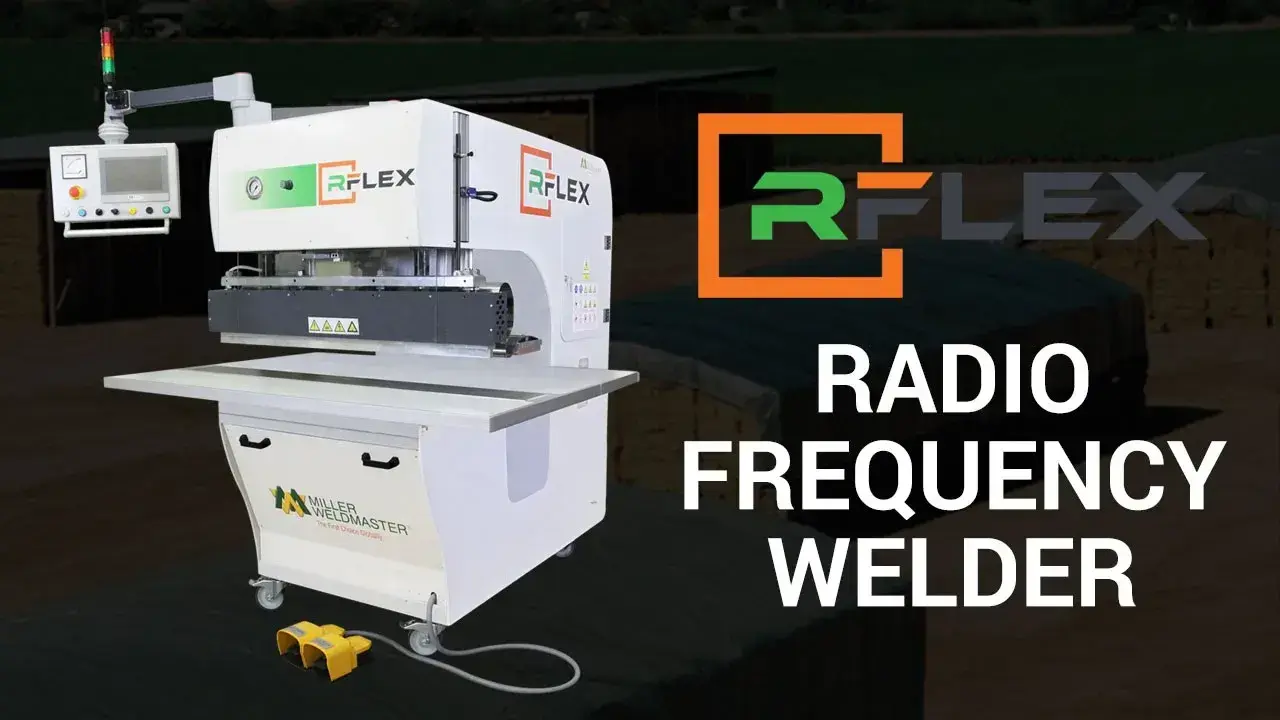
Both Miller Weldmaster RF systems utilize the same RF welding technology and produce the same high-quality hermetic welds.
The primary difference is workflow.
Stationary RFlex
Best suited for:
- Medium-sized panels
- Standard production runs
- Operations where material can be efficiently fed through the welding station
RFlex Travel
Ideal when:
- Panels become exceptionally large
- Material handling limits productivity
- Long seam runs are common
- Oversized graphics require improved workflow
The decision isn't about weld quality—it's about selecting the workflow that best matches your production environment.
When Should a Sign Shop Consider RF Welding?
RF welding makes the most sense when your production includes:
- Billboard faces
- Building wraps
- Architectural graphics
- Large outdoor displays
- High-value graphics where seam appearance matters
- PVC and PU material production
Hot air welding continues to be the preferred solution when:
- Producing standard banner hems
- Running mixed material types
- Processing polyester or mesh fabrics
- Maximizing throughput on everyday banner production
Choosing the right technology depends on your products, materials, production volume, and customer specifications.
Facility Requirements
The RFlex Travel is a permanent production system and should be planned accordingly.
Typical considerations include:
- Dedicated floor space
- Proper electrical service
- Compressed air connection
- Material staging area
- Professional installation
- Operator training
Planning these requirements early helps ensure a smooth installation and faster production startup.
Optional FREEWeld Technology
The RFlex Travel can also be configured with FREEWeld, an option that allows welding without requiring the grounding foot to maintain complete flat contact with the work surface.
This expands the machine's flexibility for products with challenging shapes or seam configurations while maintaining RF weld quality.
Is the RFlex Travel Right for Your Shop?
If your production regularly includes oversized PVC graphics, billboard panels, building wraps, or architectural displays, the RFlex Travel offers a workflow designed specifically for those applications.
By keeping the material stationary while the RF welding head travels across the worktable, manufacturers can simplify handling, improve seam consistency, and increase efficiency on large-format products.
The best machine depends on your material mix, panel sizes, production volume, and workflow requirements. Miller Weldmaster's application specialists can help determine whether the RFlex Travel or the stationary RFlex is the best solution for your operation.
Frequently Asked Questions
What is an RF welder for banners and signs?
An RF welder uses radio frequency energy to permanently fuse compatible PVC and PU materials, creating airtight, waterproof seams that are stronger and cleaner than traditional surface-heated welds.
What is the difference between the RFlex Travel and a stationary RF press?
The RFlex Travel keeps the material stationary while the RF welding head moves along a precision track. A stationary RF press requires the material to be moved through a fixed welding station.
What materials can be welded?
The RFlex Travel is designed for compatible polar thermoplastics, including PVC and polyurethane-coated materials commonly used in sign, banner, and architectural graphics production.
Does RF welding produce stronger seams than hot air welding?
RF welding creates hermetic, structurally continuous seams with excellent weather resistance and a nearly invisible appearance, making it ideal for demanding outdoor applications.
Is the RFlex Travel portable?
No. The RFlex Travel is a stationary industrial production machine that is permanently installed. While the welding head travels along the machine's precision track, the machine itself remains fixed in place.
When should a shop invest in RF welding?
RF welding becomes an excellent investment when production consistently includes large-format outdoor graphics, billboard faces, building wraps, or architectural applications where seam quality and appearance are critical.