Selecting the right fabric welding equipment can make or break your production efficiency. Whether you manufacture tarps, awnings, geomembranes, or technical textiles, the decision between a standard machine and a custom automated welding system affects everything from output quality to long-term profitability.
This guide walks you through the key factors industrial fabric manufacturers need to consider when evaluating welding equipment. Miller Weldmaster delivers industry-leading welding solutions that help you match your material requirements, production volumes, and integration needs with the right technology.
By the end of this article, you'll understand exactly how to assess your production environment and make an informed equipment decision that supports your growth objectives.
Key Takeaways: How to Choose Fabric Welding Systems in 2026
- Standard welding machines work well for established processes with consistent material types and moderate production volumes.
- Custom automated systems make sense when you need specialized seam configurations, high throughput, or integration with existing equipment.
- Material compatibility is the first filter: your fabric type dictates which welding technologies will produce reliable bonds.
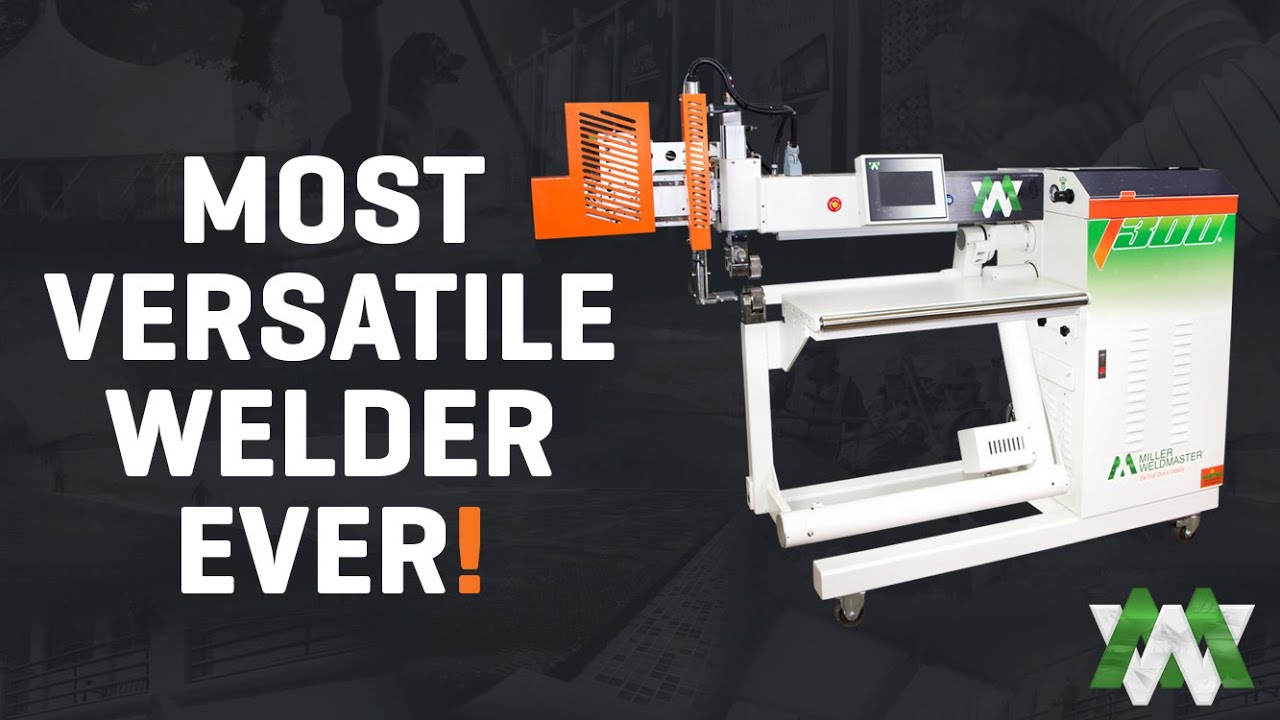
- Miller Weldmaster offers both standard and custom automated solutions with over 7,000 machines installed globally.
- Production volume, labor availability, and future scalability should all factor into your system selection process.
What Is the Difference Between Standard and Custom Automated Welding Systems?
Standard fabric welding machines are pre-engineered units designed for common applications. These machines typically handle overlap welding, hem creation, and basic seam configurations. They come ready to operate with minimal setup time and work well for manufacturers with straightforward production requirements.
Custom automated welding systems, on the other hand, are engineered specifically for your production line. These systems combine multiple processes into integrated workflows. They can include material handling, cutting, welding, and finishing operations all in one automated sequence.
The core distinction comes down to flexibility versus specialization. Standard machines offer proven performance across a wide range of applications. Custom systems maximize efficiency for specific, high-volume production scenarios where every second of cycle time matters.
How Do You Determine Which Welding Technology Fits Your Application?
Your material type is the starting point for every equipment decision. Different thermoplastics respond to different welding methods, and choosing the wrong technology leads to weak bonds, material degradation, or production failures.
Hot Air Welding Applications
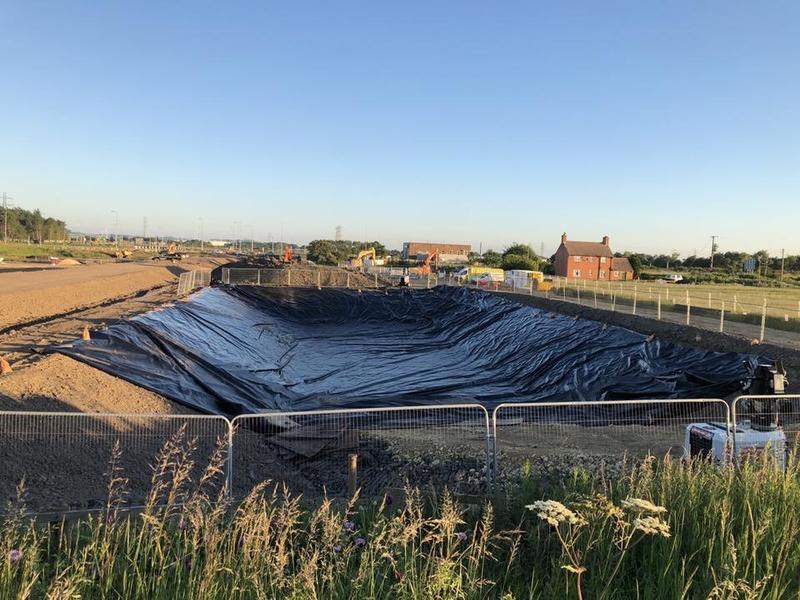
Hot air welding directs heated compressed air between fabric layers at the weld point. This method works exceptionally well for PVC-coated materials, polyethylene, and polypropylene fabrics. Applications range from truck tarpaulins and tent structures to flexible ducting and geomembrane liners.
The adaptability of hot air technology makes it a go-to choice for manufacturers working with multiple material types. Temperature and air pressure can be adjusted to accommodate varying fabric thicknesses without compromising seam integrity.
Hot Wedge Welding Applications
Hot wedge systems use a heated metal element positioned directly at the weld point. This technique excels at producing long, consistent straight seams with precise temperature control. Hot wedge welding is particularly effective for applications requiring exact seam placement, such as pool covers, protective barriers, and industrial curtains.
Manufacturers producing geosynthetics and containment products often prefer hot wedge technology because it minimizes thermal stress on surrounding material while creating strong, repeatable bonds.
Radio Frequency Welding Applications
RF welding uses electromagnetic energy to fuse thermoplastic materials from the inside out. This technology produces exceptionally strong bonds for flexible PVC and polyurethane materials. Radio frequency welding handles complex shapes and intricate patterns that other methods cannot match.
The precision of RF welding makes it ideal for medical products, inflatable structures, and high-performance technical textiles where seam quality directly impacts product safety and function.
What Material Factors Should You Evaluate Before Selecting Equipment?
Material compatibility goes beyond simply knowing what type of fabric you're working with. You need to consider thickness variations, coating types, and how your materials respond to different heat sources.
Assessing Fabric Thickness and Composition
Fabric thickness affects welding parameters including temperature settings, pressure requirements, and feed speeds. Thinner materials need lower heat to prevent burn-through or distortion. Heavier industrial fabrics require more energy to achieve full penetration and proper fusion.
When your production involves multiple material weights, you'll need equipment capable of quick parameter adjustments. Some standard machines handle this variation through programmable settings. Custom systems can automate these adjustments based on sensor feedback during operation.
Understanding Coating and Laminate Requirements
Coated and laminated fabrics present specific welding challenges. The coating composition determines melting behavior, and inconsistent coatings can lead to weak spots in finished seams. Weldable materials include vinyl-coated polyester, PVC laminates, polyurethane films, and various technical textiles.
Miller Weldmaster engineering teams analyze your specific materials before recommending equipment. This analysis ensures the welding technology matches your coating chemistry and produces reliable bonds under production conditions.
When Does a Standard Welding Machine Make Sense?
Standard machines offer the fastest path to production for manufacturers with well-defined applications. These units arrive with optimized settings for common material and seam combinations. Installation typically takes days rather than weeks, and operator training follows established protocols.
Ideal Production Scenarios for Standard Equipment
Standard welding machines fit well when you're producing established product lines with consistent specifications. If your seam types are straightforward and your material remains constant batch to batch, a standard unit delivers reliable performance without custom engineering costs.
Manufacturers adding welding capability for the first time often start with standard equipment. These machines help you understand your true production requirements before investing in custom solutions.
Evaluating Volume and Throughput Requirements
Production volume plays a significant role in equipment selection. Standard machines handle moderate throughput efficiently, but they have practical limits. When you need to produce thousands of units daily with minimal operator intervention, custom automation becomes more cost-effective.
Consider your growth trajectory as well. A standard machine that meets today's needs might become a bottleneck within two years. Factor anticipated demand increases into your equipment decision.
When Should You Consider Custom Automated Welding Systems?
Custom automation makes sense when standard equipment cannot meet your specific production requirements. Custom automated systems address unique challenges that off-the-shelf machines weren't designed to handle.
Specialized Seam Configurations and Product Geometries
Some products require seam patterns, attachment points, or dimensional tolerances that standard machines cannot achieve. Custom systems incorporate specialized fixtures, tooling, and process sequences engineered for your exact specifications.
Miller Weldmaster has delivered over 250 custom automated machines worldwide. These solutions handle everything from spiral duct fabrication to complex inflatable structures with multiple seam types in a single production pass.
Integration with Existing Production Lines
Custom systems can integrate directly with your current material handling, cutting, and finishing equipment. This integration eliminates manual transfer steps, reduces work-in-process inventory, and improves overall line efficiency.
When you're looking to automate an entire production workflow rather than a single operation, custom engineering ensures all components work together. The result is a unified system optimized for your specific output requirements.
High-Volume Production Economics
At sufficient volume, the efficiency gains from custom automation offset higher initial equipment costs. Automated systems reduce labor requirements, minimize operator fatigue, and maintain consistent quality across extended production runs.
Calculate your cost per unit under both scenarios. Include labor, material waste, rework rates, and downtime in your analysis. For many high-volume applications, custom automation delivers payback within 18 to 24 months.
How Do You Evaluate Automation Levels for Your Production Environment?
Automation isn't binary. Equipment ranges from manually operated tabletop units to fully automated production cells with robotic material handling. The right automation level depends on your current situation and where you want your operation to be in five years.
Manual and Semi-Automatic Options
Manual welding tools and semi-automatic machines require constant operator involvement. They work well for prototype development, small batch production, and field repair applications. Labor costs are higher per unit, but initial equipment investment is lower.
Semi-automatic machines automate the welding process while operators handle material positioning and product transfer. This middle ground reduces physical strain on workers while maintaining flexibility for product changeovers.
Fully Automated Production Systems
Fully automated systems handle material from raw input through finished product with minimal operator intervention. These systems incorporate sensors, programmable controls, and often robotic components to maintain consistent throughput without manual assistance.
The investment in full automation pays off when you need to scale production without proportionally increasing headcount. Automated systems also reduce quality variability that comes from operator fatigue and shift changes.
What Role Does Technical Support Play in Equipment Selection?
The equipment purchase is just the beginning of your relationship with a welding technology provider. Installation quality, operator training, and ongoing support directly impact how well your system performs over its operational life.
Installation and Training Considerations
Proper installation ensures your machine operates at specified parameters from day one. Miller Weldmaster field service engineers handle complete machine setup and verify performance with your actual production materials before sign-off.
Operator training determines how quickly you reach full productivity. Training programs cover equipment operation, parameter adjustment, troubleshooting, and preventive maintenance. Well-trained operators maximize machine uptime and product quality.
Ongoing Service and Parts Availability
Production equipment eventually needs maintenance and repair. Before purchasing, understand your supplier's service infrastructure. How quickly can technicians reach your facility? Are replacement parts stocked domestically? What remote diagnostic capabilities exist?
Miller Weldmaster maintains over 150,000 hours of field service experience and operates a dedicated resolution center for lifetime support. This infrastructure keeps your machines running at peak performance.
How Do You Calculate Return on Investment for Welding Equipment?
Equipment investment decisions require clear financial analysis. Both standard and custom systems represent capital outlays that must generate returns through improved productivity, quality, or reduced operating costs.
Quantifying Productivity Improvements
Measure your current production rate and estimate what new equipment will achieve. Account for faster cycle times, reduced setup between products, and decreased rework rates. Convert these improvements into units produced per shift or per month.
For custom automation projects, Miller Weldmaster engineers help you model expected productivity gains based on your specific products and volumes. These projections inform realistic payback calculations.
Factoring Labor and Operating Costs
Labor represents a significant portion of manufacturing cost. Automated systems reduce operator hours per unit produced. Calculate your current labor cost per unit and project how automation changes that number.
Operating costs include energy consumption, consumables, and maintenance. Different welding technologies have different operating profiles. Factor these ongoing expenses into your total cost of ownership analysis.
What Questions Should You Ask Potential Equipment Suppliers?
Equipment selection involves more than comparing specifications. You're choosing a long-term partner for technology support, application expertise, and production optimization.
Application Experience and References
Ask about specific experience with your industry, materials, and product types. Request references from manufacturers with similar applications. A supplier with relevant experience can anticipate challenges and recommend proven solutions.
Miller Weldmaster serves over 5,000 customers across more than 15 industries including tarpaulins, awnings, geomembranes, and tent structures. This breadth of experience translates to practical knowledge about what works in real production environments.
Customization Capabilities and Lead Times
Understand what modifications are available for standard equipment and what timeline custom solutions require. If you need capability that doesn't exist off-the-shelf, confirm the supplier has engineering resources to develop new solutions.
Custom automated system projects typically take several months from concept through installation. Get a realistic schedule that accounts for design, fabrication, testing, and your facility preparation requirements.
How Do You Prepare Your Facility for New Welding Equipment?
Successful equipment implementation starts before the machine arrives. Facility preparation, operator selection, and workflow planning all contribute to how quickly you achieve target productivity.
Space and Infrastructure Requirements
Welding equipment requires adequate floor space, power supply, and compressed air infrastructure. Standard machines typically have modest footprints and utility requirements. Custom automated systems may need significant floor space and higher electrical capacity.
Review equipment specifications early in your selection process. Identify any infrastructure upgrades needed and factor those costs and timelines into your project plan.
Workflow Integration Planning
Map how new equipment fits into your existing production flow. Where do materials come from? Where do finished products go? Who handles quality inspection? Answering these questions before installation prevents bottlenecks after startup.
For automated systems, consider how operators will interact with the equipment. Emergency stop access, material loading positions, and maintenance access points all affect daily operations.
In Conclusion: Matching Your Production Needs with the Right Welding System
The choice between standard and custom automated welding systems comes down to understanding your specific production requirements. Standard machines offer proven performance and faster deployment for common applications. Custom systems maximize efficiency for specialized, high-volume scenarios.
Start by analyzing your materials, volumes, and growth projections. Evaluate automation levels based on labor availability and quality consistency requirements. Consider the total cost of ownership including support and parts availability.
Miller Weldmaster brings nearly 50 years of fabric welding expertise to help you make the right decision. Contact our team to discuss your application and explore which solution fits your production goals.
FAQs About Choosing Fabric Welding Systems in 2026
What is the primary difference between standard and custom fabric welding machines?
Standard machines are pre-engineered for common applications and arrive ready to operate. Custom automated systems are designed specifically for your production requirements, often integrating multiple processes into unified workflows. Miller Weldmaster offers both options with over 7,000 installations supporting manufacturers worldwide.
How do I know if my materials are compatible with a specific welding technology?
Material compatibility depends on the thermoplastic composition, coating type, and thickness of your fabrics. PVC, polyethylene, polypropylene, and polyurethane materials each respond differently to hot air, hot wedge, and RF welding. Miller Weldmaster engineers analyze your specific materials to recommend the right technology match.
When should I consider upgrading from standard equipment to custom automation?
Consider custom automation when your production volumes outgrow standard machine capacity, when you need specialized seam configurations, or when integration with existing equipment would improve efficiency. Calculate whether labor savings and throughput gains justify the additional investment.
What training is included with new welding equipment?
Miller Weldmaster includes operator training with every installation. Field service engineers train your team on machine operation, parameter settings, and maintenance procedures. Teams receive hands-on practice with actual production materials before technicians complete the installation.
How long does implementation take for custom automated systems?
Custom automation projects typically require several months from initial consultation through installation. The timeline includes facility assessment, concept design, engineering, fabrication, testing, and on-site installation with training. Miller Weldmaster coordinates scheduling to align with your production planning requirements.