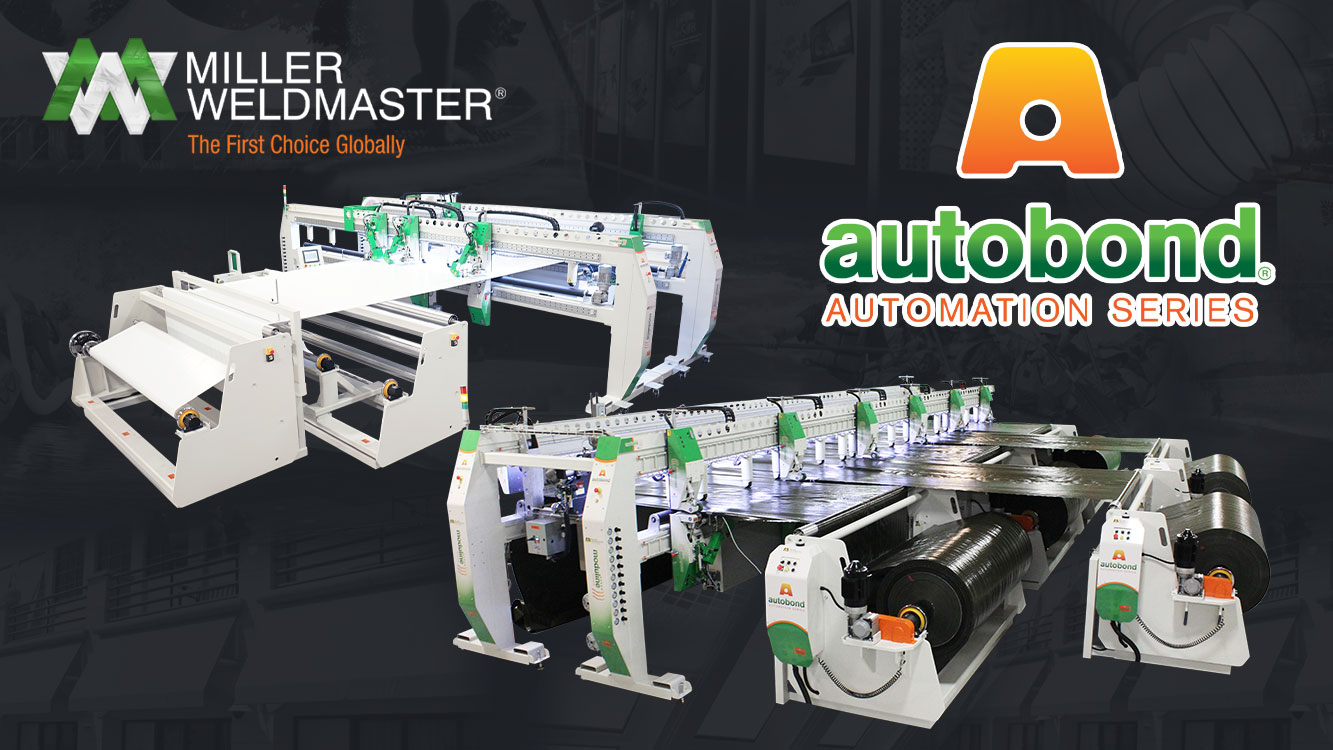
A moduline welding system is an automated, modular fabric welding production line designed for high-volume industrial textile manufacturing. As an automated welding production system, it offers product versatility and is built to accommodate multi roll production for any size liner or cover, making it ideal for diverse manufacturing needs.
Manufacturers use the Moduline system to move fabric through a controlled welding process with repeatable alignment, heat, and pressure. Miller Weldmaster is a company with a global presence, having sold machines in over 100 nations and with distributors in 20 countries. The system supports continuous production while reducing handling between steps.
This type of automated welding line is used by production managers, operations teams, and manufacturing engineers responsible for the production of large-scale items such as geomembranes, billboard banners, tents, and truck tarps. Learn more about the system design and capabilities on the Moduline welding system page.
The Moduline system is a fully automated solution designed to increase business profits by maximizing throughput and offering solutions tailored to customer production demands. It is customizable in width and the number of unwinds/rewinds to fit specific manufacturer requirements.
The Moduline system offers precise control over heat, speed, and pressure, and is equipped with multiple production heads for simultaneous panel outputs. It allows for increased production speeds compared to manual or sewing methods and can operate with minimal supervision for long periods.
What the system does:
-
Automates long seam fabric welding
-
Supports repeatable, high-volume production runs
-
Handles large panels used in tarpaulins, tents, and covers
- Supports product versatility and meets diverse production demands
What Are Moduline Welding Systems?
Moduline welding systems are modular, automated fabric welding lines built for industrial textile production. Each system is configured from individual modules that perform specific steps in the welding process. Modular welding gantries provide exceptional versatility, allowing the system to accommodate different product sizes and seam types, and enabling flexible, continuous welding operations.
The systems are designed and manufactured by Miller Weldmaster and are used in environments where manual welding limits throughput, consistency, or scalability.
Core characteristics:
-
Modular production line layout
-
Automated fabric transport and welding
-
Configurable for different product sizes and workflows
- Incorporates modular welding gantries to enhance system versatility and enable flexible, automated welding processes
- Fully automated solution that can accommodate any seam type and offers cut to length options
How Does a Moduline Welding System Work?
A Moduline welding system moves fabric through a defined production flow from input to finished output.
-
Fabric panels are loaded into the system
-
Material is guided and aligned for welding
-
Welding modules join seams using controlled parameters. Advanced process controls optimize seam joining, cutting, and finishing operations to enhance quality and efficiency.
-
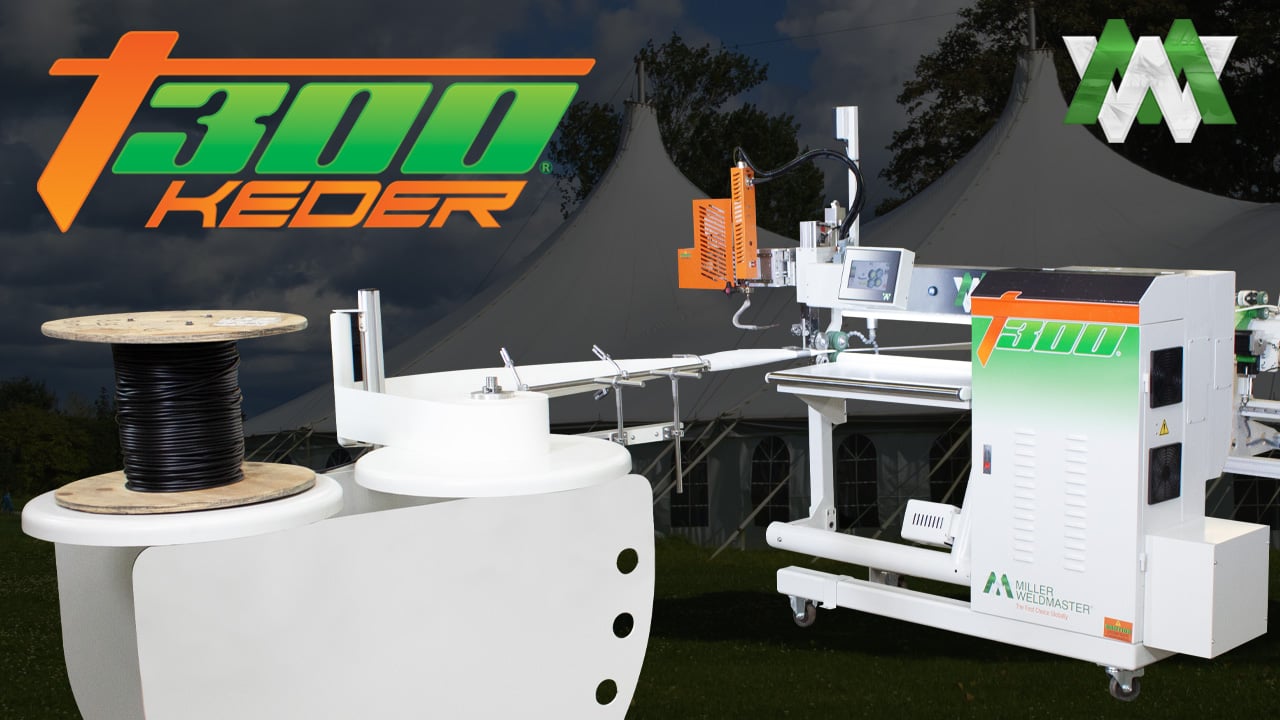
Optional inline steps are performed as needed. The system offers a range of finishing options, including automated grommet application with a fully automated inline grommet system, rotary cutting to length using a rotary cutter, and inline edge finishing with an automated Kedar cord and rope unwind mechanism.
-
Finished panels exit the line for stacking or downstream processing
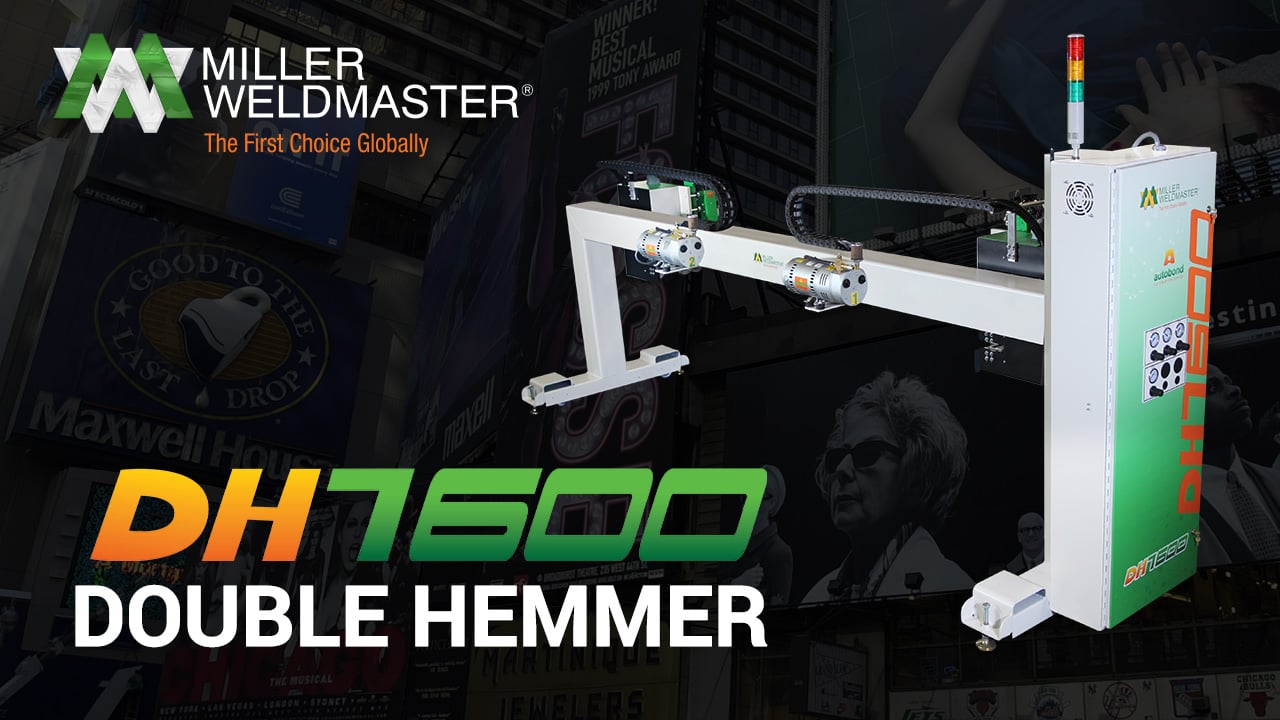
The Moduline system includes a PLC touch screen for easy recipe recall and machine control. It can perform multiple finishing tasks such as hem welding, grommet placement, and precision cutting in one pass.
What Problems Do Moduline Welding Systems Solve?
High-volume tarp and tent manufacturing presents challenges that increase as production scales. Manual processes often struggle with long seams, large panels, and consistent output across extended runs. The Moduline welding system addresses these issues by improving quality and efficiencies throughout the production process. Automated systems like the Moduline can operate with minimal supervision for long periods, maximizing throughput and allowing for increased production speeds compared to manual or sewing methods.
Common production challenges include:
-
Managing long, straight seam welding
-
Maintaining repeatability across multiple operators
-
Handling large fabric panels efficiently
-
Limiting variation during extended production cycles
Why Is Manual Tarp and Tent Welding Hard to Scale?
-
Operator-dependent seam consistency
-
Difficulty maintaining alignment over long welds
-
Throughput limits caused by stop-and-start processes
-
Increased handling between production steps
Where Do Quality Issues Typically Appear in Fabric Welding?
-
Seam width variation over long runs
-
Alignment drift between panels
-
Inconsistent heat or pressure application
-
Accumulated variation during high-volume production
How Are Moduline Welding Systems Used in Tarp Production?
In tarp manufacturing, Moduline welding systems support the welding of large panels with repeatable seam placement. The system allows manufacturers to run similar products in sequence without resetting for each panel, enabling efficient multiple roll production. With the ability to produce a wide array of products, Moduline offers manufacturers flexibility to meet diverse requirements.
Typical production flow:
-
Load tarp panels
-
Align fabric edges
-
Weld long straight seams
-
Output completed tarp sections
The Moduline welding system can weld multiple panels simultaneously to create large-scale products in a compact workspace. It operates as a roll-to-ship finishing system, taking raw material rolls, welding them into finished products, and rewinding them for shipping.
Automating Long Seam Welding for Large Tarps
Automated welding enables continuous motion across long seams. This reduces interruptions and helps maintain consistent seam formation from start to finish.
Key outcomes:
-
Controlled seam length
-
Stable welding motion
-
Reduced manual repositioning
How Are Moduline Welding Systems Used in Tent Manufacturing?
Tent manufacturing often involves welding multiple fabric panels into repeatable assemblies. Moduline systems help maintain alignment across panel joins and support consistent production output. The Moduline welding system can accommodate any seam type and offers cut to length options, providing flexibility for different production requirements.
Common tent fabrication uses:
-
Panel-to-panel welding
-
Repeated seam layouts
-
High-volume production of similar components
Welding Multiple Tent Panels at Scale
-
Aligning panels before welding
-
Welding consistent seam paths
-
Maintaining repeatability across runs
What Features Make Moduline Welding Systems Scalable?
Scalability in manufacturing depends on predictable output, controlled processes, and the ability to adapt production lines over time. Moduline systems are built around these principles. With the Moduline welding system, manufacturers can select multiple automation options to meet changing production needs, ensuring flexibility and customization for various production demands.
| Feature | Production Impact |
|---|---|
| Modular line layout | Supports staged expansion |
| Automated fabric transport | Reduces manual handling |
| Controlled welding parameters | Improves consistency |
| Configurable workflows | Adapts to product variation |
| Multiple automation options & system customization | Allows selection of automation features and customization in width and number of unwinds/rewinds to meet specific manufacturer needs |
Modular Design and Line Configuration
Each Moduline system is assembled from modules that can be arranged to match production needs. Miller Weldmaster has extensive expertise in welding equipment, designing specialized machines to meet customer automation needs while considering production and payback concerns. Additional modules can be added as output requirements change.
Modular advantages:
-
Flexible line layout
-
Expandable system design
-
Adaptable production flow
Consistent Weld Quality Across Long Production Runs
-
Controlled heat and pressure settings
-
Repeatable seam positioning
-
Reduced variation between cycles
- Modular upper and lower welding heads utilize hot air or hot wedge technology to fuse thermoplastic materials, ensuring consistent seam quality
How Does an Automated Welding Line Improve Production Efficiency?
Efficiency in automated welding lines comes from predictable flow and reduced material handling. Automation allows fabric to move through production with fewer interruptions, increasing efficiencies and business profits by maximizing throughput. Automated systems like the Moduline can operate with minimal supervision for long periods, further enhancing production performance and profitability.
| Manual Welding | Automated Welding |
|---|---|
| Frequent repositioning | Continuous material flow |
| Operator-dependent results | Process-controlled output |
| Stop-and-start production | Consistent line movement |
Reducing Rework and Material Waste in Fabric Welding
-
Stable welding parameters reduce variation
-
Fewer alignment errors during long runs
-
Improved repeatability lowers scrap risk
How Do Moduline Welding Systems Fit Into Industrial Textile Automation Trends?
Industrial textile manufacturing continues to move toward automation to improve repeatability and process control. Automated fabric welding supports higher output while maintaining consistent quality.
Manufacturers increasingly adopt modular automation to scale production without redesigning entire facilities. Moduline systems align with this shift by supporting gradual expansion and standardized processes. Miller Weldmaster offers comprehensive solutions for automation, including heat sealing technology and machine automation, designed to optimize production efficiency and profitability. Our dedicated team provides everything you need to get your team ready for installation and training, with training options available to help you optimize your use of the Moduline welding system.
How Miller Weldmaster Helps Manufacturers Implement Moduline Systems
Miller Weldmaster works with manufacturers to evaluate production needs, plan system layouts, and implement Moduline welding lines. Magnum Resources, as an authorized distributor, assists customers with setting up the Moduline system and meeting all servicing requirements. Support includes system design, factory testing, and long-term service assistance.
For manufacturers exploring automated fabric welding, consultations and demonstrations help determine the right system configuration for current and future production. After purchase, a Miller Weldmaster certified field service engineer will contact you to schedule installation and training at your facility. Our dedicated team provides your staff with extensive instruction on welding equipment operation, maintenance, and how to produce your product.
To get started, customers can fill out our contact form to begin the process.
Frequently Asked Questions About Moduline Welding Systems
What products can be made with Moduline welding systems?
Moduline welding systems are used to efficiently produce tarps, tents, industrial covers, liners, and other large welded fabric products. These systems enable manufacturers to produce custom-sized liners and covers with increased production speeds compared to manual or sewing methods. They support a wide range of panel sizes and seam lengths commonly found in industrial textile applications.
Are Moduline welding systems customizable?
Moduline systems are configurable using standardized modules. While the system layout and workflow can be tailored to production needs, configurations are based on proven modules rather than one-off custom designs.
The Moduline welding system can accommodate a wide range of project requirements, including different seam types, sizes, and production needs. It offers length options for automated cut-to-length adjustments, and is customizable in both width and the number of unwinds/rewinds to fit specific manufacturer needs.
Can Moduline welding systems support future production growth?
Yes. The modular design allows manufacturers to add or rearrange modules as production volume increases. This supports gradual expansion without replacing the entire welding line. The moduline welding system also supports multiple roll production, enabling manufacturers to scale and expand their operations efficiently as demand grows.
How does automation improve weld consistency?
Automation controls welding parameters such as heat, pressure, and speed. Integrated process controls further improve quality and consistency in the production process by monitoring and adjusting these parameters in real time. This reduces operator-to-operator variation and helps maintain consistent seam quality across long production runs.
Are Moduline welding systems suitable for first-time automation users?
Moduline systems are often used by manufacturers transitioning from manual to automated welding. Our dedicated team provides comprehensive training and ongoing support to help customers and their teams adapt to automation smoothly and confidently.