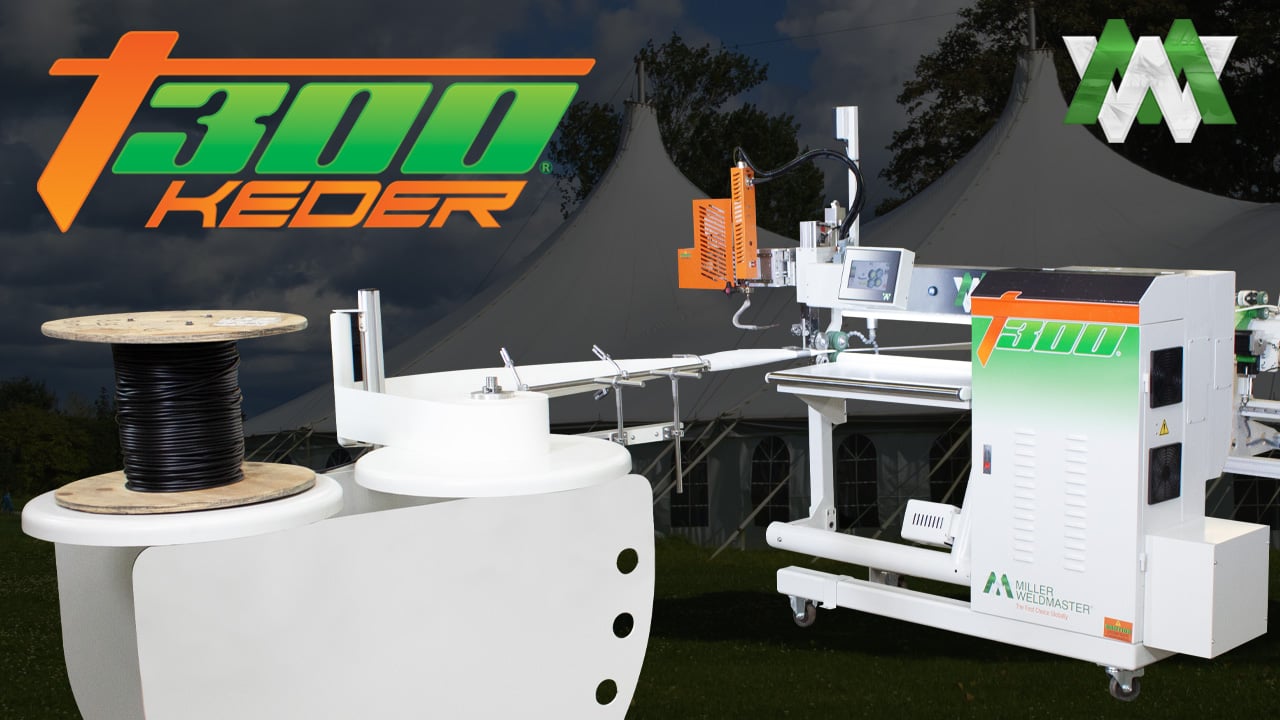
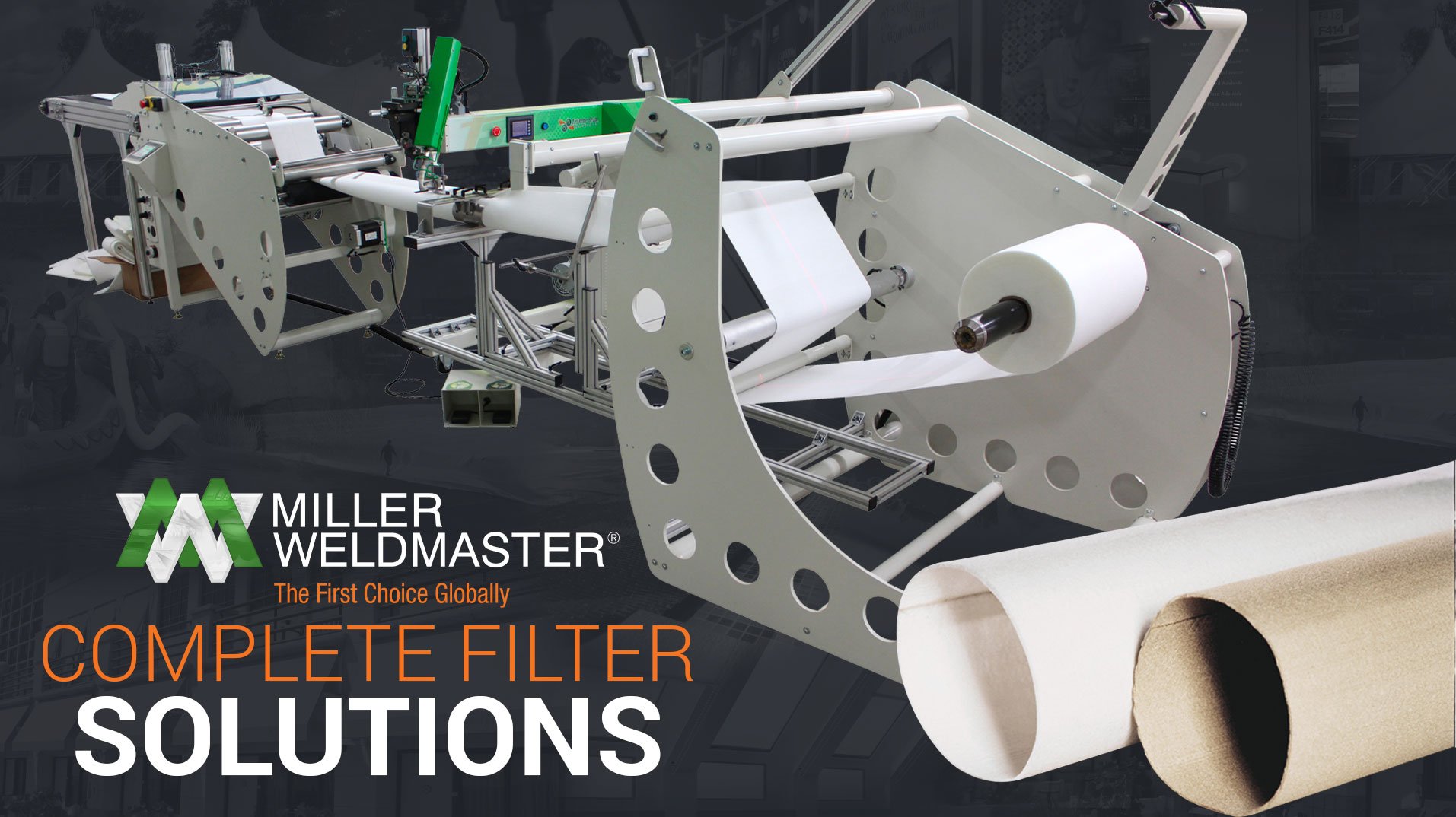
An automated filter welding system is a machine that forms and seals filter tubes and bags from nonwoven media using heat or hot air — no needles, no thread, and no manual seam handling between steps. These systems are built for filter bag manufacturers, OEM filtration producers, and plant engineers managing baghouse and dust collection equipment who need consistent output and repeatable seam quality. Machines like the T300 Extreme Filter System are designed specifically for this production environment.
Filter welding systems are essential in industrial operations, especially welding operations, to control hazardous particles and fumes generated during production.
Industrial air filtration demand is rising in 2026. Stricter EPA and OSHA emissions standards and faster filter replacement cycles in power, cement, and processing plants are increasing output requirements. These standards are in place due to the health risks posed by hazardous particles and fumes produced during welding operations. Manufacturers face tighter tolerances and labor constraints at the same time.
This article breaks down what filter welding systems do, how they compare to sewing, and why automation is becoming a production requirement rather than an upgrade
What You Need to Know Before Reading Further
- An automated filter welding system forms and seals nonwoven filter tubes using heat, creating continuous seams without needle holes, unlike traditional sewing.
- The Miller Weldmaster T300 Extreme Filter System produces welded filter tubes across a range of diameters and is designed for high-volume baghouse filter production.
- Manufacturers moving from sewing to welding commonly report production gains in the 25–35% range under comparable conditions.
- 2026 is a pressure year for the filter industry due to regulatory tightening and accelerated replacement cycles.
- Proper fume extraction and filtration are critical for welding safety, helping manufacturers comply with air quality regulations and protect workers from hazardous exposure.
- Welded seams eliminate needle holes, which is critical for fine dust collection environments where pinhole bypass cannot be tolerated.
- For specifications, pricing, or production consultation, you can contact the sales team.
What Is a Filter Welding System and How Does It Work?
A filter welding system is a machine that bonds nonwoven fabric into tubular filter bags using heat, replacing manual sewing with a continuous automated process.
The Miller Weldmaster T300 Extreme Filter System forms and welds filter tubes from nonwoven media. It accommodates multiple diameters and produces strong overlap seams in a single automated pass. The system is designed to handle particulates, fumes, gases, vapors, and particles generated by various welding processes. Automation means the system handles forming, welding, and cutting while the operator loads material and monitors output.
The process follows these steps:
- Material Feed: Nonwoven media is loaded and fed into the forming section.
- Tube Forming: The flat media is shaped into a cylindrical tube.
- Seam Welding: Hot air or contact heat bonds the overlap seam.
- Cut to Length: The tube is cut to programmed filter length.
- Finished Output: Completed filter tubes exit ready for downstream assembly. The system's automation ensures consistent removal of particles and particulates from the filter media, improving air quality in downstream applications.
The T300 integrates these steps into one controlled line, reducing manual touchpoints and variability.
What Types of Filters Can Be Welded on an Automated Line?
Automated filter welding lines handle cylindrical filter tubes, flat bag filters, and pleated filter sleeves made from nonwoven synthetic media. These products are primarily used in industrial air filtration and baghouse filter production.
Common materials and applications include:
- Polyester needlefelt filter tubes for cement and steel plants
- Polypropylene nonwoven filters for chemical and processing environments
- PTFE-laminated media for fine particulate capture
- Blended synthetic nonwoven media for high-temperature applications
Different welding materials produce various types of emissions, including hazardous metal oxides and toxic gases, depending on the process. Selecting the right filter is essential for effective capture of these emissions and for regulatory compliance.
A manufacturer producing 100mm–250mm diameter filter tubes for cement baghouses can run multiple diameters on one automated line using tooling changeovers instead of maintaining separate setups.
Filter Welding vs. Filter Sewing: Which Produces a Better Seam?
Welding produces a stronger, more consistent seam than sewing because it creates a continuous bonded joint with no needle holes or thread gaps.
| Criteria | Welding | Sewing |
|---|---|---|
| Seam Type | Continuous bonded overlap seam | Stitched seam with thread |
| Needle Holes | None | Present along seam |
| Thread Required | No | Yes |
| Seam Strength Under Pressure | Equal to or stronger than base fabric | Dependent on thread integrity |
| Lifespan in High-Temp Environments | High | Thread can degrade |
| Suitable Media | Nonwoven synthetic media | Woven or specialty fabrics |
Sewing punctures the media. Under pulse-jet cleaning cycles, those holes can expand. Thread can weaken under heat or chemical exposure.
Welding fuses the fabric itself. In fine dust collection, even a small needle hole can allow particulate bypass. The T300’s overlap seam design is built to withstand cyclical baghouse stress without introducing perforations. Additionally, welding fume extractors and fume extraction systems are essential for capturing welding smoke and hazardous fumes that could otherwise escape through poorly sealed seams, ensuring a safer and healthier work environment.
How to Automate Filter Bag Production: A Practical Breakdown
Automating filter bag production means replacing manual sewing and hand-forming with a machine that feeds, forms, welds, and cuts in one continuous process.
A transition typically follows these steps:
- Audit current bottlenecks such as labor cost per unit and defect rates.
- Confirm nonwoven filter fabrication compatibility with welding.
- Select a machine with appropriate diameter range and throughput, such as the T300 Extreme Filter System.
- Evaluate system requirements, including the need to select the right filters for your specific application. Effective weld fume control depends on choosing filters—such as high MERV-rated or HEPA filters—that meet safety standards and capture hazardous particles generated during welding. Ensure the system specifications align with regulatory requirements and operational needs.
- Plan changeovers for multiple diameters using quick-swap tooling.
- Measure post-automation output against baseline sewing performance.
A mid-size manufacturer running two operators on a sewing line may see approximately 30% output gains after implementing an automated welding line, often reducing the need for dedicated seam inspection. This approach aligns with broader trends outlined in our guide to filter bag manufacturing in 2026.
What Is the ROI of Switching to an Automated Filter Welding Machine?
ROI typically appears in four areas:
- Labor Reduction: Automated lines consolidate forming, welding, and cutting into one monitored process.
- Throughput Consistency: Automated systems maintain stable speed across shifts.
- Defect Reduction: Welded seams remove thread failure and needle hole issues.
- Changeover Efficiency: Tooling swaps reduce downtime between diameter runs.
Manufacturers moving from sewing to welding commonly report throughput improvements in the 25–35% range under similar production conditions.
Why Filter Demand Is Rising in 2026 — and What It Means for Manufacturers
Industrial filtration demand is accelerating in 2026 due to regulatory tightening, replacement cycle acceleration, and new industrial construction. Modern air filtration systems and fume extraction systems rely on high efficiency filters and progressive filtration to ensure optimal extraction and filtration efficiency.
- Regulatory Pressure: EPA NESHAP and OSHA particulate limits are driving stricter replacement schedules.
- Replacement Acceleration: Post-capacity expansion in 2024–2025 has pushed many facilities into overlapping maintenance cycles.
- New Construction: Domestic manufacturing growth and industrial reshoring are adding new filtration systems.
Note: Progressive filtration may be desirable when weld fume is mixed with coarser dust from other processes, such as metal grinding.
According to industry market research from Grand View Research, industrial filtration markets continue steady growth driven by environmental compliance and air quality standards.
Demand is increasing. Labor is not. Automation closes that gap without expanding facilities.
Effective fume extraction systems are essential for maintaining a safe working environment by reducing exposure to harmful welding fumes.
Which Industries Are Driving Baghouse Filter Demand Right Now?
- Cement & Construction Materials: Stricter particulate limits increase filter replacement frequency.
- Steel & Metals Processing: High-temperature dust collection requires durable filter tubes.
- Power Generation: Coal and biomass plants rely on baghouse filtration under heavy cleaning cycles.
- Pharmaceutical Manufacturing: Cleanroom and dust control standards require validated filtration.
- Food Processing: Grain and powder handling operations depend on reliable industrial air filtration.
These industries require consistent, high-volume filter bags capable of surviving repeated pulse-jet cleaning.
What to Look for in a Filter Tube Welding Machine
When evaluating a filter tube welding machine, look for diameter flexibility, seam type, throughput, media compatibility, and changeover time.
- Diameter Range: Systems with changeable tooling handle multiple sizes.
- Seam Type: Overlap seams are stronger for pulse-jet environments.
- Throughput: Confirm bags per hour under real production conditions.
- Media Compatibility: Ensure the system runs polyester, polypropylene, PTFE, and other nonwovens.
- Changeover Time: Faster tooling swaps improve effective daily output.
- Portable Extractors: Portable welding fume extractors offer flexibility and mobility, making them ideal for use in various locations or hard-to-reach areas.
- Extraction Arm: An extraction arm is essential for effective fume capture, allowing precise positioning to remove hazardous fumes directly at the source.
- Dust Collector and Cartridge Dust Collector: Consider dust collectors and cartridge dust collectors for efficient particulate removal, especially in welding and metalworking environments.
Selecting the right replacement filters and main filter is crucial for maintaining high filtration performance in filter welding systems. Pay attention to the MERV rating (Minimum Efficiency Reporting Value) or HEPA classification, as these indicate the filter's ability to capture fine particulate matter such as welding fumes. Minimum efficiency reporting ensures that filters meet specific standards for hazardous particle removal and compliance with safety regulations.
As a manufacturer of industrial welding systems, Miller Weldmaster designs the T300 specifically for nonwoven filter fabrication and automated filter line integration.
Ready to Scale Your Filter Production Line?
Filter manufacturers entering 2026 face higher demand, tighter tolerances, and rising labor costs. Production cannot rely on manual inspection and variable seam quality.
The T300 Extreme Filter System was developed to meet the specific requirements of baghouse filter production. You can review full specifications and see the T300 specs on the product page.
If you are evaluating automation, talk to our sales team to discuss your diameter range, media type, and throughput goals. Existing customers can contact our service team for upgrades or support.
Frequently Asked Questions About Filter Welding Systems
What is the difference between hot air welding and contact welding for filter bags?
Hot air welding blows heated air into the seam area to melt and bond the fabric, making it ideal for thicker nonwoven media and overlap seams. Contact welding uses a heated element pressed directly against the material. Hot air is generally preferred for filter tube production because it distributes heat more evenly across the seam.
Can a filter welding machine handle multiple bag diameters on the same production line?
Yes. Machines like the Miller Weldmaster T300 Extreme Filter System use changeable tooling that allows operators to switch between filter tube diameters without replacing the entire system. Changeover time depends on configuration, but properly designed systems allow diameter changes within a single shift.
Why do welded filter bags last longer than sewn filter bags?
Welded seams eliminate needle holes and thread. In pulse-jet baghouses, needle holes can widen over time and thread can degrade from heat or chemical exposure. A welded seam bonds the base material directly, producing a joint that withstands repeated cleaning cycles.
How fast can an automated filter welding system produce filter tubes?
Production speed depends on diameter, media thickness, and seam type. Automated systems like the T300 operate significantly faster than manual sewing lines in continuous runs. For exact throughput on your configuration, contact Miller Weldmaster directly or review T300 specifications.
What nonwoven materials can be used in a filter welding machine?
Most filter welding machines, including the Miller Weldmaster T300, are compatible with polyester needlefelt, polypropylene spunbond, PTFE membrane laminates, and blended synthetic nonwovens. Compatibility depends on melting temperature and thickness. Always confirm your specific media type before finalizing production configuration.