Learning how to weld PVC comes down to heat, speed, and pressure. This playbook explains how PVC welding works, the main welding methods, step-by-step tips for strong seams, common problems and how to fix them, and how to choose PVC welding equipment.
This guide covers heat welding PVC-coated fabrics, films, and membranes. Rigid PVC pipe is usually joined with solvent cement, which is a different process.
In this guide:
- What PVC welding is and why it matters
- PVC welding methods
- Step-by-step guide to perfect PVC welds
- Common PVC welding problems
- Best practices for industrial PVC welding
- Where PVC welding is used
- Choosing PVC welding equipment
- Frequently asked questions
Understanding PVC Welding: What It Is & Why It Matters
PVC welding involves the joining of two or more pieces of PVC (polyvinyl chloride), a widely used plastic, through various techniques that melt and fuse the material together under heat, speed and pressure. Unlike gluing or stitching, the weld fuses the layers into one airtight, watertight seam. It is fundamental in industries like construction, shelter, and healthcare due to PVC’s durability, cost-effectiveness, and flexibility. Achieving perfect PVC welds is critical for ensuring the structural integrity and longevity of the products, as poor welds can lead to failures, resulting in safety risks and increased costs.
The Science Behind PVC Welding & Strong Seams
Welding PVC creates a seamless bond by utilizing a combination of heat and pressure, a process that requires precise control to ensure effective and durable joins. Temperature and pressure must be carefully managed to avoid degrading the material’s integrity, so the seam holds as strongly as the material around it. Heat-welded seams set as they cool, so the layers should stay under pressure until the weld solidifies.
Choosing the Right PVC Welding Materials & Equipment
Selecting appropriate materials and welding equipment is crucial. PVC-coated fabrics, films, and laminates vary in thickness and coating, so the right settings depend on the exact material. Not all PVC is the same; different blends react differently under heat. The equipment used—be it hot air welders, wedge welders, or radio frequency (RF) welders—should match the specific requirements of the project for optimal results.
PVC Welding Methods
Three heat welding methods do most of the work in PVC fabrication. Each melts the surfaces of the PVC and presses them together, but they heat the material in different ways.
Hot Air Welding
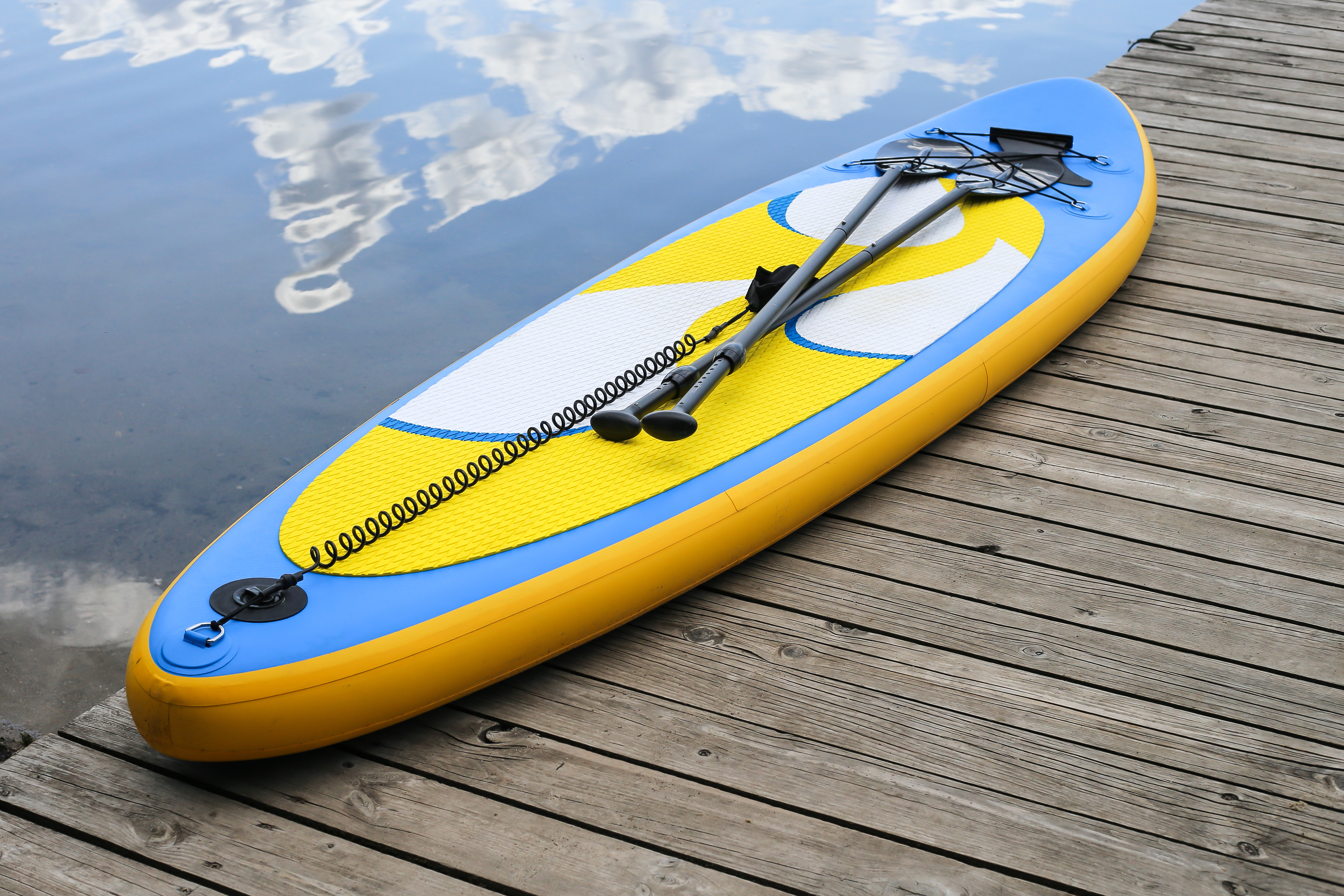
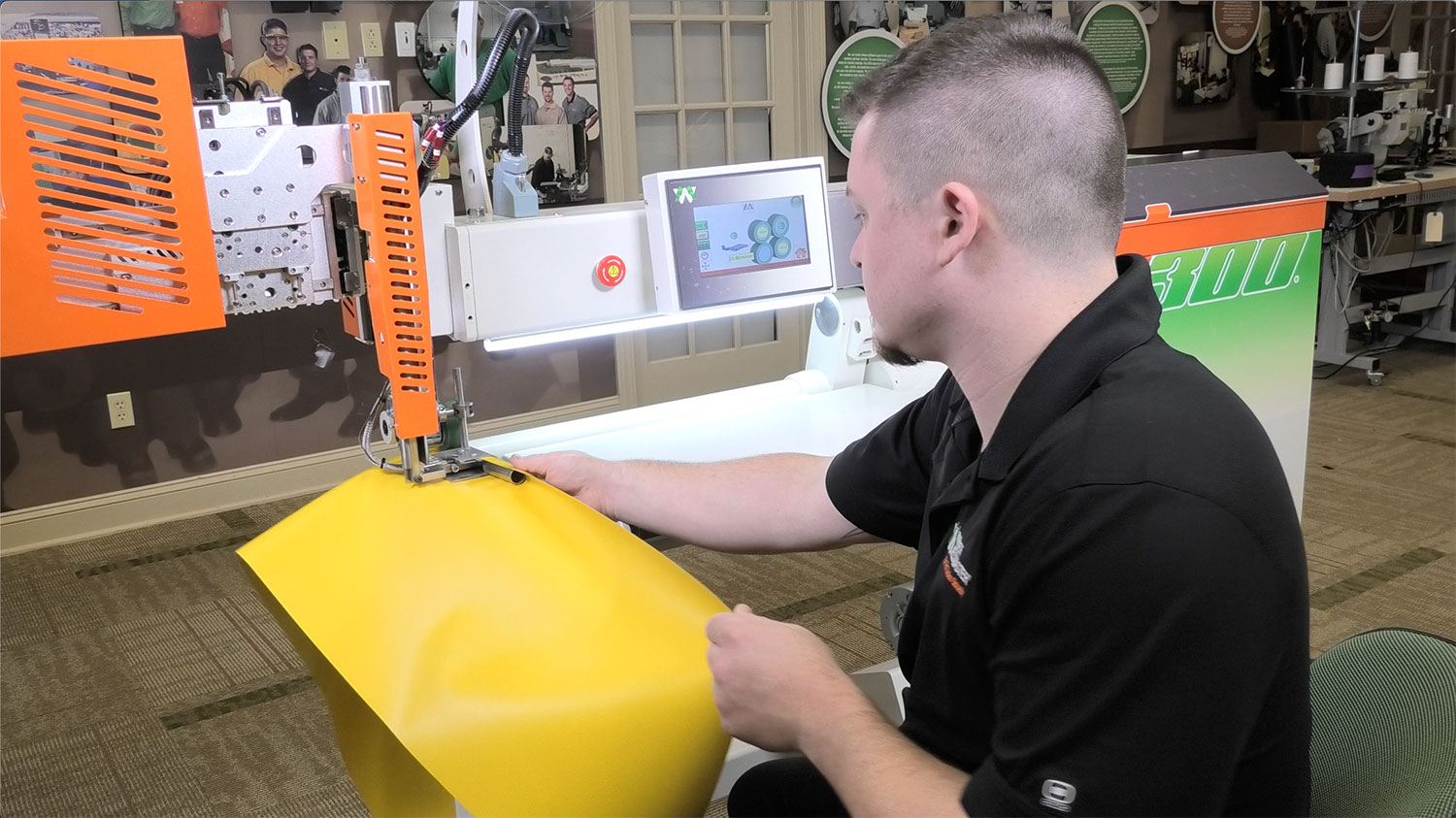
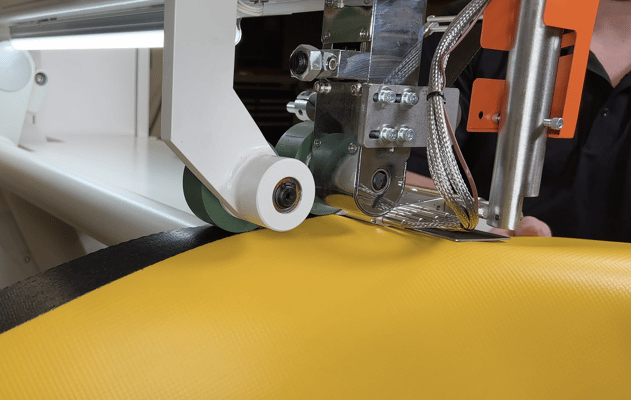
Hot air welding blows heated air between overlapping layers of PVC to melt their surfaces, then pressure rollers fuse them into a watertight seam. It handles curves as well as long seams and is common for tarps, banners, tents, roofing membranes, and inflatables.
Hot Wedge Welding
Hot wedge welding uses a heated metal wedge between the layers instead of air. Rollers press the melted surfaces together right behind the wedge, which makes it well suited to long, straight seams in liners, covers, and geomembranes.
Radio Frequency (RF) Welding
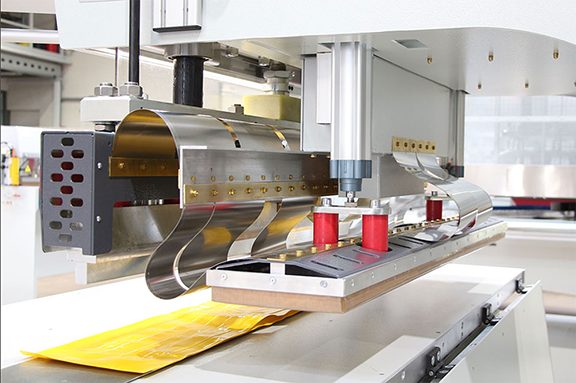
Radio frequency welding, also called high-frequency welding, uses electromagnetic energy to heat PVC from the inside. It produces fast, consistent seams in high-volume production of items like tarpaulins, banners, and industrial curtains.
Step-by-Step Guide to Achieving Perfect PVC Welds
Achieving consistent, high-quality PVC welds involves several key steps from preparation to the actual welding process. Here’s a detailed guide:
How to Prepare PVC for Welding: Cleaning & Setup
Proper preparation of PVC surfaces is essential. Clean, dry, and smooth surfaces are crucial for a strong bond, and an even overlap between the layers is vital for creating strong, leak-free seams. Any contaminants like dirt or grease can prevent proper adhesion and lead to weak welds. Aligning and securing the materials properly ensures that they do not shift during the welding process, maintaining uniformity and strength across the seam.
Mastering Temperature & Speed for Stronger Welds
The welding temperature must be precisely controlled to suit the type of PVC being welded. Too high a temperature can burn the material, while too low a temperature might not melt it sufficiently to form a strong bond. The speed of the welding process also affects the seam strength and appearance. Optimal adjustments of airflow and pressure settings are crucial for achieving the best results. The right temperature depends on the material, its thickness, seam width, and welding speed. Start from your machine’s material settings and always test on a sample before a full production run.
Preventing & Fixing Weak or Inconsistent Welds
Understanding the common welding mistakes such as overheating, improper speed, and insufficient pressure can help in avoiding them. Ensuring that the joint is clean, properly aligned, and securely bonded is crucial to prevent leaks. Regular checks for any signs of poor welds such as gaps, burns, or uneven seams are vital. Techniques to reinforce and test the strength of the welds can ensure long-lasting durability.
Common PVC Welding Problems & How to Solve Them
Why Your PVC Welds Are Failing (And How to Fix Them)
Identifying and addressing common issues like incorrect temperature settings, improper material alignment, or contamination can drastically reduce the incidence of weld failures. Proper surface preparation and avoiding common mistakes are crucial for a strong weld. Solutions may involve adjusting the welder settings, improving the material handling processes, or redesigning the welding procedure.
Avoiding Material Distortion & Overheating
Excessive heat can cause PVC to deform, which not only affects the appearance but can also weaken the material structurally. Learning how to modulate the heat application based on the material thickness and type can prevent damage and maintain the integrity of the PVC. Utilizing tools like Miller Weldmaster’s weld test and seam vision systems can help in accurately finding and monitoring seams and welding temperatures, ensuring the optimal heat is applied during the welding process. This not only enhances the quality of the seams but also prevents overheating, preserving the structural and aesthetic qualities of the PVC.
Best Practices for Industrial PVC Welding Efficiency
Increasing Speed Without Compromising Weld Strength
In an industrial setting, efficiency is key. Accurate cutting and consistent overlaps keep seams straight and prevent leaks. Employing techniques that increase the speed of the welding process without affecting the quality of the welds is crucial. Advances in automation and the use of state-of-the-art welding machines can aid in achieving this balance.
Choosing the Best PVC Welding Method for Your Application
The selection of welding methods depends largely on the specific application. For instance, hot air welding is suitable for thinner sheets and curved seams, while hot wedge welding may be preferred for thicker sections and long, straight seams. RF welding is often used for waterproofing applications such as tarpaulins and tents.
Where PVC Welding Is Used
- Waterproofing and geomembranes: Welded PVC liners line irrigation canals, ponds, and landfills, and form waterproof barriers in construction. See our geomembrane welding machines.
- Tents and tarps: PVC welding produces tent sidewall panels, keder, hems with grommets, and tent tops, as well as tear-resistant tarpaulins. Explore our tent welding machines.
- Custom fabrication and prototyping: Welding makes it fast to prototype new designs and build custom parts. At a Miller Weldmaster Design Day, you can work with our technicians at our facility to develop and test prototypes. If you can’t visit, send us samples of your material and we’ll test which welding method works best.
- Mass production: Automated PVC welding lines keep weld quality consistent across thousands of units and scale from small batches to large runs.
Choosing PVC Welding Equipment
The right PVC welding machine depends on what you make, the materials you weld, and how much you produce.
Types of PVC Welding Machines
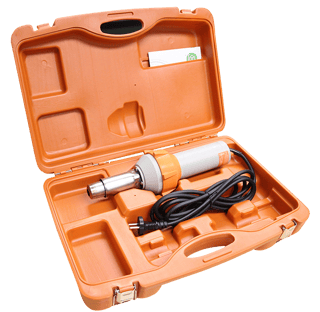
- Hand tools: Portable hot air welders for detail work, repairs, and installation in the field, such as the EliteAir hand tool.
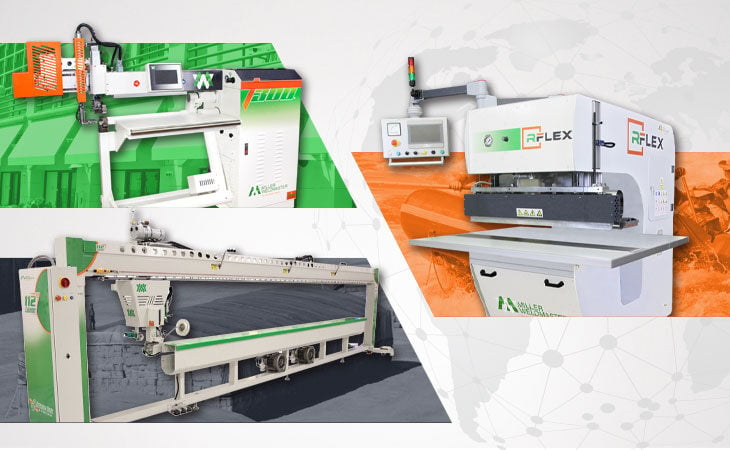
- Stationary machines: Hot air, hot wedge, and RF welders for production work on the shop floor.
- Automated systems: Machines with unwinds, rewinds, and material handling for high-volume, consistent output.
Features to Look For
- Automation: Reduces errors, cuts labor costs, and speeds up production.
- Material compatibility: The machine should match the type and thickness of your PVC. Test sample materials before you buy.
- Adjustable settings: Seam width, temperature, speed, and pressure you can set for each material.
- Room to grow: Modular designs that let you add features as production grows.
Questions to Ask Before You Buy
- What production volume do you expect?
- What seam types and lengths do your products need?
- Are there industry standards your products must meet?
- Will the machine fit your current workflow?
Mistakes to Avoid
- Underestimating production needs: A machine with too little capacity can hold back growth.
- Choosing on price alone: Lower-priced equipment may lack features you need.
- Skipping training: Operator training is essential for consistent welds.
- Picking the wrong method: The welding method should match your material and seam.
How Miller Weldmaster Helps You Achieve Perfect PVC Welds
Miller Weldmaster, a leader in the welding industry, provides top-notch PVC welding solutions that enhance both the efficiency and quality of welds. Our machines are designed to deliver strong, consistent welds and are backed by decades of innovation and a deep understanding of the welding industry.
Miller Weldmaster’s Industry-Leading PVC Welding Machines
Our range of welding machines includes options tailored to various PVC applications, ensuring precision and durability. We offer customizable solutions that can adapt to different operational scales and needs, from small workshops to large industrial operations.
Why Choose Miller Weldmaster for Your PVC Welding Needs?
With years of industry expertise, reliable equipment, and dedicated support and training services, Miller Weldmaster is your go-to partner for achieving flawless PVC welds. Our customers' success stories reflect our commitment to excellence and innovation in welding technology.
Not sure which machine fits your PVC products? Talk to a Miller Weldmaster expert, or send us a sample and we’ll test it on our machines.
Related Guides
- Why PVC Laminated Fabric Is the Best for Tent Welding
- High-Frequency Welding for PVC
- What Is Hot Air Welding?
By understanding the principles, best practices, and potential pitfalls of PVC welding, you can achieve perfect welds that are strong, durable, and aesthetically pleasing, ensuring the longevity and functionality of your PVC-based products.