High-frequency (HF) welding joins thermoplastic materials by heating them from the inside with electromagnetic energy. In the United States it is usually called radio frequency (RF) welding, and you will also hear dielectric welding, dielectric sealing, and RF heat sealing—all names for the same process. Miller Weldmaster builds radio frequency (RF) welding technology for manufacturers who need airtight, watertight seams in PVC, polyurethane, and other polar plastics.
This guide explains how HF welding works, which materials it welds, where it is used, how it compares to other plastic welding methods, the difference between solid-state and tube-based HF welders, and how to tell whether RF welding is right for your product.
In this guide:
- What is high-frequency (RF) welding?
- How does high-frequency welding work?
- Which materials can be HF welded?
- Advantages of high-frequency welding
- Where high-frequency welding is used
- HF welding vs. other plastic welding methods
- Is RF welding right for your product?
- High-frequency welding machines: solid-state vs. tube
- Tips for consistent, safe RF welds
- Miller Weldmaster RF welding machines
- Frequently asked questions
What Is High-Frequency (RF) Welding?
High-frequency (HF) welding—also called radio frequency (RF) welding—is a process that uses electromagnetic energy to bond thermoplastic materials. Unlike heat welding methods that apply heat from the outside, HF welding heats the material from within. A high-frequency electric field makes the polar (dipole) molecules in the material rotate back and forth, and that molecular friction generates the heat that softens and fuses the layers. Our radio frequency glossary entry explains the terms in more detail.
Because the heat starts inside the material, there is no open flame, no hot air, and no adhesive or solvent—just a precise combination of time, pressure, and RF energy. The result is a uniform, airtight, and waterproof seam that is minimally visible and often as strong as, or stronger than, the surrounding material.
How Does High-Frequency (RF) Welding Work?
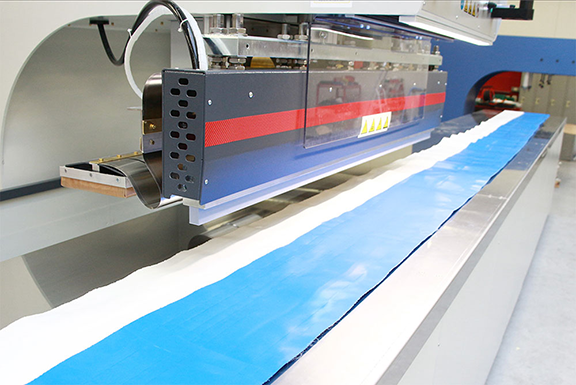
Every RF welding machine follows the same working principle: a generator produces high-frequency energy, and an electrode (also called a die, tool, or bar) delivers it to the area being welded. The process has five steps:
- Position the materials: Two or more layers of thermoplastic are placed between the upper electrode and the lower plate in the welding area.
- Apply the electromagnetic field: A high-frequency field—typically 27.12 MHz—is applied across the electrodes.
- Molecular agitation and heating: Polar molecules in the material vibrate, heating the material from the inside out.
- Apply pressure: Pressure holds the layers in close contact while the material softens, so they fuse into one.
- Cool and seal: The energy switches off and the weld cools under pressure, forming a strong, clean seal. Controlling pressure, weld time, and cooling time is what makes every weld consistent and repeatable.
Want to see it in motion? Watch this short RF welding animation.
Which Materials Can Be HF Welded?
| Material | RF weldable? | Notes |
| PVC (vinyl) | Yes | The most commonly RF-welded material, thanks to its strong polarity. |
| PU (polyurethane) and TPU | Yes | Ideal for inflatables and waterproof applications. |
| EVA | Yes | Used in flexible medical and consumer products. |
| PET-G | Yes | Used in medical and clear packaging applications. |
| Polypropylene (PP) | No | Non-polar; needs another method, such as hot air or hot wedge welding. |
| Polyethylene (PE) | No | Non-polar; needs another welding method. |
| Nylon | No | Does not respond to the RF field. |
Only polar thermoplastics can be HF welded, because the process relies on molecular dipoles to generate heat. Non-polar plastics like polyethylene and polypropylene don't react to the field, so bonding them needs a different welding method. Within the right material family, RF welding handles thick or thin material, reinforced fabric or film, and plain, colored, or printed surfaces.
PVC is the most common choice by far—see our PVC welding machines for tarps, banners, covers, and liners.
Polyurethane and TPU are a close second, especially for inflatables and medical products. Learn more about polyurethane fabric welding.
Why Material Compatibility Matters
Choosing the right material ensures weld strength, durability, and regulatory compliance. In medical, outdoor gear, and industrial packaging, material compatibility can affect safety and performance. Not sure your material will weld? Send us a sample—we'll test it on our machines to make sure it welds properly.
Advantages of High-Frequency Welding
- Strong seams: Airtight and watertight bonds that are often stronger than the original material.
- Consistent results: Reliable, repeatable welds across production runs, which also simplifies quality control.
- Precise bonding: Clean edges and accurate seams, even on complex shapes and curves.
- Multi-layer welding: Welds several layers at once, where many other methods can only weld two.
- Re-weldable seams: Seams can be welded over again to reinforce them or fix errors—something sewing can't do.
- Custom shapes: Specialized dies make unique shapes and seals possible for custom products.
- Fast production: Short cycle times suit high-volume manufacturing.
- Minimal distortion: Localized heating avoids damage to surrounding material, with no burning or scorching of the surface.
- Energy efficiency: The machine heats up and cools down in seconds and uses less energy than other technologies.
- Clean process: No adhesives, solvents, or by-products.
- Compliance: Supports compliance with industry regulations (FDA, ASTM, ISO).
- Automation-ready: Easily integrated with digital and robotic systems for high-volume production.
Where High-Frequency Welding Is Used
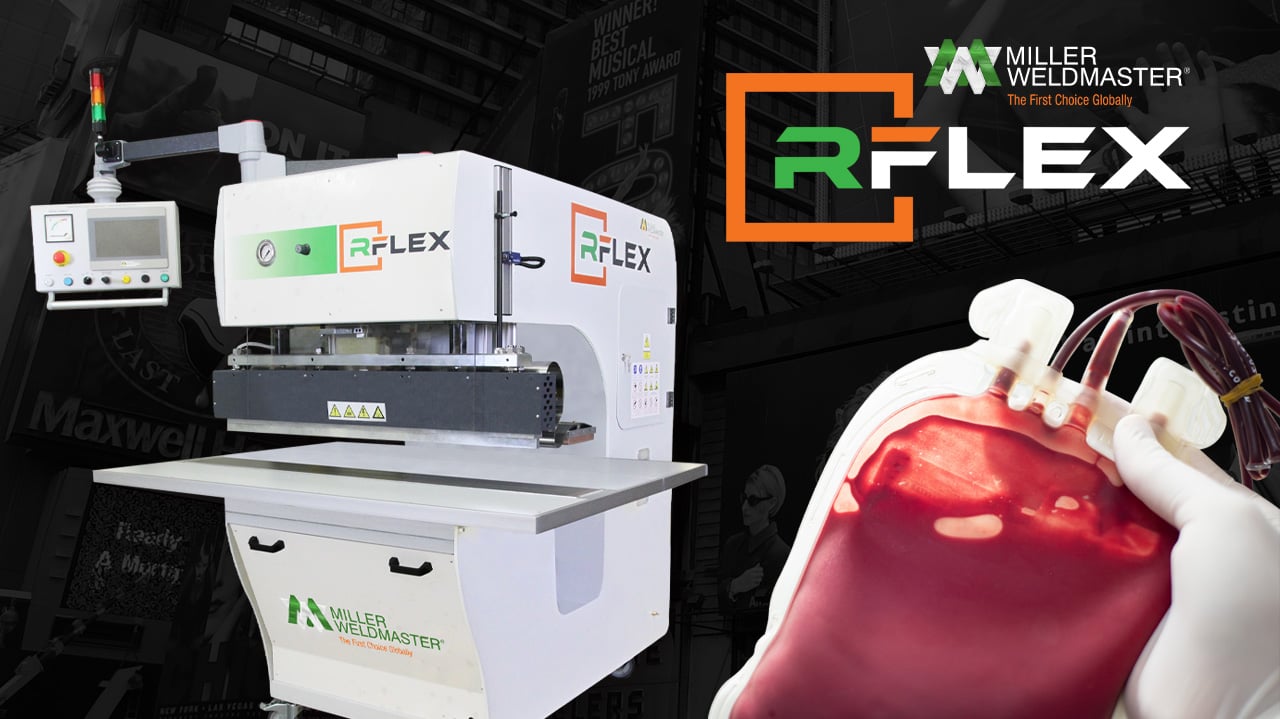
- Medical and pharmaceutical: Blood bags, IV and fluid bags, blood pressure cuffs, fluid bladders, surgical drapes, and disposable clothing, where sterile, leak-proof seams are critical.
- Inflatables: Rafts, emergency shelters, air mattresses, bounce houses, and life jackets that must hold air under pressure. See our inflatable product welding solutions.
- Pool liners and water containment: Pool liners, pond liners, RF-sealed containment liners, and water tanks that need completely waterproof seams.
- Protective gear and covers: Hazmat suits, industrial PPE, military shelters, and protective covers that rely on airtight barrier seams.
- Automotive and aerospace: Interior trim, door panels, airbags, flotation devices, and safety seals.
- Tensile structures, tents, and tarps: Large-format tensile structures, tents, tarps, awnings, and geomembranes, often welded on a large-format RF welding machine.
- Industrial and consumer products: High-speed rolling doors, oil booms, billboards, material handling products, industrial packaging, and waterproof gear.
Why HF Welding Excels in These Areas
- Clean, sterile sealing avoids contamination in medical products, and HF welding seals thin sheets and films well.
- High seam strength stands up to pressure, stress, and wear, and multiple layers can be welded at once for complex, layered products.
- Fast, repeatable cycles make it ideal for mass production of consumer and industrial goods.
HF Welding vs. Other Plastic Welding Methods
| Feature | HF (RF) welding | Hot air welding | Ultrasonic welding |
| Heating method | Electromagnetic (internal) | External hot air | High-frequency vibration |
| Material compatibility | Polar thermoplastics | Broader range, including PE and PP | Thin plastics only |
| Speed | Fast | Moderate | Very fast |
| Seam strength | High | Moderate to high | Moderate |
| Automation integration | Excellent | Good | Good |
How the other fabric welding methods differ:
- Hot air welding blows heated air between layers while pressure bonds them. It suits thinner, flexible materials, general-purpose seams, and field repairs.
- Hot wedge welding uses a heated wedge between overlapping layers. It works well on thick or coated materials and long, straight seams.
- Impulse welding uses brief pulses of electrical current to heat and fuse the material. It is especially suited to delicate, heat-sensitive films.
- Ultrasonic welding uses mechanical vibration. It is best for small, rigid, or thin parts, while RF is better for larger, airtight seams and thicker materials.
For a side-by-side look at the two most common fabric methods, read our hot air vs. RF welding comparison.
When to Choose HF Welding
If you're asking, "Is HF welding better than hot air welding for PVC tarps?"—the short answer is yes, especially when airtight seams, high strength, and clean aesthetics are required. HF welding is especially effective for PVC because of its polar molecular structure. HF is the preferred choice for polar materials, high-volume runs, and industries with strict compliance needs. For broader material compatibility and field repairs, hot air may be the better choice.
Is RF Welding Right for Your Product?
Use these questions to decide whether RF welding—or another method—fits your production:
- Material type and thickness: RF needs polar materials such as PVC, PU, TPU, EVA, or PET-G. Thicker or coated materials suit RF or hot wedge welding; thin or heat-sensitive films may suit impulse or hot air welding.
- Product shape: Flat products such as banners and covers work well with hot air and hot wedge. 3D or tubular products—inflatables, bladders, ducting—benefit from RF welding.
- Seam requirements: If seams must be airtight or watertight, or look clean and professional, RF and impulse welding give the cleanest results.
- Production volume: Low-volume or custom jobs can run on manual machines; high-volume production benefits from automated RF welding lines.
- Operator skill: Modern RF machines have intuitive controls that reduce training time, though operator training is still important for consistent results.
- Budget and ROI: Look beyond the purchase price to machine lifespan, energy use, maintenance, and throughput. In many cases, a higher-end RF welder pays off over time in productivity and less waste.
The surest way to know is to test your material. Our team offers free material testing to confirm your material welds properly before you invest.
High-Frequency Welding Machines: Solid-State vs. Tube
Every high-frequency welding machine has a generator that creates the RF energy. There are two main types, and the right one depends on your material, production scale, and precision needs.
Traditional (Tube-Based) RF Welders
Traditional RF welders have been industry workhorses for decades. They use vacuum tube oscillators to generate high-frequency energy and are powerful and reliable for large-scale welding, but they need ongoing maintenance and skilled technicians to keep performing.
- Pros: High power for large parts, proven reliability, and lower upfront cost.
- Cons: Frequent tube replacement, longer warm-up times, and higher energy use and downtime.
Solid-State RF Welders
Solid-state RF welders replace the tubes with semiconductor amplifiers. That brings faster response times, tighter frequency control, and much better energy efficiency—using up to 50% less power than tube-based systems. Stable frequency output produces uniform welds every time, better control reduces arcing, and there is no manual frequency tuning. Initial costs can be higher, but operating and maintenance costs are lower.
| Feature | Solid-state RF | Traditional (tube) RF |
| Frequency stability | Excellent | Moderate |
| Weld consistency | High | Variable |
| Downtime | Minimal | Higher (tube replacement) |
| Maintenance needs | Low | High |
Which One Should You Choose?
- Choose solid-state RF for medical device welding that needs tight validation and clean seams, for energy-conscious manufacturers, and for high-volume lines focused on uptime and consistency.
- Choose traditional RF for large-format work such as tents, tarps, and geomembranes, for shops already set up with tube-based equipment, and for heavy-duty materials that need maximum power output.
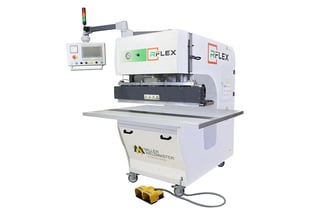
Miller Weldmaster's RFlex line of RF welders is designed to support both traditional and solid-state high-frequency welding technologies, with arc suppression, stable output, and digital control interfaces.
Innovations and Automation in HF Welding
Smarter Equipment and Seam Control
Modern HF welders offer:
- Digital controls for repeatable settings
- Real-time monitoring and diagnostics, with sensors that track key metrics to keep seams consistent
- IoT integration for predictive maintenance and quality control
- Quick adjustments for new materials or designs without long delays
Automation reduces human error, cuts waste from defective seams, and scales easily from small batches to full production.
Sustainability and Material Efficiency
High-frequency welding supports greener manufacturing by:
- Minimizing scrap waste through precise welding
- Using clean electricity instead of fossil-fuel heating
- Supporting recyclable materials like PVC and PU
- Removing the need for adhesives or solvents
Tips for Consistent, Safe RF Welds
- Match settings to the material: Thicker materials may need longer weld times or higher power. Run test welds to fine-tune settings before full production.
- Control the weld cycle: Keep weld (dwell) time, pressure, cooling time, and overlap width consistent.
- Keep electrodes calibrated and clean: Calibrated electrodes spread pressure and energy evenly, and clean tooling helps prevent arcing.
- Support the material: Make sure surrounding material is properly supported, especially on thicker materials.
- Watch for common problems: Overheating causes warping, incorrect pressure causes uneven seams, and incompatible materials won't bond.
- Document your process: Written procedures (SOPs) keep results repeatable across operators and shifts.
- Put safety first: Use machine guarding, lockout/tagout procedures, shielding, and grounding, and give operators hands-on training.
- Maintain the machine: Inspect electrodes, die plates, and wiring regularly, replace wear parts before they affect quality, and keep machine software up to date.
For fixes to specific weld defects, see our RF welding troubleshooting guide.
Miller Weldmaster RF Welding Machines
Miller Weldmaster has been designing American-made welding machines for more than 50 years. To add radio frequency to its hot air, hot wedge, and impulse technologies, Miller Weldmaster partnered with Zemat Technology Group—which has sold more than 6,500 RF machines in over 75 countries—to co-develop a line of stationary, traveling, and custom RF welders:
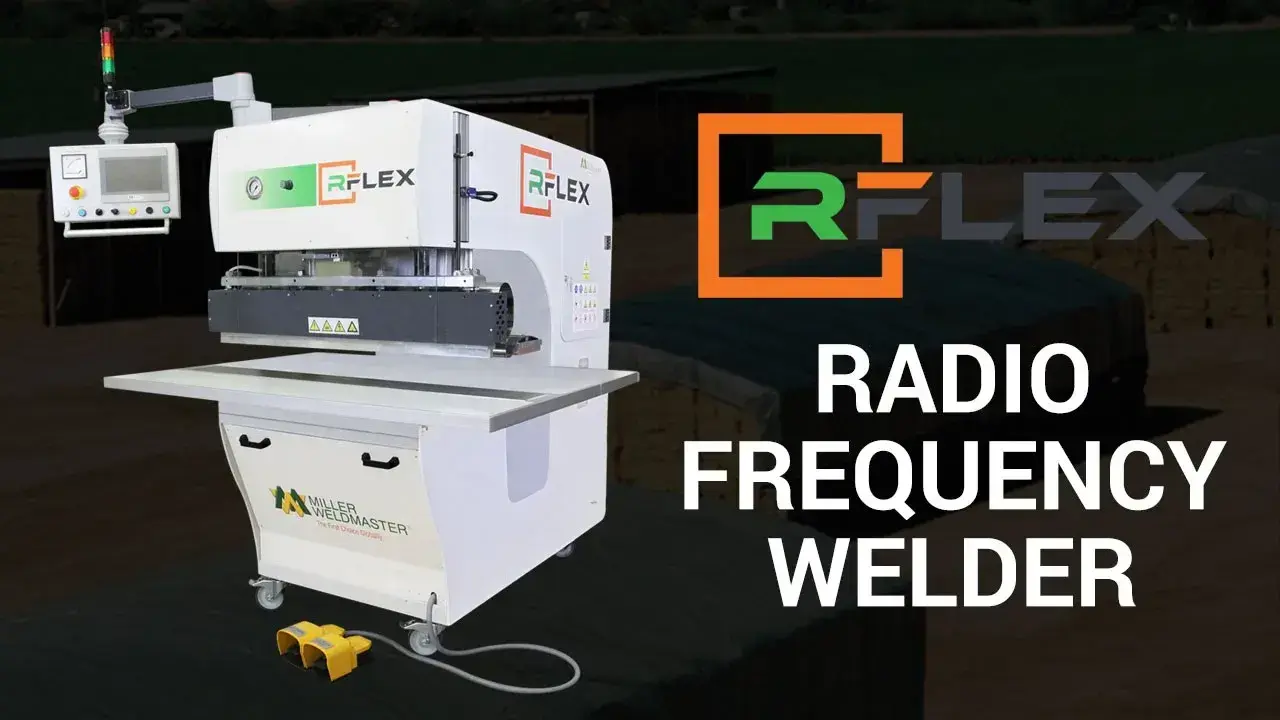
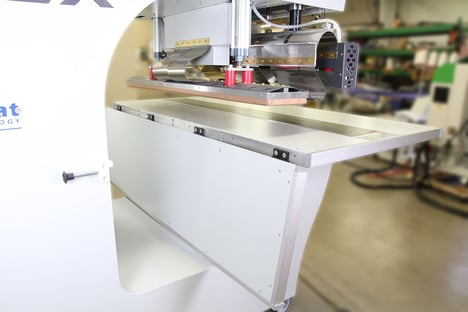
- RFlex: A stationary RF welder built for versatility, performance, and safety. It produces strong, even, waterproof welds with nearly invisible seams—even on multiple layers—with touchscreen controls, programmable settings for quick setup, and precision weld arms for tight or complex shapes.
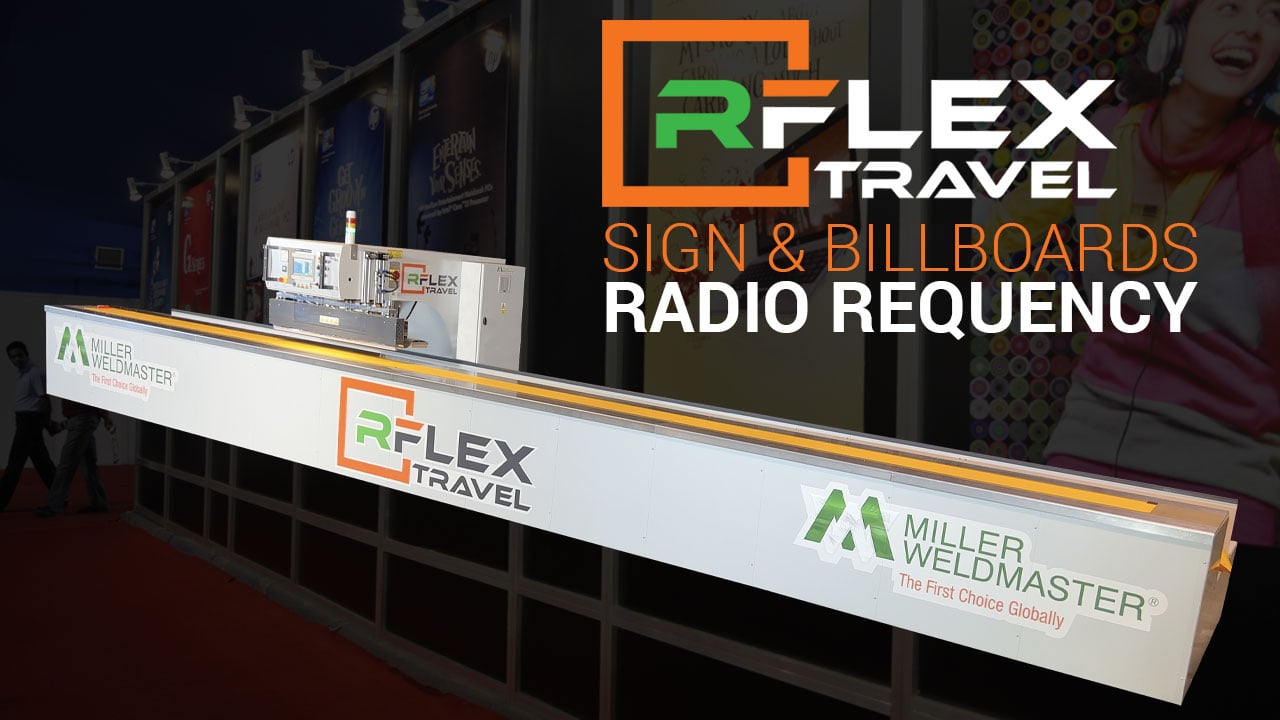
- RFlex Travel: An RF welder with a traveling head for large-format tensile structures, tarps, geomembranes, and tents. With an optional vacuum worktable up to 100 meters long and laser guides, you line up the fabric, vacuum it down, and let the head do the work.
- RFlex Press: A compact, precision radio frequency welder.
- Custom RF machines: Our engineers design custom RF welding machines for packaging, automotive, medical, and other specialized applications, including custom electrodes, automation, and advanced controls.
Our team supports you from start to finish, with free material testing, help matching you to the right machine, and training, technical support, and maintenance after installation.