A customer walks into your shop asking for a fabric SEG display. You have the printer ready. The graphics look great. But finishing that dye-sublimated polyester is nothing like finishing a vinyl banner. That is where most shops run into problems.
A digital textile finishing machine is equipment designed to apply edge treatments such as silicone keder to digitally printed fabric so it can be installed cleanly into a frame system, especially for SEG graphics.
For sign shops and production facilities moving beyond vinyl into fabric-based SEG graphics and soft signage, this step becomes critical. Understanding the digital textile finishing process, how fabric finishing differs from vinyl banner work, how automated sewing systems such as the Digitran fit into SEG production, and what to consider if your shop produces both vinyl and fabric output is what determines whether graphics install flawlessly or fail at the frame. Shops that get this right gain tighter finishing precision, smoother workflow, and a real advantage as demand shifts toward fabric displays within sign finishing and banner production.
Key Takeaways: What Sign Shops Need to Know About Digital Textile Finishing
- Digital textile finishing for SEG requires tighter seam tolerances than vinyl banner finishing because the graphic must fit precisely into a rigid frame.
- SEG graphics use a silicone keder sewn to the edge, creating a tensioned, wrinkle-free display inside an aluminum frame.
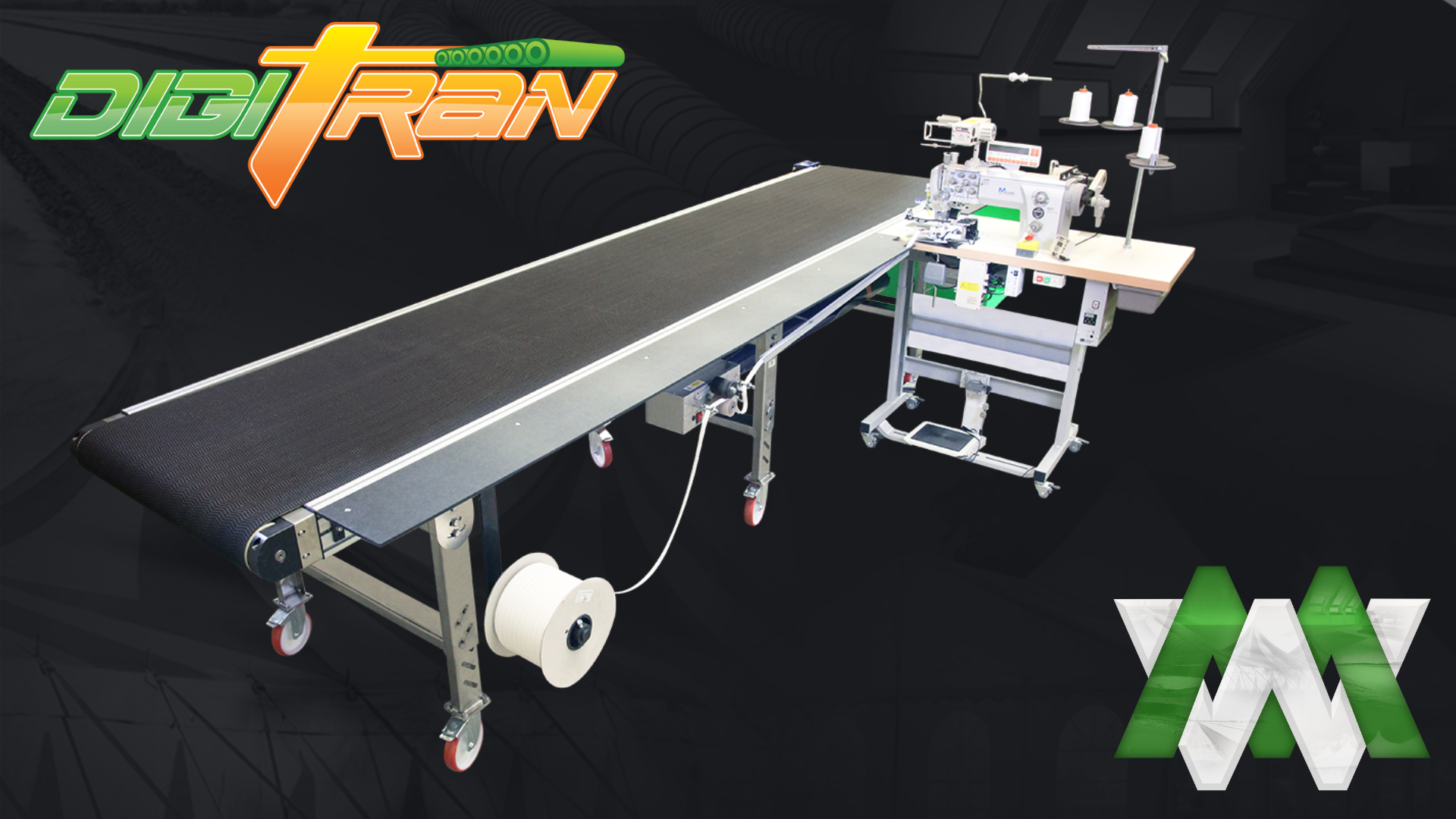
- The Digitran is an automated sewing machine designed for SEG production with synchronized feeding and high-speed output.
- Shops producing both vinyl and fabric signage benefit from using both sewing and welding technologies in the same workflow.
- Finishing is often the most underestimated step when transitioning from vinyl to fabric signage production.
What Is Digital Textile Printing and Finishing?
Digital textile finishing is the process that transforms printed fabric into a usable, install-ready product. It connects the full workflow from print to install. Without finishing, printed fabric remains incomplete and cannot function as a finished display.
In soft signage production, finishing includes preparing edges, attaching hardware, and ensuring the material meets the exact tolerances required for installation systems. It also supports more environmentally friendly production by reducing water use and chemical waste versus traditional methods; in this regard, digital finishing helps reduce chemical waste significantly. The transition from printing to finishing is where precision becomes critical. Unlike vinyl, fabric must be handled carefully to maintain alignment, tension, and dimensional accuracy while supporting accurate, low-waste application.
What Finishing Involves
- Hemming – securing raw fabric edges
- Silicone keder attachment – enabling frame installation
- Pole pockets – supporting display structures
- Seam joining – combining panels for large graphics
Why Finishing Differs Between Vinyl and Digital Textile
Vinyl banners and digital textiles require fundamentally different finishing approaches. Digital systems can place treatments only where needed instead of soaking the entire fabric.
Vinyl is thermoplastic, which allows it to be heat welded quickly and consistently. This makes it efficient for high-volume banner production with relatively forgiving tolerances.
Digital textiles, especially SEG graphics, demand a higher level of precision. The silicone keder must be sewn onto the fabric with exact placement. Because SEG frames have fixed channel widths, even small inconsistencies can prevent proper installation.
Vinyl allows minor variation. SEG does not. This difference shifts the requirement from speed-focused finishing to precision-focused finishing that can enhance targeted functionalities such as water repellency or antimicrobial finishes while minimizing chemical waste through precise application.
SEG vs Vinyl Banner Finishing Comparison
| Attribute | Vinyl Banner Finishing | Digital Textile / SEG Finishing |
|---|---|---|
| Primary Material | PVC Vinyl | Polyester Fabric |
| Finishing Method | Heat welding | Sewing |
| Edge Treatment | Hem or weld | Silicone keder |
| Seam Tolerance | Moderate | High precision required |
| Frame Compatibility | Not required | Required for SEG systems |
| Machine Type | Welding machines | Automated sewing machines |
| Production Focus | Speed | Precision and consistency |
How SEG Production Works — From Print to Frame
SEG production is a multi-step workflow that links digital textile printing, the printing process, and finishing, with digital printing quality affecting the final result in frame-based systems. Many inconsistencies occur at this stage because shops underestimate the level of precision required for modern textile printing applications.
Modern SEG finishing relies on industrial sewing technology to maintain consistency across production runs. Textile printing also requires fabric-specific ink types before the finishing stage can be completed successfully.
Step 1 — Printing Process: Printing the Substrate
SEG graphics are typically produced through digital printers using dye sub workflows on polyester fabric. Material properties such as stretch, weight, and coating influence how the fabric behaves during finishing.
For high-volume polyester production, dye-sublimation printers are ideal, while direct to media printing can reduce waste significantly in production. This versatility also depends on using sublimation ink that is compatible with the application.
Once printed, the fabric must be prepared for precise finishing operations, and the right ink and fabric combination affects finishing performance.
Step 2 — Cutting to Finished Dimensions
SEG graphics must be cut to exact dimensions based on frame specifications. Unlike vinyl, there is no tolerance for excess material or trimming during installation.
Step 3 — Attaching the Silicone Keder
Silicone keder is a flexible bead sewn onto the edge of the fabric. This bead acts as a gasket that inserts into the frame channel, holding the graphic in place under tension.
Precision is critical. The keder must be sewn at a consistent distance from the fabric edge. Any variation results in loose or overly tight installations.
Manual sewing introduces inconsistencies, especially at scale. Automated systems solve this by synchronizing fabric and keder movement, ensuring repeatable results across every panel.
Step 4 — Quality Check Before Installation
Before installation, each finished piece must be checked for dimensional accuracy and seam consistency. Errors at this stage are costly because the print has already been completed. Quality checks may also verify print-through and alignment on the printed material, especially on uncoated fabrics where maximum print-through is expected and colours must remain consistent for certain display applications.
Consistent finishing reduces rework and protects profit margins.
What the Digitran Does for SEG and Soft Signage Production
For shops producing SEG graphics at volume, the limiting factor is rarely the printer. It is the finishing step.
The Digitran automated sewing machine is designed specifically to solve the challenges of digital textile finishing by improving precision, consistency, and throughput for a business within the broader textile industry. Modern digital finishing systems may use high-resolution micro-spray technology for precise application, support functions such as UV stability, and cut drying energy by up to 85%.
Key Features, High Speed, and What They Solve
- Hands-free SEG feeding — eliminates operator misalignment and reduces manual handling
- Synchronized transport system — ensures fabric and keder move together consistently
- Programmable stitching — reduces operator variability and decision-making
- Needle cooling — maintains performance during extended high-speed runs
- Multiple seam configurations — allows flexibility across different applications
- Mobile frame design — enables efficient movement within production facilities
Best For — Applications the Digitran Handles
The Digitran is not limited to SEG production. Its versatility supports a wide range of textile application needs across end uses:
- Silicone edge graphics
- Fabric banners
- Awnings
- Curtains, gymnasium dividers, and other home décor textiles
- Marine applications
- Mattresses
- Pergolas and shade systems, including garments and other products that may benefit from UV stability
Digitran Production Scenarios
| Production Scenario | What the Digitran Handles | Key Feature |
|---|---|---|
| High-volume SEG | Consistent keder alignment | Automated feeding + transport |
| Mixed production | Multiple seam types | Seam configuration flexibility |
| Transition to fabric | Faster finishing time | Programmable stitching |
| Large-format graphics | Oversized panel handling | Conveyor and driven rollers |
SEG vs Vinyl Banner — Choosing the Right Finishing Approach
Sewing and welding are not competing technologies. They serve different materials and applications.
Vinyl banners require welding for speed and durability. SEG graphics require sewing for precision and proper frame integration.
For shops producing both, a dual-machine workflow is the most effective approach. Pairing a sewing system like the Digitran with a welding solution such as the T300 Edge banner and sign welding machine creates a complete finishing operation.
Understanding the difference between processes is essential. For a deeper comparison, see this banner welding vs sewing comparison.
Final Thoughts
The shift from vinyl to fabric signage is not just a printing change. It is a finishing transformation. Shops that understand and invest in digital textile finishing gain a competitive advantage in quality, efficiency, and scalability.
The right finishing equipment does not just complete the product. It defines it.
Frequently Asked Questions About Digital Textile Finishing for SEG
What is a digital textile finishing machine?
A digital textile finishing machine is equipment designed to cut, hem, and apply edge treatments like silicone keder to printed fabric. In the sign industry, it refers specifically to automated sewing systems used for soft signage production, and in broader digital textile workflows these systems can also support more environmentally friendly production by reducing water consumption by up to 90% compared with traditional methods.
What is the difference between SEG finishing and vinyl banner finishing?
Vinyl banners are heat welded for speed and durability. SEG graphics require sewing to attach silicone keder with precise placement. SEG frames require tighter tolerances, making precision critical.
How does automated SEG finishing improve consistency?
Automated systems synchronize fabric and keder movement, eliminating manual feeding inconsistencies. This ensures consistent seam placement and improves installation success rates.
Can one machine handle both SEG and vinyl finishing?
No. SEG requires sewing, while vinyl requires heat welding. Shops producing both typically operate separate machines for each process.
What seam types can the Digitran produce?
The Digitran supports multiple seam types including hems, pockets, butt seams, overlap seams, SEG webbing, and hook-and-loop applications. This flexibility allows one machine to support multiple production needs.