A banner hem that looked perfect at delivery can start peeling just months later—and in many cases, the problem isn’t the material, it’s the welding method. A hot wedge welding machine for signs bonds thermoplastic materials by pressing a heated metal wedge between layers and sealing them with pressure rollers, creating a stronger, more uniform seam than hot air methods, especially on thick vinyl and outdoor banners. For sign shops, banner manufacturers, and other professionals producing durable signage, that difference matters because many seam failures do not show up until months after installation, when weather, tension, and handling expose weak welds and turn into rework or warranty issues.
This article explains how hot wedge welding machines work, where they outperform hot air welding, which materials are the best fit, why seams fail, and what machine options make sense for smaller sign shops, including models like the T3 Extreme. This is why modern sign and banner welding machines are designed to address long-term durability, not just immediate appearance.
Key Takeaways
- A hot wedge welding machine bonds material through direct heated-metal contact, producing stronger seams than hot air in many applications.
- Hot wedge welding excels on thick vinyl and outdoor banners where consistent heat penetration is critical.
- Hot air welding remains better for curved seams, mesh banners with heavy ink, and mixed-material workflows.
- Seam failures like delamination often appear months later and are typically caused by improper welding method selection.
- Compact machines like the T3 Extreme make hot wedge welding accessible to smaller sign shops.
- Many seam failures traced months later are caused by method mismatch—not material defects.
What Is a Hot Wedge Welding Machine?
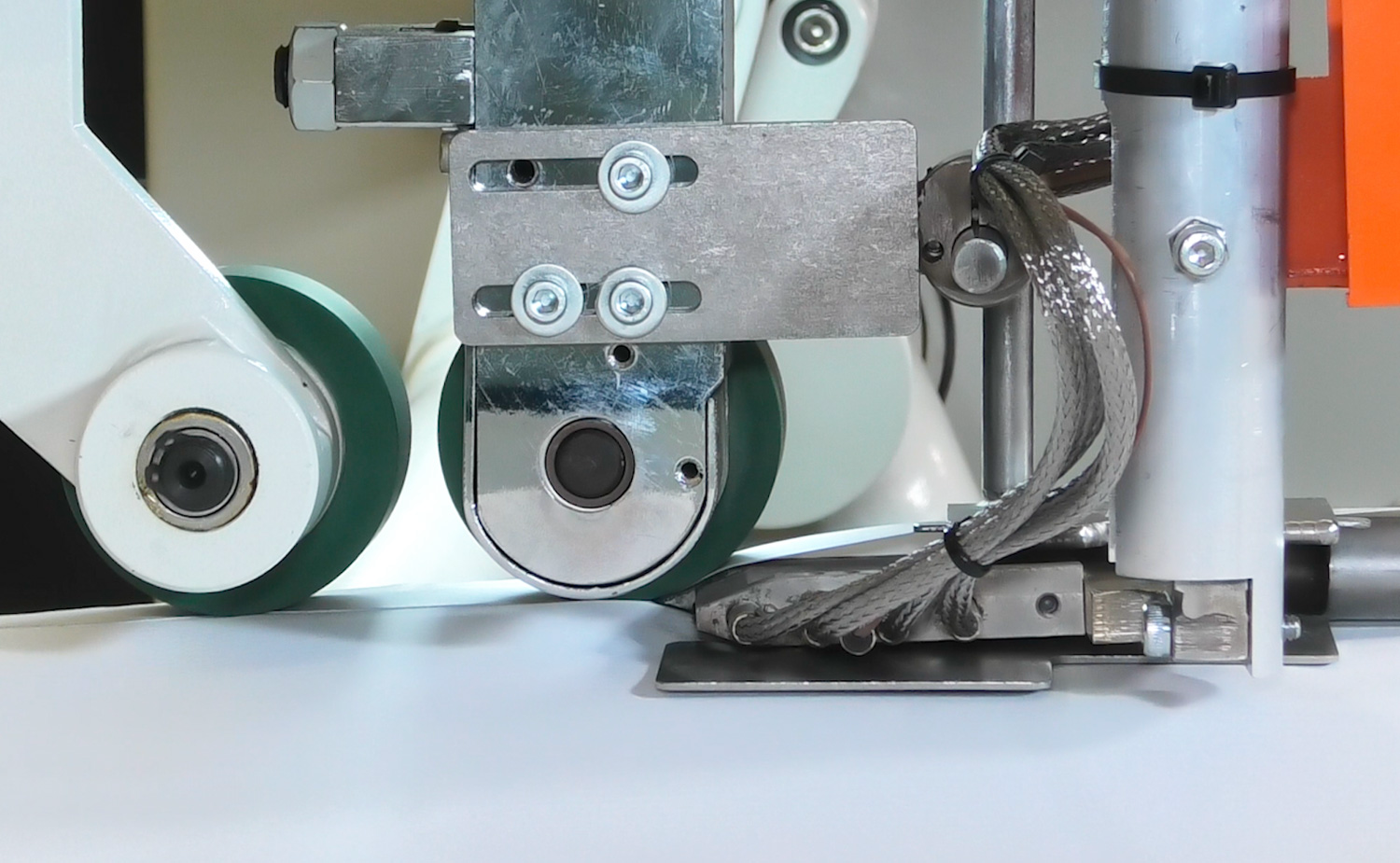
A hot wedge welding machine is a system that joins thermoplastic materials by inserting a heated metal wedge between overlapping layers and compressing them with rollers to create a fused seam.
Unlike hot air welding, which uses forced airflow to soften materials, hot wedge welding delivers heat through direct contact. This results in more consistent heat transfer and stronger bonding—especially in thicker or multi-layer materials.
New to the process? See our guide: What Is Hot Wedge Welding?
How the Wedge and Rollers Work Together
The heated wedge is positioned between two layers of material, softening them from the inside out. Immediately behind the wedge, pressure rollers compress the layers together, creating a uniform bond. Proper alignment, pressure, and temperature control are critical factors, and a digital control system helps manage key parameters with precision to ensure temperature stability and consistent pressure; the adjustable settings should match the material and speed to prevent defects like burn through, since test welds are required and the right tools can help stop seam wander and save setup recipes when needed—small variations can significantly affect seam quality.
Hot wedge systems are energy-efficient and do not require compressed air, and this hot wedge welding glossary overview explains why direct-contact heating delivers strong, waterproof seams across many thermoplastic applications.
What Materials Respond Best to Direct Contact Heat
- PVC-coated vinyl banner stock — Ideal for strong, consistent seams
- Laminated or multi-layer fabrics — Benefit from deeper heat penetration
- Heavy scrim vinyl (13–18 oz) — The “sweet spot” for hot wedge welding
- Mesh banners (lightly printed) — Can work, but require careful settings
- Thin or heavily inked materials — Better suited for hot air welding
For these materials, wedge position and roller pressure must work with temperature, alignment using proper guiding tools, and travel speed to produce clean, durable seams. An adjustable control system helps match those settings, maintain temperature stability, and improve precision and repeatability.
Material choice also depends on the application: even fabrics that look identical can weld differently because coating weight, thickness, and formulation change how heat transfers. That matters across a broader range of banner and industrial materials, and it helps determine whether a product calls for a single- or dual-track weld, depending on its end use, testing needs, and required standards.
Hot wedge welding is also effective for thermoplastic geomembranes and HDPE, so it can be a suitable option beyond sign vinyl when the material and seam requirements fit. Industry users can look at hot wedge welding for geomembranes and liners to understand how the same technology scales to large containment projects. Always run test welds before production, and save proven settings for repeat runs. Do not stop the machine with the wedge touching the material, or you risk burn through.
Hot Wedge vs. Hot Air Welding: What Actually Changes at the Seam?
The real difference between hot wedge and hot air welding lies in how heat is delivered—and how that affects seam performance over time.
| Factor | Hot Wedge Welding | Hot Air Welding |
|---|---|---|
| Heat Delivery | Direct metal contact | Forced heated airflow |
| Best Material Fit | Thicker coated thermoplastics; suitability depends on coating weight and formulation, not just thickness | Thin, flexible, or printed materials |
| Seam Geometry | Straight, continuous seams | Curves and complex shapes |
| Seam Strength (Thick Vinyl) | High and consistent | Can be inconsistent |
| Equipment Needs | No compressed air | Requires air supply |
| Failure Mode | Rare if applied correctly | Delamination over time |
| Typical Uses | Outdoor banners, billboards, pole pockets, hems, reinforced edges, and some HDPE or thermoplastic geomembrane work | Detailed shapes and heat-sensitive graphics |
Visually identical thermoplastic products can still weld differently, so selecting settings should always include testing.
Hot wedge welding penetrates deeper into thicker materials, creating a bond that holds under stress. A fast wedge welder also helps improve production speed when long linear seams are the priority. That makes it suitable for specific applications where repeatable seam quality matters, including swimming pool liners and water storage tanks, and it often outperforms sewing in banner finishing techniques comparing welded and sewn seams. Hot air welding, while more flexible, can sometimes heat unevenly—leading to weaker seams in heavy applications.
Why Straight Seams Favor Hot Wedge
Straight seams allow consistent pressure and alignment between wedge and rollers. Choosing between hot wedge and hot air depends on the application, and for long, straight runs a single-track configuration is the standard choice because steel rollers help maintain even contact and pressure. This creates highly uniform welds, especially in long banner hems or overlaps, and hot wedge welding is most effective for long, straight seams rather than curved layouts.
Hot wedge welding is typically faster than sewing or gluing because it forms a continuous seam without thread, adhesives, or tapes.
It also runs cleaner and quieter, without fume emissions.
Why Curves and Mesh Still Favor Hot Air
Hot air welding adapts more easily to curves and irregular shapes. It also reduces the risk of ink damage on heavily printed mesh, making it the better choice for certain applications.
Where Hot Wedge Has a Distinct Advantage in Sign Production
Outdoor Banners and Long-Term Exposure
Outdoor banners, billboards, and pole pockets experience UV exposure, wind stress, and repeated flexing, and the same seam durability matters in demanding field installations and even some industrial roofing applications. Hot wedge welding creates deeper, more uniform bonds that hold up better over time—reducing the risk of seam failure months after installation, which directly supports the importance of durable signage in advertising for long-term brand visibility.
Thick Vinyl and Heavy Scrim Stock
Hot air welding can under-penetrate thick materials, resulting in seams that look fine initially but fail later. Hot wedge welding solves this by delivering consistent heat through the full material thickness, which is a key reason many shops invest in a dedicated sign finishing and banner welding machine for heavy scrim work.
When Mesh Still Works on Hot Wedge
Hot wedge welding can work on mesh banners without heavy ink coverage. However, for heavily printed mesh, hot air is often the safer choice to prevent ink lifting.
What Seam Failure Actually Looks Like When the Method Is Mismatched
Understanding failure modes helps diagnose problems quickly:
- Peeling hems after installation
Likely cause: insufficient heat penetration (often from hot air on thick vinyl) - Wavy or inconsistent seams
Likely cause: uneven pressure or alignment issues - Ink lifting near seam on mesh
Likely cause: excessive heat from wedge welding
In most cases, failure is not due to material quality—it’s due to using the wrong welding method for the application.
The T3 Extreme: A Hot Wedge Option Built for Smaller Sign Shops
The assumption that hot wedge welding requires a large, expensive system is outdated. The T3 Extreme hot wedge welder is designed specifically for sign shops that need high-speed performance in a compact, accessible format, much like the Miller T3 series favored for fast production. That makes it easier when selecting a machine by application fit, operator training needs, available service, and overall price.
What a Small Shop Gains by Moving Off Hot Air Alone
Adding a dedicated hot wedge machine allows shops to:
- Produce stronger seams on thick banners
- Reduce long-term warranty issues
- Improve consistency across production runs
- Expand capabilities without replacing existing equipment
This makes it an ideal complement to hot air systems rather than a replacement, especially as more custom sign producers recognize why banner welders are essential for signage projects that must balance speed, durability, and finish quality.
How Miller Weldmaster Helps Sign Shops Choose the Right Method
Choosing between hot wedge and hot air welding isn’t about picking one over the other—it’s about matching the right method to the material, seam type, production goals, and track configuration. In applications where seam verification matters, a dual track setup can add a test channel for quality checks, and this style is widely recognized in technical welding beyond signs.
Miller Weldmaster works with sign shops to evaluate applications, test materials, and recommend solutions that balance performance, efficiency, and long-term durability. For shops planning their layouts, hems, and hanging methods, guidance on what to consider when finishing signs or banners can help align equipment choices with real-world installation demands. This approach ensures manufacturers invest in the right technology for their specific needs.
See Miller Weldmaster’s hot wedge welding machines.
- Create hems and reinforced edges quickly and consistently.
Frequently Asked Questions About Hot Wedge Welding for Signs
What is a hot wedge welding machine?
A hot wedge welding machine bonds thermoplastic materials by using a heated metal wedge and pressure rollers to fuse layers together, creating strong seams for banners and signage.
Is hot wedge welding stronger than hot air welding?
On thick vinyl materials, hot wedge welding typically produces stronger seams due to direct heat transfer. On thinner or curved materials, the difference is less significant.
Does hot wedge welding work on mesh banners?
Yes, but results depend on ink coverage. Heavily printed mesh is often better suited to hot air welding to prevent ink damage.
What is the best hot wedge welding machine for a small sign shop?
Compact machines like the T3 Extreme are designed specifically for smaller shops, offering strong performance without large system requirements.
Why do welded banner hems fail months after installation?
Delayed failures are usually caused by using the wrong welding method. Hot air welding on thick material can create seams that weaken over time under environmental stress.