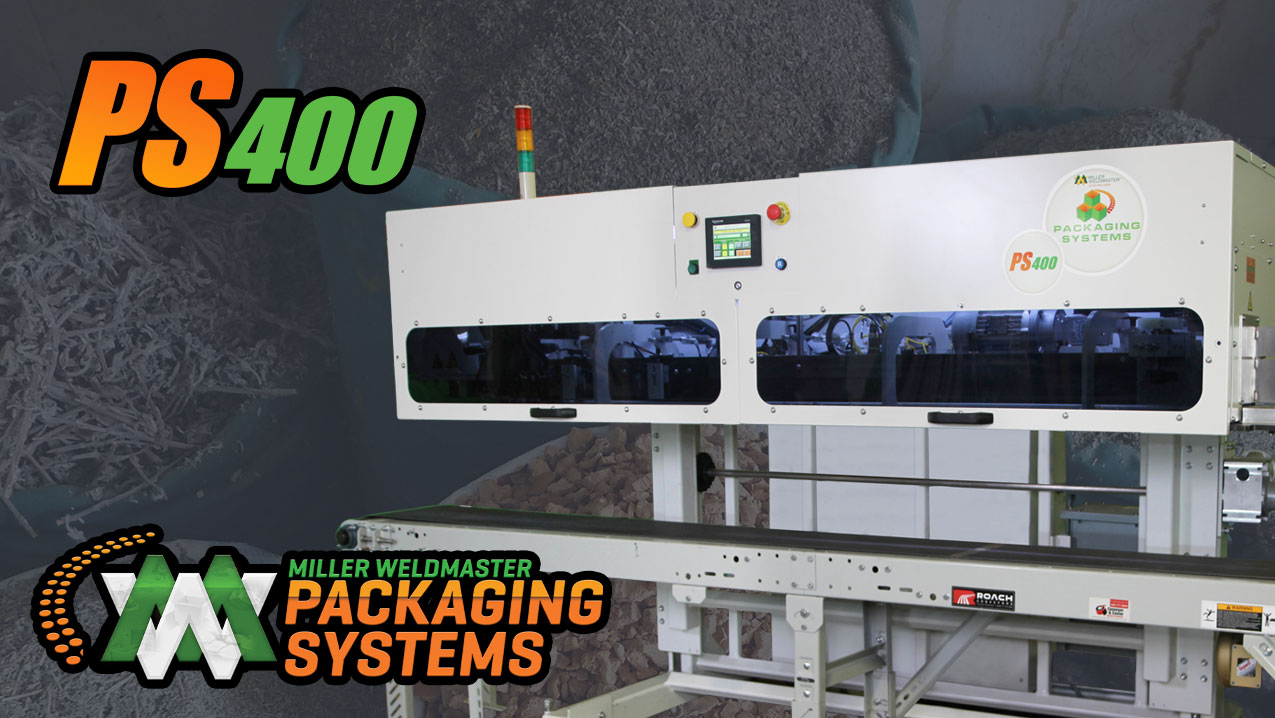
Bulk packaging operations today face a constant challenge: demand is increasing while labor availability and production time remain limited. The PS400 high-speed bag closer addresses this gap by providing fully automated bag closing using hot-air welding technology capable of running at true industrial speeds. It is the fastest packaging bagging machine, offering a streamlined bag closing system that can be integrated into automated packaging lines. The PS400 is versatile and can seal a wide variety of bags, including polywoven, thermoplastic, and paper bags, without the need for glue. With the ability to seal up to 35 bags per minute, it is ideal for high-volume production lines. Designed for industries such as agriculture, building materials, and pet food that require consistent quality and operational efficiency, the PS400 integrates directly into modern bagging lines to deliver consistent seams, improved packaging throughput, and reliable performance for industries such as pet food bag sealing, agricultural packaging, and other high-volume bulk packaging operations. For full specifications and machine details, visit the official PS400 high-speed bag closer page.
As production volumes continue to rise across sectors like animal nutrition, chemicals, and agricultural inputs, manufacturers are increasingly turning toward bulk packaging automation to stay competitive. A modern high-speed bag sealer like the PS400 eliminates bottlenecks at the end of the bagging line while delivering strong, consistent welded seams that outperform traditional stitching methods in durability and product protection.
What You Need to Know Before Reading Further
- The PS400 high-speed bag closer automates bag sealing for industrial packaging lines using hot-air welding technology designed for high production volumes.
- The machine functions as a pinch and double-fold sealer, producing durable, tamper-resistant seams suitable for demanding industrial environments.
- The PS400 features a precision folding system for clean, straight pinch or double-fold seals.
- The PS400 features digital controls for quick production start and is servo controlled, enabling synchronization with converting lines.
- The PS400 can weld and seal thermoplastic and paper bags closed with a pinch and/or double fold, supporting both methods as a fold no glue solution.
- Automated bag closing significantly improves bagging line efficiency by reducing manual labor and eliminating bottlenecks at the end of the packaging process.
- Rising packaging demand in 2026 means manufacturers must increase throughput while maintaining consistent product quality.
- Welded seams provide stronger, more contamination-resistant closures compared to traditional stitched seams used in manual bag closing.
- Manufacturers can review specifications or request a consultation through Miller Weldmaster packaging automation experts: https://www.weldmaster.com/contact-sales
What Is a High-Speed Bag Closer and How Does It Work?
A high-speed bag closer is an industrial bag closing machine and sealing machine designed to seal filled bags automatically as they exit a bagging system. Instead of relying on operators to manually stitch or tape each bag closed, the machine integrates directly into the production line with an advanced closing system to perform consistent sealing using heat welding technology.
In packaging environments such as pet food production or agricultural feed processing, filled bags move continuously along a conveyor. A machine like the PS400 applies a precise hot-air welding process to create a durable seam that protects the product inside while maintaining high production speeds.
Typical automated bag sealing follows this process:
- Filled bags travel from the filling station onto a conveyor system.
- The bag top is aligned and folded to prepare for sealing. The PS400 features a folding system for size, with a quick change folding system that allows for rapid adjustments to accommodate different bag sizes and types.
- Heated air and pressure weld the bag layers together.
- The sealed bag exits the machine and continues down the packaging line for palletizing or shipping.
Within a modern industrial bag sealer like the PS400, automation ensures consistent weld temperatures, pressure control, and seam quality across thousands of bags per shift. The benefits of the PS400's efficient and customized operation include seamless integration into new or existing packaging lines, and it is designed for heavy-duty industrial use, providing durable, moisture-proof, and weather-resistant seals.
What Types of Bags Are Commonly Sealed with Automated Systems?
High-speed bag closing equipment is widely used across industries that require reliable bulk packaging.
Common bag types include:
- Pet food and animal feed bags using multilayer paper or coated materials
- Agricultural seed and fertilizer bags requiring strong sealed seams
- Chemical and powder packaging bags designed for dust containment
- Industrial ingredient bags used in food processing or material supply chains
- Bulk ingredient packaging used by large-scale manufacturing operations
- Thermoplastic and paper bags for a variety of packaging needs
The PS400 high speed bag closer is versatile and can handle different batches, integrating seamlessly with both automatic filling lines and manual feed systems to suit a wide range of production environments.
For example, a pet food manufacturer running multiple production lines may process thousands of bags per hour. Automated sealing ensures every bag is closed consistently without slowing the production process.
Automated Bag Closing vs. Manual Bag Closing: Which Produces a Better Seal?
| Performance Factor | Automated Welding (PS400) | Manual Sewing |
|---|---|---|
| Seam Integrity | Continuous welded seam | Thread-based closure |
| Contamination Risk | Fully sealed barrier | Needle holes can allow product leakage |
| Production Speed | High-speed continuous operation | Dependent on operator speed |
| Maintenance | Controlled machine parameters | Requires thread replacement and operator handling |
| Consistency | Uniform seam every cycle | Variability between operators |
Manual sewing remains common in smaller packaging operations because it requires lower upfront equipment investment. However, as production volume increases, the limitations of manual bag closing become more apparent.
Machines such as the PS400 pinch and double-fold sealer provide sealed seams that reduce contamination risks and improve long-term durability during transport and storage. This consistency is especially important in industries like agriculture or animal nutrition where product integrity directly affects brand reputation.
The PS400 features a line precision folding system and a folding system for clean, straight folds, ensuring a system for clean straight seams on every bag. Its advanced folding system for clean, straight folds enables quick production start-up and easy customization for different fold types and sizes, delivering high-quality, seamless finishes without adhesives or hot melt. Additionally, the PS400 can weld and seal thermoplastic and paper bags closed with a pinch and/or double fold, further enhancing production efficiency and product appearance.
How to Automate Bag Closing in a Packaging Line
Transitioning from manual bag sealing to a fully automated process requires careful evaluation of the production line. Manufacturers typically follow a step-by-step approach when implementing packaging automation.
- Evaluate current production output and identify bottlenecks in the bag closing stage.
- Determine bag specifications, including materials, sizes, and seam requirements.
- Select the appropriate automated bag closer, such as a PS400, based on speed and integration capabilities.
- Integrate the machine into the bagging line, ensuring compatibility with conveyors and filling equipment.
- Measure production performance, tracking throughput, seam consistency, and labor reduction.
After these steps, installation is coordinated by a Miller Weldmaster certified field service engineer, who will contact you to schedule installation and training at your facility. The PS400 high speed bag closer is designed to be easily integrated into existing packaging lines, whether as part of a larger automated system or a manual process. Miller Weldmaster provides you with everything you need to know to get your team ready for installation and training, ensuring a smooth setup and transition.
For manufacturers evaluating packaging automation options, additional resources are available on the Miller Weldmaster packaging pages:
https://www.weldmaster.com/packaging/
https://www.weldmaster.com/packaging/bag-machine
A facility producing large quantities of feed bags, for example, may see significant improvements when replacing manual stitching with automated sealing. Instead of relying on several operators to close bags individually, a single automated system can handle continuous production with greater speed and consistency.
What Is the ROI of Switching to an Automated Bag Closer?
- Labor reduction: Automated bag closing reduces the need for multiple operators at the sealing station, lowering labor costs per bag produced.
- Higher throughput: A high-speed bag sealer can process significantly more bags per hour compared to manual sewing operations.
- Reduced defects: Automated welding eliminates thread failures and inconsistent closures that can lead to product loss.
- Improved line efficiency: Faster sealing prevents the bag closing stage from becoming a bottleneck in the packaging workflow.
Why Packaging Demand Is Rising in 2026 — and What It Means for Manufacturers
Industrial packaging demand continues to grow due to several major market forces affecting manufacturers worldwide.
- Expansion in agricultural and pet food markets is increasing demand for durable bulk packaging solutions.
- Supply chain pressure is pushing manufacturers to improve production efficiency and reduce packaging delays.
- Automation adoption is accelerating as companies seek to maintain throughput despite labor shortages.
These trends mean packaging lines must operate faster and more consistently than ever before. Automated solutions like the PS400 allow manufacturers to keep up with production demand while maintaining quality control. The PS400 enables quick production and a quick production start, helping manufacturers efficiently respond to rising demand.
Which Industries Are Driving Bulk Bag Packaging Demand?
- Pet food manufacturing requires durable bags capable of protecting product freshness and preventing contamination.
- Agricultural supply companies depend on strong packaging for seed, fertilizer, and feed products.
- Chemical processing requires sealed bags that safely contain powders and granulated materials.
- Food ingredient manufacturing uses bulk packaging to transport flour, grains, and other dry ingredients.
- Industrial materials suppliers package additives, compounds, and specialty materials in sealed bags.
These industries share one key requirement: high production volumes that demand reliable, automated packaging equipment. The PS400 high speed bag closer is a versatile solution for a wide range of packaging needs across these industries.
What to Look for in a High-Speed Bag Sealer
When evaluating automated bag closing equipment, several technical considerations influence production efficiency.
- Sealing technology: The machine should provide reliable hot-air welding capable of producing strong seams on multilayer bag materials.
- Throughput capability: Equipment must match or exceed the output of the upstream bag filling system.
- Material compatibility: Packaging materials vary widely, so the sealer must accommodate coated paper and multilayer bag constructions.
- Integration flexibility: The machine should integrate easily with existing bagging lines and conveyor systems.
- Changeover efficiency: Packaging operations often run multiple bag sizes, making quick adjustments important.
The PS400 high speed bag closer features a recipe management system that enables easy recall of different batch settings, allowing for customized production and quick changeovers. This digital control system ensures consistency and efficiency, especially in environments requiring frequent adjustments.
Miller Weldmaster offers comprehensive training on machine operation and after-sales service to ensure optimal performance. Your staff will receive extensive instruction on welding equipment operation and maintenance, and our service team is dedicated to keeping your business running at optimal performance and assisting with any solutions you need.
Manufacturers evaluating packaging automation solutions often consult equipment providers such as Miller Weldmaster industrial packaging technology:
https://www.weldmaster.com/
Additional automation insights can be found in these resources:
- https://www.weldmaster.com/blog/ps150-bag-sealer-vs-manual-bag-closing
- https://www.weldmaster.com/blog/top-features-automated-bag-machines
- https://www.weldmaster.com/blog/choosing-bag-machine-for-business
- https://www.weldmaster.com/blog/bag-machines-vs-manual-packaging-why-automation-wins
Ready to Scale Your Packaging Line?
Manufacturers across the packaging industry are facing the same reality in 2026: production expectations are rising while labor availability remains limited. Companies that invest in automation today are positioning themselves to maintain consistent throughput and product quality in an increasingly competitive market.
For operations handling bulk packaging, the PS400 high-speed bag closer provides a practical solution for eliminating bottlenecks and improving sealing consistency. Detailed machine specifications and capabilities can be explored on the PS400 product page.
If you are evaluating packaging automation for your facility, speak with Miller Weldmaster packaging specialists to discuss your application:
https://www.weldmaster.com/contact-sales
Existing Miller Weldmaster customers seeking maintenance or technical assistance can reach the service team here:
https://www.weldmaster.com/contact-service
Frequently Asked Questions About High-Speed Bag Closers
What is the difference between hot air welding and contact welding for bag sealing?
Hot air welding uses heated air to soften thermoplastic layers before pressure seals them together, creating a continuous welded seam. Contact welding uses heated bars that directly press against the material. Hot air welding is typically preferred for continuous industrial bag sealing because it allows higher speeds and more consistent seams.
Can a high-speed bag closer handle multiple bag sizes on the same production line?
Yes. Most automated bag closers allow adjustment of guides, fold mechanisms, and sealing parameters to accommodate different bag widths and materials. Machines like the PS400 are designed to integrate into flexible packaging lines where manufacturers may run multiple product sizes during the same production shift.
Why do welded bag seams last longer than sewn seams?
Welded seams fuse the material layers together, eliminating needle holes that can weaken the closure. Sewn seams rely on thread, which may degrade or loosen during handling and transportation. A welded seam forms a continuous barrier that improves durability and reduces the risk of leakage.
How fast can an automated bag closer run?
Actual speed depends on bag material, dimensions, and production line configuration. High-speed machines like the PS400 are designed for continuous operation at industrial packaging rates. For detailed performance data or application guidance, contact Miller Weldmaster packaging specialists: https://www.weldmaster.com/contact-sales
What packaging materials can be sealed using a hot-air bag closer?
Hot-air bag closers typically seal multilayer paper bags with thermoplastic coatings, as well as certain laminated packaging materials. Compatibility depends on the bag structure and coating composition, so manufacturers should always confirm material suitability with equipment suppliers before finalizing machine configuration.