---2.jpg)
Packaging automation trends 2026 are being shaped by forces that go well beyond incremental efficiency gains. For U.S. manufacturers, distributors, and fulfillment operations, automation is no longer a future initiative—it is a requirement for maintaining service levels, controlling costs, and meeting sustainability expectations.
The global packaging machinery market is projected to expand by 5.8% annually, reaching a valuation of $71.1 billion by 2026. This rapid growth is driven by rising consumer demand for sustainable, flexible, and high-tech packaging solutions, as well as the need for machinery that can process new materials. The packaging machinery market is influenced by labor shortages, stricter environmental regulations, and the need for production agility.
In 2026, packaging automation is increasingly defined by flexibility, data integration, and right-sized production. Market analysis shows that the market is defined by rapid growth, driven by automation, and shaped by emerging markets such as Asia Pacific and North America. Systems must adapt to changing order profiles, labor constraints, and environmental metrics without slowing throughput. This is where automated box making has moved from a niche solution to a core component of modern packaging strategies.
Asia Pacific dominates the packaging machinery market due to rapid industrialization and expanding food, beverage, and pharmaceutical manufacturing sectors, while North America is the fastest growing region thanks to the rapid adoption of advanced automation and robotics. The United States and China are expected to account for half of all packaging equipment sales growth through 2026.
Manufacturers evaluating automation options can explore a high-level overview of packaging and sealing technologies on Miller Weldmaster’s Packaging & Sealing Solutions page.
This guide explains:
-
The key packaging industry trends shaping 2026
-
Why automated box making plays a central role in packaging automation
-
How manufacturers are improving packaging line efficiency, reducing waste, and achieving measurable ROI
Why Packaging Automation Looks Different in 2026
Between 2023 and 2025, many companies viewed automation as a way to offset temporary labor challenges or support growth. In 2026, that mindset has changed.
Labor shortages in packaging and fulfillment are now structural rather than cyclical. These persistent labor shortages are driving the adoption of advanced packaging technologies to boost productivity and reduce labor costs. At the same time, e-commerce packaging solutions must support smaller batch sizes, more SKUs, and faster ship windows—all without increasing overhead. Sustainability expectations have also shifted from marketing claims to measurable performance indicators such as material reduction, DIM weight optimization, and waste reporting.
Automated box making addresses these pressures directly. Rather than standardizing products around fixed packaging formats, manufacturers are adapting packaging to the order itself—automatically, consistently, and at production speed. Regulatory pressure and rising labor costs are making automation a necessity rather than a value-add for companies in 2026.
By the end of this article, readers will understand:
-
The most important packaging automation trends in 2026
-
How custom box production fits into broader automation strategies
-
Practical outcomes such as cost reduction, faster fulfillment, and waste reduction
What Is Driving Packaging Automation Trends in 2026?
Labor Constraints and Rising Fulfillment Complexity
Packaging operations continue to face declining labor availability, especially in repetitive and physically demanding roles. At the same time, order profiles are becoming more complex:
-
Multi-SKU shipments
-
Smaller, more frequent order batches
-
Shorter fulfillment timelines
These conditions make manual packaging processes harder to staff and less predictable. Automation is no longer about replacing people—it is about stabilizing output, reducing variability, and allowing skilled labor to focus on higher-value tasks.
Cost Pressure from Materials, Freight, and Inefficiency
Packaging costs are no longer isolated line items. Corrugated material prices, void fill usage, and freight charges interact directly with one another. Oversized boxes increase:
-
Corrugated consumption
-
Filler material usage
-
DIM weight, which drives higher shipping costs
Right-sized packaging reduces these costs simultaneously by aligning box dimensions with the product, not the pallet or historical averages. According to industry analysis from McKinsey & Company (opens in a new tab), right-sizing initiatives can reduce total packaging costs by double-digit percentages when applied at scale.
Sustainability Requirements Becoming Measurable
In 2026, sustainable packaging is evaluated through data, not slogans. Manufacturers are increasingly required to track:
-
Material usage per order
-
Packaging waste reduction
-
DIM weight efficiency
-
Filler reduction
As manufacturers transition toward eco-friendly materials and sustainable packaging, they face new challenges in maintaining seal integrity. These materials often require custom machinery to ensure reliable seals due to their unique sealing properties. Sustainable materials typically have narrower heat-sealing windows and can be more prone to stretching and tearing under tension, making precise temperature control and advanced sealing technologies, such as ultrasonic sealing, essential. Automation hardware is evolving to handle delicate eco-friendly materials, including seaweed-based films and mono-materials. Custom machinery enables food manufacturers to adapt sealing heads, dwell times, and pressure controls to specific recyclable films and trays, supporting both sustainability goals and operational efficiency.
Automated box making supports sustainable packaging by reducing excess corrugated and filler while improving packing consistency. Importantly, these sustainability gains are tied directly to operational efficiency—not branding alone.
Why Automated Box Making Is Central to 2026 Packaging Automation
What “Automated” Actually Means in Modern Packaging Systems
Automated box making refers to automated systems that create custom box sizes in real time, based on order-specific dimensions. It is not limited to short runs, and it does not rely on manual customization.
Modern systems combine automation software, dimension capture, and precision cutting and creasing to produce right-sized boxes continuously throughout a shift.
How Real-Time Box Creation Works on the Production Floor
In practice, the workflow looks like this:
-
Order dimensions are captured through scanning or system input
-
Software calculates optimal box dimensions
-
Corrugated material is cut, creased, and formed automatically
-
The finished box is delivered to the packing station in real time
Modern packaging systems now integrate smart automation and real-time monitoring, leveraging IoT and AI technologies to enable predictive maintenance and continuous process optimization.
This process allows operators to maintain consistent output even as order profiles change throughout the day.
Why Right-Sized Boxes Reduce Waste and Speed Fulfillment
Oversized boxes create multiple inefficiencies:
-
Higher material consumption
-
Increased filler usage
-
Slower packing times
-
Higher freight costs
Right-sized packaging improves measurable outcomes, including reduced corrugated usage, faster pack rates, and lower shipping expenses. Additionally, right-sized packaging can help optimize shelf life and ensure product durability, particularly for food, beverage, and pharmaceutical products, by providing better protection and maintaining product stability.
Key Packaging Automation Trends U.S. Manufacturers Are Adopting in 2026
Increased Investment in Modular Automation Systems
Rather than replacing entire packaging lines, manufacturers are adopting modular automation systems that can scale over time. Modular machinery and automated solutions are being rapidly adopted to improve efficiency and reliability in packaging operations. This approach reduces risk while allowing companies to adapt as demand and product mixes evolve.
Data-Driven Quality Control in Packaging Operations
Automation increasingly includes sensors and data logging that monitor packaging consistency. Smart and connected technologies, such as sensors, QR codes, and RFID, are being integrated to enhance traceability, improve quality control, and boost consumer engagement throughout the packaging process. Compared to manual inspection, automated quality monitoring improves accuracy and reduces rework—whether measuring box dimensions or ensuring seal integrity.
Integration Between Packaging Equipment and Warehouse Systems
Packaging machines can no longer operate in isolation. Integration with WMS, ERP, and order management systems not only reduces errors, eliminates redundant data entry, and improves throughput consistency across the operation, but also enhances supply chain visibility and efficiency. AI is expected to reduce manufacturing costs by 20–30% and improve supply chain visibility by up to 25%.
How Automated Box Systems Like the Boxmat ProX Support These Trends
Flexibility for Mixed Order Profiles
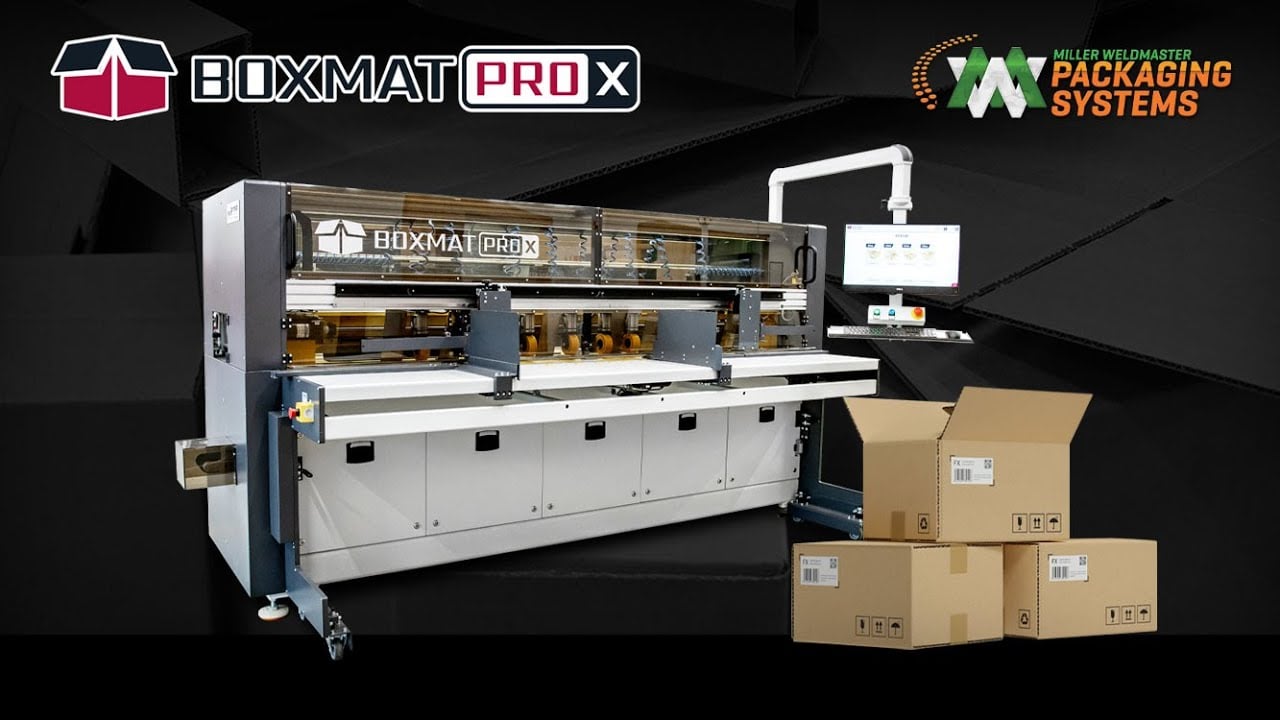
Systems such as the Boxmat ProX support variable box sizes, short runs, and frequent changeovers without sacrificing efficiency. These systems are designed to handle high speeds and rapid changeovers, meeting the demands of industries like food and beverage, where the need for high-speed, automated, and flexible packaging is driven by high consumption of packaged foods and drinks. This flexibility is essential for modern e-commerce and manufacturing distribution environments.
Learn more about automated box production systems here.
Supporting Sustainability without Losing Production
Automated box making supports sustainability goals by reducing waste and filler usage. However, successful implementations balance environmental benefits with throughput requirements, ensuring production efficiency is not compromised.
Reducing Total Packaging Cost, Not Just Labor
Automation impacts multiple cost categories:
-
Materials
-
Labor
-
Freight
-
Returns due to damage
What to Look for When Evaluating Packaging Automation in 2026
Questions Operations Teams Should Ask Before Investing
Key questions include:
-
What throughput levels are required today and in three years?
-
How variable are SKU sizes and order profiles?
-
What integration capabilities are needed with existing systems?
Common Mistakes Companies Still Make with Automation
Larger machines are not always better, and speed alone does not solve inefficiency. Effective packaging automation aligns technology with real operational constraints—not assumptions.
Frequently Asked Questions About Packaging Automation and Automated Box Making in 2026
How can packaging automation reduce costs in 2026?
Packaging automation reduces costs by enabling right-sized packaging, lowering labor dependency, and reducing shipping expenses driven by DIM weight and filler usage.
Is automated box making only for high-volume operations?
No. Variability in order size often matters more than volume. Operations with mixed SKUs and frequent changeovers benefit significantly from on-demand systems.
How does right-sized packaging impact sustainability goals?
Right-sized packaging reduces corrugated waste, filler usage, and shipping emissions, making sustainability improvements measurable and repeatable.
What industries benefit most from automated box automation?
Industries such as e-commerce fulfillment, manufacturing distribution, and third-party logistics benefit most due to high SKU variability and shipping complexity.
Additionally, the food and beverage, pharmaceuticals, and personal care industries are key drivers of packaging automation trends, with the pharmaceutical industry being the fastest-growing segment due to increasing demand for safe and sterile packaging. Emerging markets, especially in Asia-Pacific, are experiencing rapid growth in packaging machinery adoption, and the United States and China are expected to account for half of all packaging equipment sales growth through 2026.
How long does it take to see ROI from packaging automation?
ROI timelines vary, but many operations see returns within 12–24 months depending on volume, material savings, labor reduction, and freight cost improvements.