Inflatable welding is the process of joining thermoplastic inflatable materials with heat and pressure to create airtight seams. It is a critical process for manufacturing engineers, production managers, and product designers building welded inflatables for recreation, safety, and industrial applications. As inflatables become more technical—incorporating drop-stitch cores, higher operating pressures, and complex shapes—seam performance matters more than ever. Manufacturers looking to scale production and improve consistency are turning to purpose-built inflatable welding solutions to support repeatable, high-quality builds.
The idea of inflatable structures has evolved significantly, with innovations in inflatable welding transforming the industry and enabling new concepts and applications.
Today’s inflatable product manufacturing environment is more demanding than even five years ago. Customers expect lighter materials, stronger seams, and longer product life. Modern welding processes offer greater efficiency, as the welding process is faster than traditional sewing methods, allowing for quicker production of inflatable products. From paddle boards and inflatable docks to rescue lift bags and industrial containment bladders, durability and airtight performance are baseline expectations—not premium upgrades.
To optimize production for various inflatable products, manufacturers often use a combination of different welding machines, such as RF and hot air welders, to efficiently handle different seams and components.
The Short Version: What Changed in Inflatable Manufacturing
- Inflatables now serve industrial, safety, and high-performance markets, where seam failure is less acceptable.
- Drop-stitch technology requires precise welding to protect internal threads while maintaining airtight seams.
- Welding often outperforms gluing for long-term durability because it avoids adhesive aging and reactivation risks.
- The need for specialized welding equipment has increased to meet modern production demands and ensure strong, waterproof, and airtight seams.
- Hot air welding PVC and hot wedge welding are common methods depending on seam geometry and material stack.
- Automated hot air welders offer significant efficiency advantages, operating at speeds up to 100 feet per minute to boost productivity and reduce production costs.
- Quality control inflatables now focus on repeatable settings, inspection protocols, and leak testing workflows—not guesswork.
- Miller Weldmaster supports inflatable production with purpose-built systems, training, and service support.
What Is “Welded Inflatable” Construction?
Welded inflatables use heat welding to fuse thermoplastic layers into airtight seams. Instead of relying on adhesives, the material itself is melted and pressed together to create a bonded surface that is more durable and long-lasting than glued joints, which can weaken over time.
The welding process is an industrial, non-contact method that uses heat and pressure to fuse thermoplastic-coated fabrics, resulting in strong, waterproof seams.
In practical terms, “airtight seams” are seams that hold pressure under load, flexing, and temperature swings without measurable leakage. For high-pressure products, this means maintaining structural integrity even when internal air tension increases.
While adhesives are still used in some builds, welded inflatables are increasingly preferred when manufacturers prioritize durability, repeatability, and long-term seam stability. Companies like Miller Weldmaster design industrial fabric welding systems specifically to support this level of consistency.
Inflatable Welding vs Gluing
Welding bonds material layers by fusing them together with heat and pressure. Gluing bonds layers using a chemical adhesive between them. Problems can arise with glued seams, such as glue failure over time due to plasticizer migration, which causes glued parts to lose strength and can lead to leaks or loss of integrity in inflatable products.
| Factor | Welding | Gluing |
|---|---|---|
| Seam Strength | Material-to-material fusion | Adhesive layer bond |
| Failure Modes | Improper heat, overlap, or pressure | Adhesive aging, contamination, reactivation |
| Production Speed | Consistent once dialed in | Cure time required |
| QC Approach | Pressure testing + parameter control | Visual + cure verification |
| Environmental Sensitivity | Less sensitive to humidity during bonding | Adhesives can be humidity/temperature sensitive |
Welded seams maintain the presence of a strong, durable bond that can be as robust as a continuous piece of vinyl fabric, providing long-lasting integrity even in the presence of environmental factors.
Some products still use adhesives, especially in highly detailed or hybrid constructions. However, when airtight seams and repeatable production are top priorities, welding is often preferred. Many manufacturers position hot air welding as an improvement over glue for long-term inflatable durability.
How Do I Make Inflatables Stronger?
Strength comes from material choice, seam design, and process control.
Welded seams are strong and provide superior durability, especially for high-pressure drop-stitch materials like those used in stand-up paddleboards. Inflatable welding creates a bond that is as strong as the base material, making it ideal for products that must endure heavy usage and environmental stress.
- Use appropriate overlap width based on pressure and load.
- Maintain consistent heat, speed, and pressure settings.
- Add reinforcement patches at stress points (handles, valves, tow points).
- Design seam paths to avoid sharp load corners.
- Match seam type to product function (towable vs. lift bag).
For example, an inflatable towable may prioritize dynamic seam reinforcement at handles, while an industrial lift bag prioritizes uniform edge sealing to withstand sustained pressure.
Drop-Stitch Technology and Why Welding Quality Matters
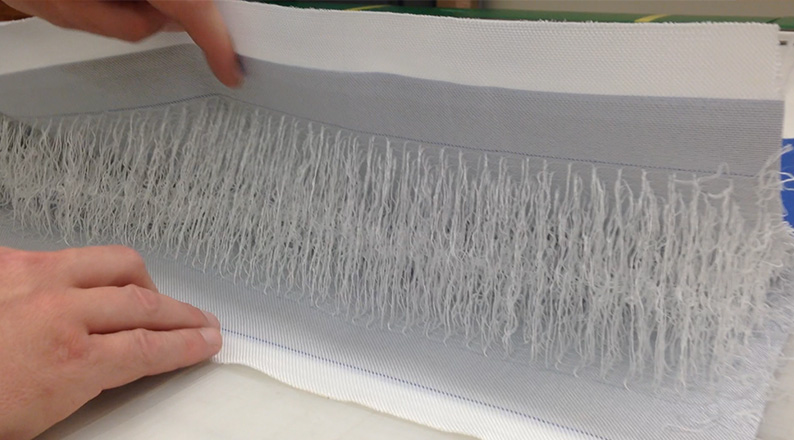
Drop-stitch is a construction method where two fabric layers are connected by thousands of internal threads, creating a rigid structure when inflated. For a detailed definition, see this explanation of drop-stitch technology.
Common in paddle boards, air floors, gym mats, and inflatable docks, drop-stitch panels demand precise welding. The process must seal edges without damaging internal thread structure.
Failure modes include:
- Thread damage from excessive heat
- Uneven bond along panel edges
- Micro leaks that appear only under higher pressure
- Inconsistent overlap causing localized weakness
Welding systems used for drop-stitch panels must balance heat input with structural preservation.
Airtight Seams on Drop-Stitch Panels
“Airtight” in QC terms means no measurable pressure loss over a defined time period.
- Maintain controlled temperature to avoid thread damage
- Ensure uniform overlap and pressure
- Inspect for edge consistency
- Perform pressure hold tests
Recommended test method: Pressure hold test over a fixed duration to confirm minimal PSI loss under controlled conditions.
Choosing the Right Welding Method for Inflatable Materials
Method choice depends on material type, thickness, geometry, and seam requirements. Selecting the right welding machine, such as a hot air welding machine or RF welding machine, is crucial for achieving durable, watertight seams in inflatable products.
Hot air welding machines operate at specific temperatures, typically between 700°F and 1,350°F, to ensure proper seam fusion without damaging the material.
Tape can also be applied after welding to reinforce seams, prevent wicking, and enhance waterproofing for added durability.
| Material | Seam Type | Geometry | Typical Welding Method | QC Focus |
|---|---|---|---|---|
| PVC-coated fabric | Overlap seam | Flat/long runs | Hot air welding PVC | Uniform heat + airflow |
| PVC-coated fabric | Long straight seams | Flat | Hot wedge welding | Speed + pressure consistency |
| TPU film | Curved seams | Complex shapes | Hot air welding | Heat sensitivity control |
| RF-compatible materials | Flat panel seams | Controlled tooling | RF welding inflatables | Die alignment + energy control |
Hot Air Welding PVC for Inflatables
PVC-coated fabrics are common in inflatable product manufacturing due to durability and weldability. The welder must precisely control heat, airflow, speed, and pressure.
Vinyl welding is a process that guarantees a waterproof seal and an airtight bond for inflatable products, making it ideal for creating strong, reliable inflatables.
For example, a bounce house seam may prioritize speed and wide overlap, while an inflatable boat seam may require tighter heat control and reinforcement integration. Learn more about process fundamentals in this guide to hot air welding for inflatables.
Checklist:
- Confirm correct temperature setting
- Monitor airflow consistency
- Validate overlap alignment
- Run pressure test samples
Vinyl welding eliminates the need for stitching, which can create holes and increase the risk of leaks.
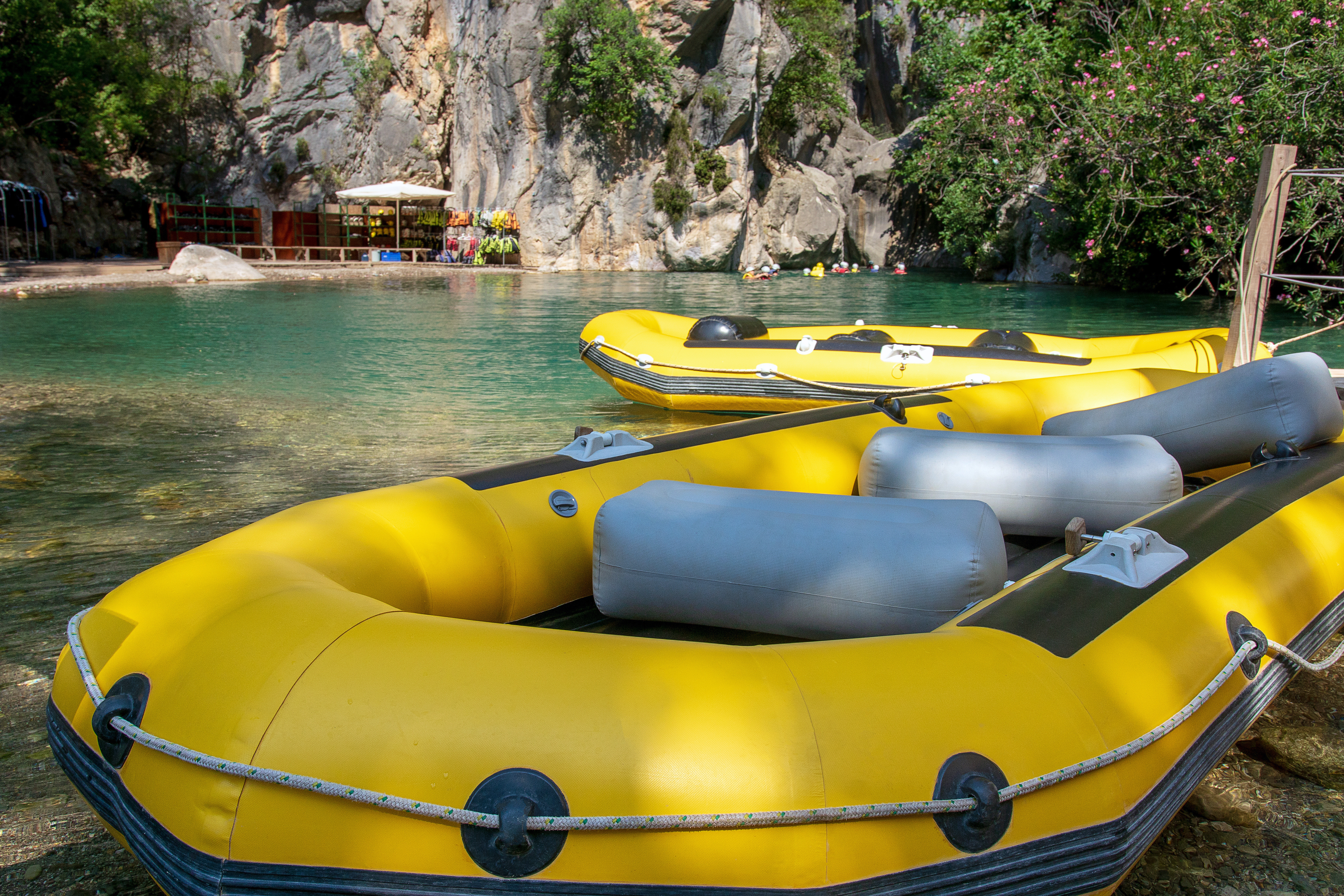
The absence of stitching in welded seams reduces the risk of leaking seams in inflatable boats and pool toys, ensuring waterproof and airtight performance.
The T300/T600 Curve Hot Air machine is ideal for the construction and repair of inflatable boats, providing strong, waterproof welded seams.
Design Trends in 2026 That Put More Pressure on Seams
Products are becoming more complex, tightening seam tolerances.
- More 3D panel shapes and curved seam paths
- Modern welding machines can handle virtually any shape or size of inflatable structure, ensuring precise and durable seams.
- Higher pressure use cases in performance inflatables
- Added components like handles, valves, mounts, and sensor housings
- Lightweight material stacks requiring durable seam welding
- Growing expectations for documented quality control inflatables
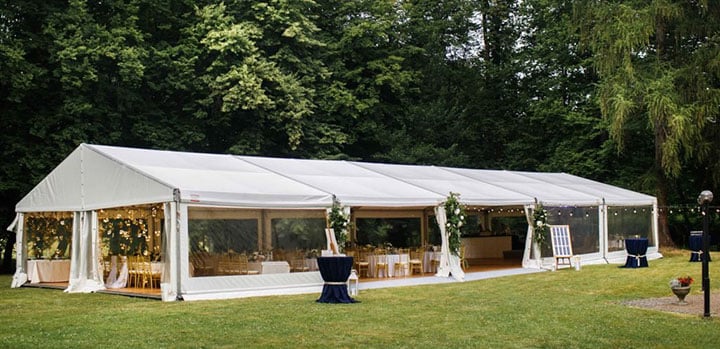
Hot air welding machines are commonly used for manufacturing inflatable tents, military attack boats, and other inflatable products.
Curves, Corners, and Odd Shapes (Where Leaks Love to Hide)
Curved seams fail more often due to alignment drift, inconsistent overlap, or uneven heat contact.
- Tight radii increase alignment sensitivity
- Irregular geometry challenges heat consistency
- Overlap width may vary without proper control
- Stress concentrates at corners
Consider a promotional inflatable with tight curves: corner seams often show leaks first due to minor overlap inconsistencies.
Quality Control for Inflatables
Inflatable QC verifies seam integrity and leak performance before shipping.
- Visual seam inspection (burn marks, skip welds, overlap consistency)
- Pressure hold testing
- Leak detection (soap solution or controlled immersion)
- Documentation of welding settings for repeatability
Thorough quality control and proper welding techniques significantly reduce the risk of leaks and seam failures in inflatable products.
Stable welding parameters reduce surprises and improve long-term performance.
How Miller Weldmaster Supports Inflatable Welding From Setup to Service
Miller Weldmaster works with manufacturers to evaluate material stacks, seam types, and throughput goals. Teams can talk through applications, run samples, and review seam performance before committing to full production. Miller Weldmaster also helps customers find the right welding machine or solution for their specific needs.
Manufacturers can also reach out to contact sales to evaluate welding methods or connect with contact service for seam troubleshooting, maintenance planning, or training support. Using advanced welding systems can save manufacturers time and money, and some inflatable weld purging systems can pay for themselves in gas savings after just a few welds.
What to bring to a seam review:
- Material samples
- Target pressure specifications
- Existing seam samples
- Failure photos or leak test data
Frequently Asked Questions About Inflatable Welding
What is inflatable welding?
Inflatable welding joins thermoplastic inflatable materials using heat and pressure to form airtight seams. It is commonly used for products like inflatable boats, paddle boards, and industrial bladders where consistent sealing matters more than cosmetic finishing.
Is inflatable welding better than gluing?
Often, yes for durability and repeatability. Welding fuses material layers, while glue adds an adhesive layer that can degrade or reactivate in some conditions. Many manufacturers prefer welding when airtight seams and consistent production are priorities.
What is drop-stitch technology in inflatables?
Drop-stitch uses two fabric layers connected by thousands of internal threads. When inflated, those threads hold a fixed thickness so the product becomes rigid. Welding must seal edges without damaging the thread structure to keep the product airtight.
How do you test inflatable seams for leaks?
Common methods include visual seam inspection, pressure hold testing over a set time, and leak detection using soap solution or controlled immersion. Testing verifies the seam stays airtight under pressure, not just that it looks clean. Pair results with recorded welding settings for repeatability.
What welding method is used for inflatable PVC or TPU?
Hot air welding is widely used for many inflatable thermoplastics and seam types. Method selection depends on material stack, thickness, and seam geometry, especially when curves or complex panels are involved. A quick sample weld and pressure test usually confirm the best approach.