A healthcare manufacturer isn’t just buying a machine—they’re investing in a production process that must withstand sterility audits, validation protocols, and seam-quality scrutiny. Medical fabric welding equipment refers to specialized machinery—typically RF (radio frequency) or dielectric welding systems—that fuse medical-grade thermoplastics like PVC, PU/TPU, and EVA into hermetic seals used in IV bags, blood bags, and surgical drapes. Choosing the right system requires a structured approach. In this guide, we’ll walk through five critical evaluation criteria: material compatibility, seal integrity, production throughput, operator consistency, and long-term serviceability.
Key Takeaways
- Medical fabric welding equipment must meet sterility, hermetic seal, and production-record requirements beyond standard industrial welders.
- Material compatibility is the first filter—only polar thermoplastics like PVC, PU/TPU, and EVA can be RF welded, and this welding technology helps eliminate contamination risks from needles and adhesives in sterile medical production.
- Seal integrity testing (pull, leak, optical) should be part of equipment evaluation—not an afterthought.
- Operator variability is a major risk; programmable, repeatable weld recipes are essential.
- Long-term support and serviceability directly impact uptime and validation continuity.
Why Medical Fabric Welding Equipment Isn’t a General-Purpose Machine
Buying medical fabric welding equipment means buying a validated process—not just hardware. Unlike industrial fabric welding used across industries for industrial fabrics such as tarps, banners, or awnings, medical applications demand airtight, sterile seals that can withstand pressure, fluid containment, and regulatory scrutiny; while fabric welding technology can deliver significant advantages over sewing by creating stronger seams with better durability and more efficient production, the medical focus is still sterile performance and compliance.
In industrial settings, minor inconsistencies may result in cosmetic defects. In medical manufacturing, those same inconsistencies could compromise patient safety. This fundamental difference elevates requirements for precision, repeatability, and documentation.
What Makes Medical-Grade Welding Different From Industrial Welding?
Buying medical fabric welding equipment means buying a validated process—not just hardware. Unlike industrial fabric welding used across industries for industrial fabrics such as tarps, banners, or awnings, medical applications demand airtight, sterile seals that can withstand pressure, fluid containment, and regulatory scrutiny; while welding can deliver significant advantages over sewing by creating stronger seams with better durability and more efficient production, the medical focus is still sterile performance and compliance.
Evaluation Criteria #1: Material Compatibility
Medical fabric welding uses thermoplastic materials to create strong seams, but not all of them can be RF welded. Only polar materials respond effectively to RF energy, making material compatibility the first and most important evaluation step for strong bonds, and understanding the high-frequency welding process for polar thermoplastics will help you evaluate which materials are viable for your application.
Which Materials Are Commonly Used in Medical Fabric Welding?
- PVC (Polyvinyl Chloride)
- PU/TPU (Polyurethane/Thermoplastic Polyurethane)
- EVA (Ethylene Vinyl Acetate)
- TPU-coated fabrics
These are common medical fabrics used in medical textiles because they can melt and bond under controlled welding conditions, unlike natural fibers.
Non-polar materials like polyethylene (PE) and polypropylene (PP) typically cannot be RF welded without additives, because radio frequency welding relies on dielectric heating of polar plastics such as PVC and PU.
Why Material Validation Testing Matters Before Committing to a Machine
Even within the same material family, coatings and formulations vary. Manufacturers should always request test welds using their exact material lot before purchasing equipment and validate exact coatings, thicknesses, and other specific materials characteristics first. This ensures compatibility and prevents costly surprises during production, while confirming the machine is suitable for the manufacturer’s exact material lot and formulation.
Evaluation Criteria #2: Seal Integrity and Sterility Testing
A hermetic seal isn’t just theoretically airtight—it must be proven under real-world conditions. High frequency welding creates waterproof, fray-proof bonds and a streamlined finish without visible seams, improving sealing quality where consistency matters most, especially in PVC RF welding applications requiring strong, seamless bonds.
What Is a Hermetic Seal, and How Is It Verified?
A hermetic seal is an airtight bond that prevents the passage of gases or liquids. Verification typically involves:
- Pull/Tensile Testing – Measures seam strength and verifies strong bonds
- Leak Testing (Pressure Decay) – Confirms airtightness
- Optical Inspection – Detects visible defects
How Do You Validate a Hermetic Seal on a Medical Device?
Validation should begin during equipment evaluation. Manufacturers should ask vendors for test data, repeatability documentation, and proof of consistent weld quality. Building validation into the selection process saves time and reduces risk later.
Evaluation Criteria #3: Production Throughput and Volume Requirements
Throughput should be defined before evaluating machines—not discovered after installation. Recent technology improvements have made HF welding equipment more efficient and easier for operators to run consistently, and modern RF welding technology and machine designs are optimized for high-speed, repeatable production.
Matching Machine Type to Production Volume
Different RF machine configurations serve different production needs, and standard welding machines in this category commonly use hot air, hot wedge, or RF welding, so it’s important to understand how hot air and RF welding compare for fabric sealing:
- Shuttle systems – Moderate volume, flexible production
- Rotary/turntable systems – High-volume continuous production
- Press-style systems – Precision, smaller batch runs
Cycle time, automation level, and part geometry all influence output capacity.
Planning for Growth, Not Just Current Demand
Choosing equipment based only on current demand can create bottlenecks later. Scalable systems that support automation and higher throughput provide long-term value, while also reducing long-term maintenance demands and related costs.
Evaluation Criteria #4: Operator Consistency Controls
In medical manufacturing, weld quality cannot depend on operator skill alone.
Why Operator-Dependent Variation Is a Quality Risk
Manual adjustments to time, pressure, or power introduce variability across shifts. This inconsistency is a common failure point in regulated environments.
What to Look for in Automated Weld Parameter Control
- Programmable weld recipes by product/SKU
- Autotuning for material variation
- Real-time monitoring and fault detection
- Automated systems are especially helpful for repeatable weld parameter control, particularly when ultrasonic welding is ideal for thin non-woven fabrics.
These features ensure repeatability and reduce operator error.
Evaluation Criteria #5: Serviceability and Long-Term Support
The real value of equipment is measured after installation.
Questions to Ask a Vendor Before You Buy
- Is on-site installation and training included?
- What is the spare parts lead time?
- Is field service available?
- What technical support is available after installation and during validation?
- Does the vendor support IQ/OQ/PQ validation documentation?
Strong post-sale support helps maintain uptime, and solid regulatory compliance assistance supports validation continuity.
RF Welding vs. Ultrasonic Welding for Medical Fabric Applications
RF and ultrasonic welding are the two dominant technologies in medical manufacturing.
When RF Welding Is the Better Fit
RF welding works best with polar thermoplastics like PVC and PU. It excels at producing deep, uniform hermetic seals for flexible products such as IV bags, blood bags, and surgical drapes, and these medical applications are among the radio frequency welding use cases that particularly excel. For flexible thermoplastic products that need stronger seams, HF welding is often preferred over traditional sewing.
When Ultrasonic Welding Is the Better Fit
Ultrasonic welding is better suited for thin non-woven materials and rigid components. It doesn’t require polar materials, making it more versatile in certain applications, and specialized ultrasonic welding machines for industrial and medical uses can help achieve consistent results on these substrates.
How the RFlex Press Addresses These Evaluation Criteria
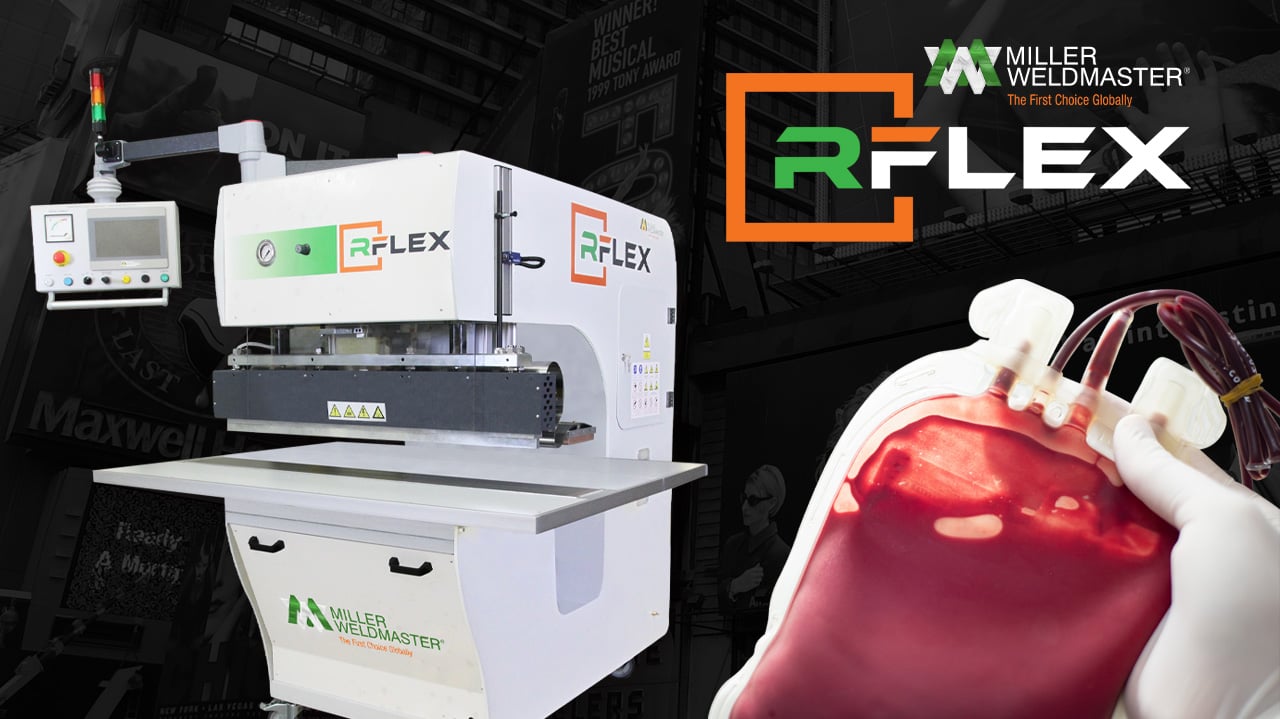
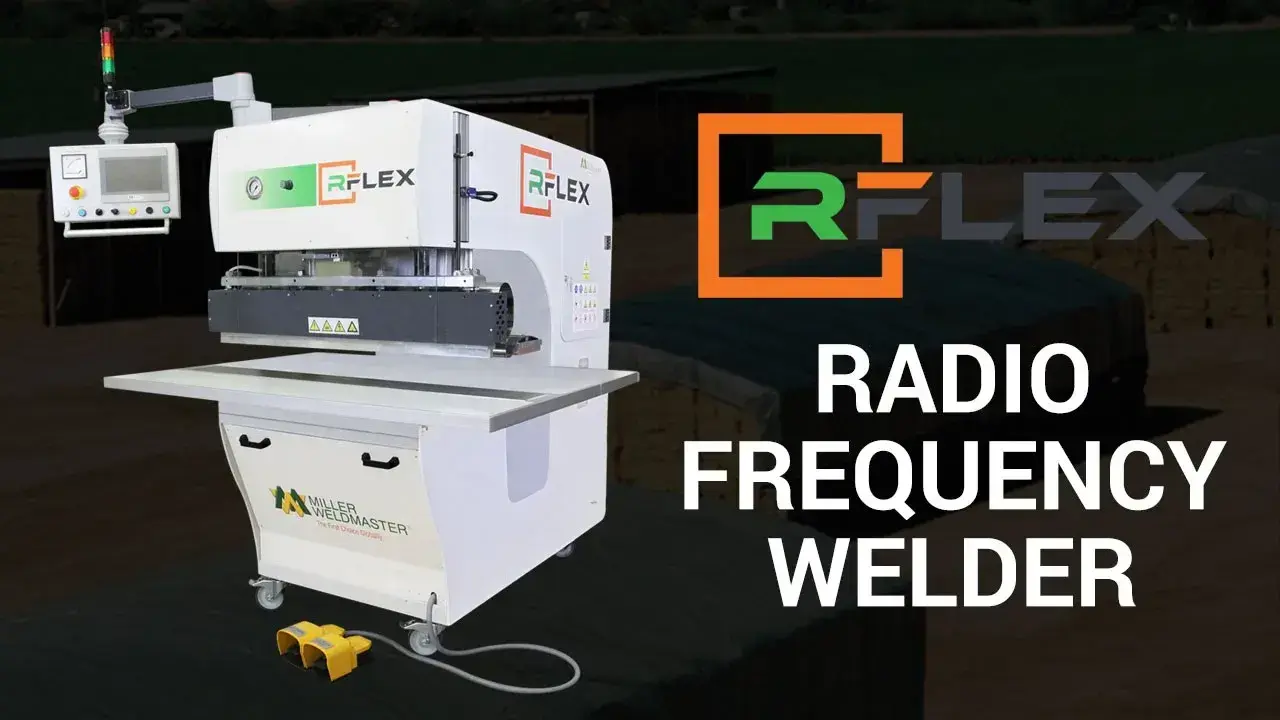
Material compatibility, precision, and repeatability converge in the RFlex Press welding platform. Designed for small, intricate applications, it supports consistent, high-quality welds across medical-grade materials.
Built for Small, Precision Medical Components
The RFlex Press offers:
- Precision line, spot, and curve welding
- Autotuning for consistent weld quality
- Compatibility with PVC, PU, and other medical-grade materials
Its design supports repeatable, validated production—making it ideal for medical device manufacturing.
Request a Test Weld on Your Material
Before committing to any system, manufacturers should validate performance on their actual materials and part geometry. Test welding ensures compatibility, verifies seal integrity, and confirms the system meets production requirements.
Frequently Asked Questions About Medical Fabric Welding Equipment
What is RF welding used for in medical devices?
RF welding creates hermetic seals in products like IV bags, blood bags, and surgical drapes. It uses electromagnetic energy and heat to bond materials without adhesives or stitching, improving sealing for sterile products.
What materials can be RF welded for medical products?
PVC, PU/TPU, EVA, and TPU-coated fabrics are commonly used. Non-polar materials like PE and PP require alternative processes.
How do you validate a hermetic seal on a medical device?
Validation involves tensile testing, leak testing, and visual inspection. Vendors should provide repeatability data during equipment trials.
RF welding vs. ultrasonic welding for medical devices — which is better?
The best method depends on material and application. RF is ideal for flexible thermoplastics, while ultrasonic suits non-wovens and rigid parts.
What certifications should medical welding equipment meet?
While machines themselves aren’t certified, they must support compliance with ISO 13485 and FDA traceability requirements.
What is IQ, OQ, PQ in medical device manufacturing?
These are validation steps: Installation Qualification, Operational Qualification, and Performance Qualification—ensuring equipment is installed correctly, operates within spec, and produces consistent results.
By applying these five evaluation criteria, manufacturers can confidently select medical fabric welding equipment that supports sterile, high-volume production while meeting regulatory expectations.