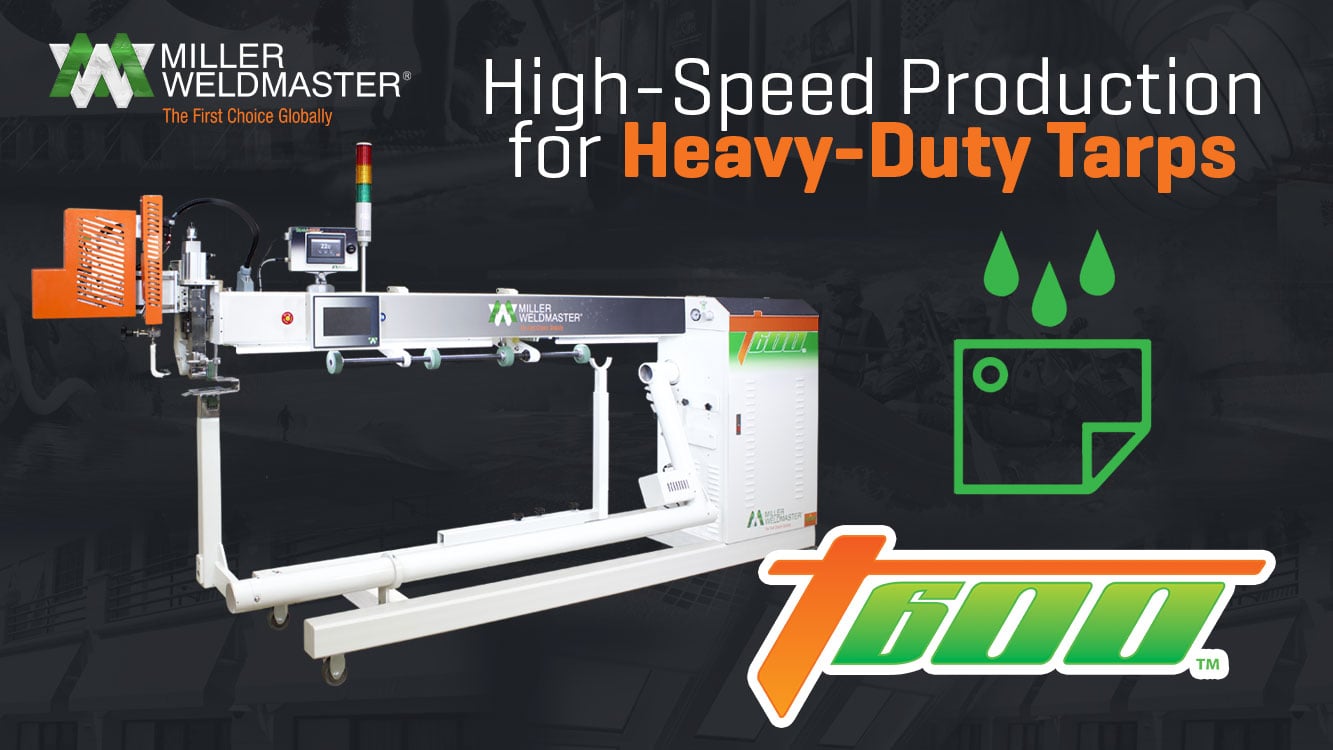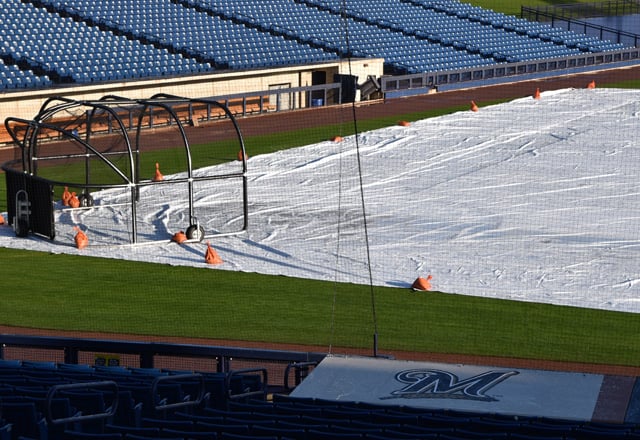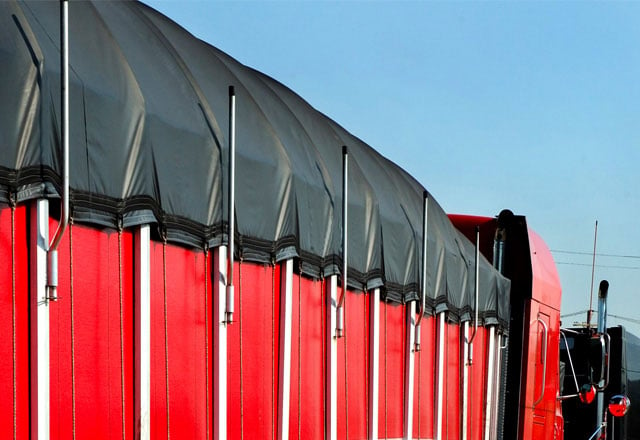
A tarp welding machine is industrial equipment that uses heat, pressure, and controlled motion to fuse thermoplastic materials—like PVC and vinyl-coated fabrics—into a single, continuous seam. A tarp welding machine uses heat, pressure, and speed to melt and fuse thermoplastic materials like PVC or polyethylene together, creating a seamless, waterproof bond. Unlike metal welding, this process melts and bonds materials together, creating a unified structure rather than mechanically fastening separate pieces.
In tarp manufacturing, this process directly impacts seam strength by producing more consistent, waterproof, and durable seams compared to many sewn alternatives. Professional equipment and effective welding are crucial for achieving quality welding results, especially when using tarpaulin welders for industrial fabrics and truck covers. Seam welding is a specialized process in tarp production, and welding tarpaulins is essential for both manufacturing new tarps and repairing existing ones. Whether you’re producing truck tarps, covers, or industrial curtains, welding creates seams that behave more like one continuous material. To see how this applies across industries, explore https://www.weldmaster.com/industries/tarpaulins-and-tarps
PVC tarpaulins are heavy-duty and long-lasting with excellent weldability, making them ideal for applications requiring strong, waterproof seams. In contrast, PE tarpaulins are lightweight and economical but more challenging to weld due to their lower melt-flow index. Welding PVC tarpaulins typically requires higher temperatures, while PE tarpaulins need more precise temperature control.
Proper weld setup is essential for the long-term durability of tarpaulins, ensuring strong, waterproof seams, and a well-executed weld minimizes the risk of cargo damage and avoids downtime.
How a Tarp Welding Machine Works
The welding process follows a precise, controlled sequence:
- Two pieces of thermoplastic material are overlapped
- Heat is applied to soften the coating layers
- Pressure is applied to fuse the materials together
- The seam cools, forming a bonded joint
In addition to hot air welding, which directs heated air between overlapping layers of material, other methods like hot wedge sealing and hf welding (high frequency welding) are also used. Hot wedge sealing inserts a heated wedge between fabric layers to generate heat and create a strong seal. Hf welding, also known as radio frequency welding, uses a high frequency electromagnetic field to generate heat within thermoplastic materials, producing strong, durable seams. This process relies on high frequency vibrations and molecular friction to create internal heat and a strong bond. Radio frequency welding uses electromagnetic energy to heat materials from within, which is especially effective for PVC.
Key variables—temperature, pressure, speed, and cooling—must all be balanced to create a strong seam. When done correctly, the result is a bond that acts like a single piece of material rather than two layers held together.
Machines range from:
- Manual systems for small jobs
- Semi-automatic machines for consistent production
- Fully automated systems for high-volume manufacturing
Process control is what separates strong, repeatable seams from inconsistent ones.
Why Seam Strength Matters in Tarp Manufacturing
Seam strength is one of the most critical performance factors in any tarp product.
A strong seam ensures:
- Load handling capability
- Weather resistance
- Long-term durability
- Clean appearance
- Customer satisfaction
Tarps used in high stress applications, such as truck covers and industrial settings, often require thicker materials and reinforced seams to withstand demanding conditions.
Common failure points include:
- Peel failure
- Shear failure
- Leaking seams
- Seam separation
- Weak overlap zones
PVC tarps are typically chosen for industrial and high-stress applications due to their excellent weldability and durability.
Even the highest-quality material will fail if the seam is weak—making seam performance a defining factor in product reliability.
How a Tarp Welding Machine Impacts Seam Strength
Welding improves seam strength by fusing compatible thermoplastic layers into a unified bond.
This provides:
- More uniform seam structure
- Improved waterproofing (no needle holes)
- Higher consistency across production runs
- Reduced operator variability
Automation in welding processes, when combined with professional tarpaulin welders, can lead to higher throughput and consistent seam strength in tarpaulin production.
However, seam strength is not automatic. It depends on:
- Proper machine setup
- Correct material compatibility
- Controlled process parameters
A poorly configured weld can still fail, which is why process control is essential.
Tarp Welding vs. Sewing: Which Produces a Stronger Seam?
| Factor | Welding | Sewing |
|---|---|---|
| Strength | High (fused material) | Moderate (thread-based) |
| Waterproofing | Excellent | Limited (needle holes) |
| Consistency | High | Operator-dependent |
| Appearance | Clean, uniform | Visible stitching |
| Labor | Lower | Higher |
| Rework | Reduced | More frequent |
Compared to traditional sewing, which punctures the material with a needle and thread, welding fuses thermoplastic layers into a single continuous piece. This means ultrasonic welding offers superior seam strength, waterproofing, and efficiency over conventional sewing methods. Sewing still has value for certain applications, but for thermoplastic materials, welding typically provides stronger, more consistent, and waterproof seams.
Types of Tarp Welding Machines and When Each One Makes Sense
Hot Air Welding
- Flexible for PVC and coated fabrics
- Ideal for varied materials and applications
- Effective for both PVC and PE tarpaulins, creating strong, waterproof seams
- Highly consistent and repeatable
- Best for uniform thermoplastic materials
- Hot wedge sealing is a specific technique used for applications requiring precise and strong seals
Impulse Welding
- Precise control for specific applications
- Slower but effective for certain films
Each method fits different products like truck tarps, banners, or industrial covers. Fully automated systems are ideal for high volume production, ensuring consistent quality and efficiency. The right choice depends on your materials and workflow. PVC tarpaulin welding requires specialized machines and techniques to ensure waterproof, durable seams.
The Biggest Factors That Affect Welded Seam Strength
Several variables influence seam performance:
- Material type and coating chemistry
- Overlap width
- Heat level
- Pressure
- Dwell time
- Machine speed
- Operator setup
Additional issues like dirty material, worn components, or poor calibration can weaken seams.
Most common reasons seams fail:
- Incorrect temperature settings
- Inconsistent overlap
- Contaminated materials
- Worn machine parts
- Improper pressure
Machine quality and process consistency must work together.
Which Materials Can Be Welded Successfully?
Common weldable materials include:
- PVC and vinyl-coated fabrics
- PE-coated fabrics
- Thermoplastic-coated textiles
When working with industrial fabrics, such as those used in tarps, it is important to consider the melting point of the material. For example, PE tarps are lightweight and economical but are more challenging to weld compared to PVC tarps due to their lower melt-flow index. This means precise temperature control is essential during welding to avoid overheating and to ensure strong, durable seams.
Not all fabrics weld equally. Material compatibility should always be verified before purchasing equipment.
Factors that affect weldability:
- Fabric weight
- Coating type
- Reinforcement layers
A key distinction: standard fabrics do not weld—only thermoplastic-coated materials do.
How to Evaluate Seam Strength in Real Production
Seam strength should be evaluated beyond appearance.
Key evaluation methods:
- Visual consistency
- Leak resistance
- Peel testing
- Destructive testing
- Repeatability across runs
Quality control tests for tarpaulin seams include peel and tensile tests to ensure seam strength and waterproofing.
A clean-looking seam is not always a strong seam. Real production testing is essential—especially for demanding applications. Improved efficiency and production speed in testing and manufacturing contribute to overall product quality and reliability.
Signs Your Current Tarp Seam Process Is Costing You Money
Common warning signs include:
- Inconsistent seams
- Frequent rework
- Material waste
- Slow production speeds
- Leak complaints
- High operator dependency
These issues impact:
- Labor costs
- Delivery timelines
- Profit margins
- Customer retention
Additionally, the choice of manufacturing processes, such as ultrasonic welding versus heat sealing, can significantly affect energy consumption and energy efficiency. Ultrasonic welding typically results in lower energy consumption and improved energy efficiency compared to traditional heat sealing, as it uses localized high-frequency vibrations that minimize heat loss and reduce overall energy use. This can lead to cost savings and a more sustainable production process.
Seam problems are often systemic—not isolated.
Safety Precautions and Considerations When Using Tarp Welding Machines
Operating tarp welding machines requires strict attention to safety to protect both operators and the quality of your finished products. The welding process—whether it involves hot air welding, radio frequency welding, ultrasonic welding, or other advanced welding techniques—relies on high temperatures, electrical components, and moving parts. Without proper precautions, these factors can pose risks to both personnel and production efficiency.
Key safety considerations include:
- Personal Protective Equipment (PPE): Always wear heat-resistant gloves, safety glasses, and face masks to shield yourself from hot air, sparks, and airborne debris generated during the welding process.
- Proper Training: Ensure all operators are thoroughly trained in the use of welding equipment, including hot air welders, high frequency welding machines, and specialized equipment for different welding techniques.
- Machine Maintenance: Regularly inspect and maintain your welding machines—checking air volume, pressure rollers, and heated air settings—to prevent malfunctions and maintain consistent welding quality.
- Ventilation: Maintain adequate ventilation in the welding area to disperse fumes and particles, especially when working with tarpaulin materials and thermoplastic coatings.
- Fire Safety: Keep fire extinguishers accessible and remove flammable materials from the welding area to reduce fire risk during heat sealing and hot air sealing operations.
- Electrical Safety: Use grounded, properly rated electrical connections and avoid overloading circuits to prevent electrical hazards when operating high frequency or automated systems.
- Material Handling: Handle tarpaulin materials carefully to avoid creases or damage that could compromise seam strength and lead to seam failure.
- Welding Area Cleanliness: Keep the welding area clean, dry, and free from debris to prevent contamination and ensure a durable bond in welded seams.
- Quality Control: Implement regular quality control checks, including inspections and testing of welded seams, to ensure watertight seals and consistent welding quality.
- Emergency Procedures: Establish clear emergency procedures, such as fire evacuation plans, and make sure all operators are familiar with them.
By prioritizing these safety measures, you not only protect your team but also enhance the reliability and durability of your welded seams. This is especially important in industries where airtight and watertight seals are critical, such as truck tarps, agricultural covers, and outdoor structures. Leveraging advanced technology, automated systems, and regular training ensures that your welding process remains efficient, safe, and capable of producing high-quality results across various industries. Regular maintenance and quality control of your hot air welding equipment and other welding machines are essential steps in preventing accidents and ensuring long-term production success.
How to Choose the Right Tarp Welding Machine for Your Operation
Choosing the right machine requires aligning equipment with your production needs.
Checklist:
- Material type (PVC, vinyl, etc.)
- Seam requirements (strength, waterproofing)
- Product size and dimensions
- Production volume
- Operator skill level
- Available floor space
- Budget
Also consider:
- Future scalability
- Training and support
- Service availability
Selecting a high-quality tarpaulin welding machine and working with professional tarpaulin welders is essential for achieving effective, durable, and waterproof seams, especially for heavy-duty tarpaulins used in industries like construction and agriculture. Regular maintenance of welding equipment is necessary to ensure reliable performance and high-quality results in tarpaulin welding.
The right machine supports both current production and future growth.
How Miller Weldmaster Supports Stronger Tarp Seams
Miller Weldmaster designs industrial fabric welding equipment specifically for thermoplastic and tarp applications.
With technologies like hot air, hot wedge, and impulse welding, their solutions help manufacturers achieve:
- Consistent seam quality
- Improved production efficiency
- Scalable operations
- Reliable product performance
Beyond equipment, Miller Weldmaster supports customers with application testing, process optimization, and ongoing technical guidance—making them a valuable partner in improving seam performance.
Frequently Asked Questions About Tarp Welding Machines and Seam Strength
Can a welded seam be stronger than a sewn seam?
Yes. When done correctly, a welded seam can exceed the strength of the base material because it fuses layers together instead of relying on thread.
What is the best welding method for PVC tarps or vinyl-coated fabrics?
Hot air and hot wedge welding are the most common, with the best choice depending on material consistency and production needs.
Do all tarp materials weld the same way?
No. Different coatings and fabric constructions require different temperature, pressure, and speed settings.
What causes a welded seam to fail?
Common causes include incorrect settings, poor material compatibility, contamination, and inconsistent overlap.
How do I know if I need a manual, semi-automatic, or automated tarp welding machine?
It depends on production volume, consistency requirements, and labor availability. Higher volumes typically justify automation.